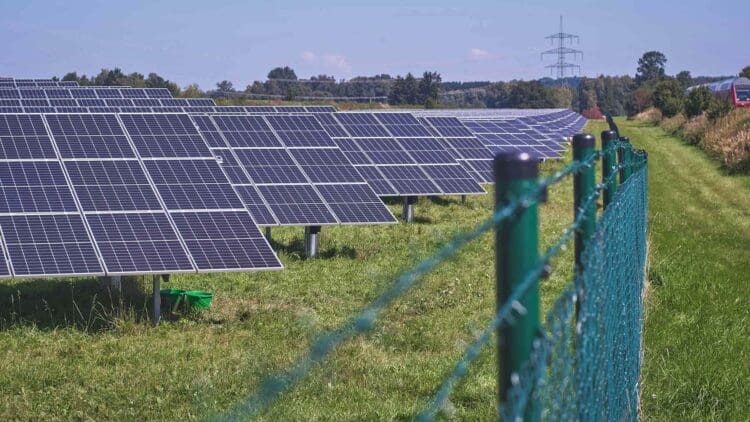

Not for the first time in 2026, Meta finds itself in a collaboration that promises to deliver a surplus of renewable electricity. Zelestra has also been involved in other projects this year, which speaks to the commitment of both companies. Instead of resting on their laurels and becoming complacent with numerous projects in the works, both companies are collectively pursuing another initiative. Zelestra has broadened its U.S. solar collaboration with Meta through new projects, including Skull Creek.
Zelestra collaborates with Meta for a wide range of solar developments
Zelestra is a global renewable energy company that is headquartered in Bilbao, Spain. However, it is increasing its presence in the United States and following in the footsteps of many other foreign companies. Its collaboration with one of the most famous companies in Meta is one that is likely to elevate the company’s profile and name value.
The reason why Meta is increasingly committing to energy initiatives is that as it continues to adopt more technology, it requires a greater amount of electricity to ensure that operations run smoothly. Most of the electricity produced is for its data centers, where the bulk of the operations take place.



In a quest to accelerate their clean energy ambitions, the two companies announced a new power purchase agreement (PPA) covering the Skull Creek Solar Plant in Texas. For Meta, the partnership is one that strengthens its strategy of sourcing renewable electricity for its growing digital infrastructure. For Zelestra, it is emphasizing its position in the American solar market.
A detailed analysis of the Skull Creek Solar Plant located in Texas
Meta has zeroed in on Texas in 2026 as most of its large-scale initiatives are based in the state. Its latest agreement involves the Skull Creek Solar Plant, which is a significant development projected to deliver 176 MWdc (136 MWac) of solar capacity once completed in Texas.
The relevance of a long-term PPA is that it allows Meta to acquire the entire electricity output from the facility. Ultimately, instead of the plant catering to the general population of Texas, it will contribute to the company’s renewable energy portfolio.
The companies were able to effortlessly reach an agreement because they had been affiliated with each other in the past. For instance, Zelestra and Meta have seven solar power purchase agreements across the United States, including the latest ones. This amounts to around 1.2 GWdc of total capacity.
What’s next for the solar facilities coming to the state of Texas?
When news about such large-scale initiatives breaks, the general public is eager to know when they are set to become operational. According to reports, all of these projects involved in the arrangement are expected to become operational by 2028.
There is a lot of buzz in the energy industry surrounding this project because it is among the larger corporate renewable procurement programs in the country.
How is the Solar Creek facility set to influence future energy generation?
One thing that is becoming undeniably clear in the energy industry as 2026 is underway is that technological companies are best served to collaborate with energy firms in order to generate the amount of electricity they require.
The Skull Creek project is intended to generate clean electricity and to assist Meta in maintaining its commitment to matching its operations with 100% renewable energy. The Texas grid will receive new electricity generation capacity courtesy of the solar plant.
Meta’s demand for energy continues to increase as the company enhances its artificial intelligence infrastructure and builds new data centers.
The Skull Creek facility is expected to come online around 2027, feeding electricity into the ERCOT grid in Texas. The future is looking bright for Texas when it comes to the amount of power that it can generate and the clean energy objectives it can reach.