
Not China, not India — Asian “sleeping giant” wakes up and will align 5,000,000 solar panels in 2026
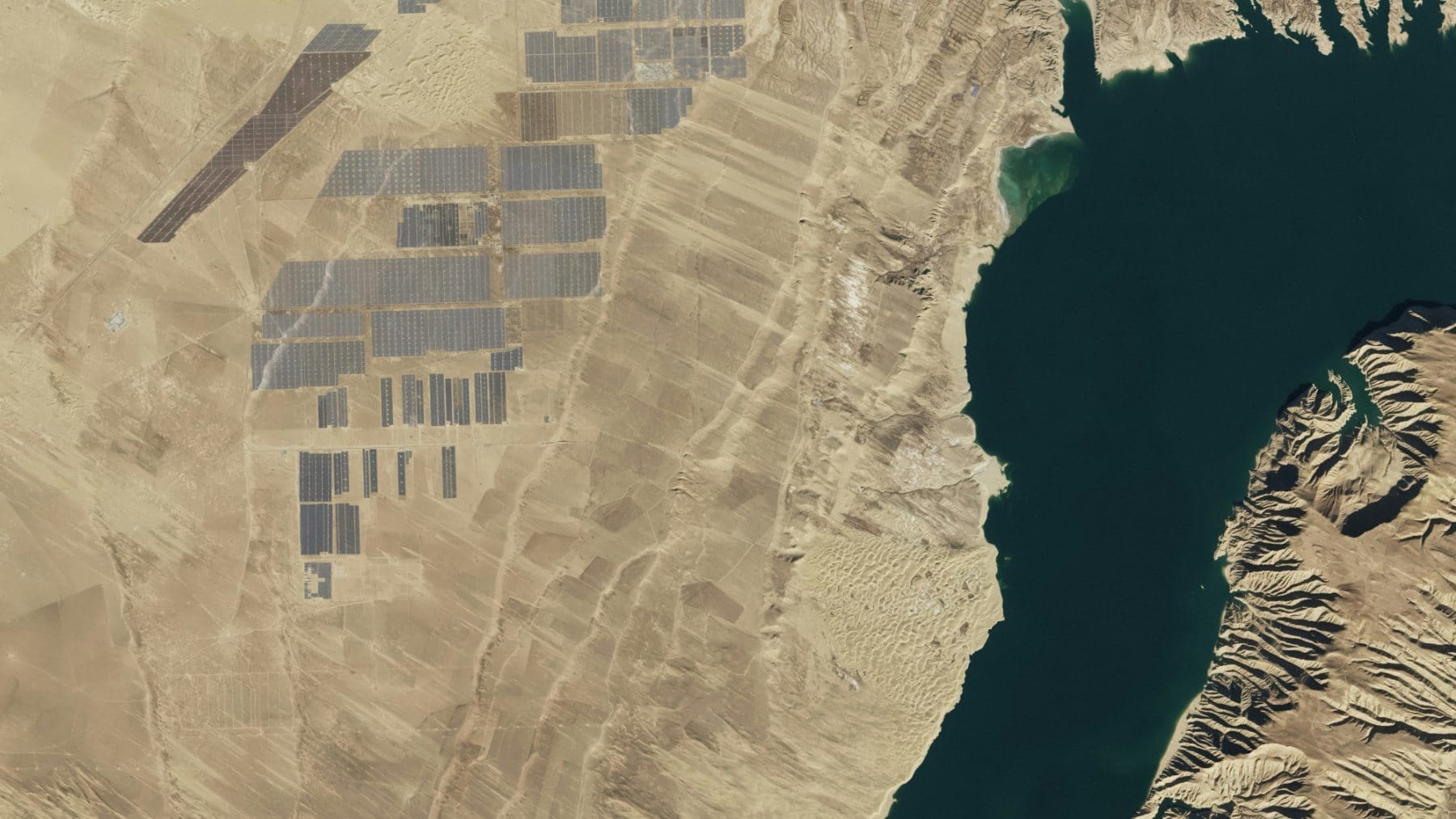 Credits: USGS on Unsplash
With China and India transitioning to clean energy, an Asian “sleeping giant” is waking up and accelerating the clean energy transition. While China has enjoyed manufacturing dominance and India has many solar panels to boast, the Asian giant that has been awoken is neither China nor India. By 2026, five million solar panels will span fields in Nueva Ecija and Bulacan and reshape the entire clean energy sphere.
A significant leap by the “sleeping giant” in Asia
This MTerra development has been labelled as perhaps the largest integrated solar-and-storage installation in the world. This solar and storage project has received backing from Meralco PowerGen and SPNEC and enjoys a $600 million investment from the global infrastructure leader, Actis.
As per the project’s vision, 3,500 MW of installed solar capacity will be supported by 4,500 MWh of battery storage. Although the figures are rather ambitious, the construction has shown rather impressive results already. With 778 MW of operational solar panels already in this Asian country, we are only given a glimpse of what can be expected next.
Rather significant leaps can be found occurring in China as well, with China aligning 6,000,000 solar panels, resulting in megafarms that stretch offshore.
The project expands beyond clean power generation. Since this Asian country charges some of the highest electricity prices in Asia, a successful project would mean cleaner energy for all and energy that is more affordable. Furthermore, the transition to cleaner power would mean far less reliance on fossil fuels throughout the country.
2026, a rather significant turning point for the MTerra development
The Energy Regulatory Commission recently approved the ₱14.25-billion transmission network, and thus far, high voltage lines are 80% complete. The good news is that in 2026, the project’s core phase will go online. The initial phase is meant to put hundreds of megawatts into the Luzon grid. This project’s full output is scheduled for 2031 and 2040, causing this Asian country to benefit from the project much earlier than expected.
Once activated, the 2026 phase will be responsible for adding daytime generation and will also work towards stabilizing the grid at times of peak demand. For this country, this is a major leap forward, as it is a country known for its brownouts.
Which Asian country is making economic and environmental leaps?
The solar farm will provide power to over 2.4 million households in the Philippines. For many citizens, this will considerably reduce the financial burden of high electricity prices on many Filipino families. The solar output will severely undercut the fossil fuel generation.
With full operation underway, more than four million tons of CO₂ are emitted annually. The reduction in CO₂ emissions would mean that emissions from three million cars would be reduced. The economic benefit is that MTerra has already created more than 9,500 jobs and has created numerous training programs like the TERRAnsform. In the next 10 years, more than ₱23 billion for local economies will be generated.
Rather significant leaps can be found occurring in China as well, with China aligning 6,000,000 solar panels, resulting in megafarms that stretch offshore. While China’s major solar advancements are rather noteworthy, the clean energy development in the Philippines is rather inspirational as well.
The Sleeping Asian giant has woken up
Looking forward to the MTerra 2026 major milestone and the second phase in 2027, this country has shown that it can overcome infrastructural challenges to execute renewable projects on a global scale. With five million panels being aligned, this signifies a major technical achievement. The Philippines is a country proving that sustainable power can come from almost any Asian country.
New York is also looking at solar farm projects, but its record may have been shattered. 370,000 panels are still shining, but it may no longer be the biggest installation. With New York also considering the solar agenda, it can yet be seen whether the Philippines can live up to other ambitious solar projects, too.
Kelly is an experienced writer with 15 years of experience exploring the big stories that shape our world, from tech breakthroughs and space exploration to climate, energy, and the fascinating quirks of science. She has a talent for turning complex ideas into sharp, memorable insights that stay with readers long after they’ve finished reading.
