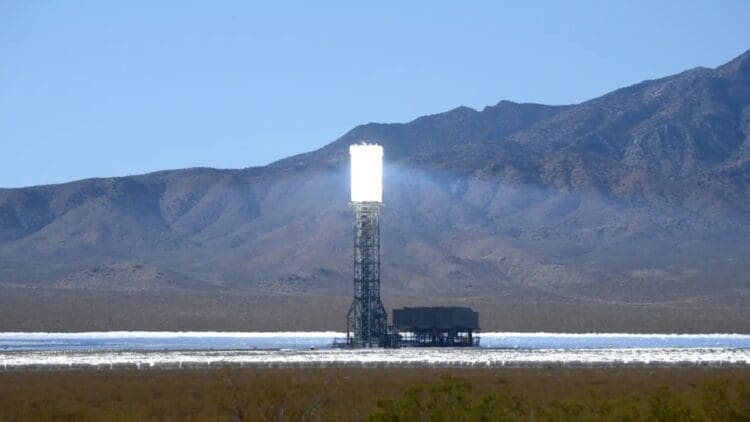

During the early 2000s, Mildura, located in the northwestern part of Victoria, was forecasted to be the center of Australia’s renewable energy revolution. Mildura was chosen to develop the world’s first fully integrated solar power station, the Mildura Solar Concentrator Power Station, which was to be one of the most advanced power generation, environmentally safe facilities. The station’s main features included 40 solar dishes that could convert concentrated sunlight to electricity with great efficiency.
The history of the world’s first fully integrated solar power station
The idea was very creative and different from anything else that was taking place in the world. Each one of the 14-meter-diameter dishes consisted of several mirrors that concentrated the sunlight on the receiver, which created the heat to run a Stirling engine.
Because of this technology, the dish was expected to be more efficient than the solar panels, which made Mildura a world leader in solar thermal energy. The plan for the facility was to be able to supply electricity to power over 100,000 homes, which is about 100 megawatts of power.


The transition into this part of the project seemed very optimistic. In 2012, the 1.5 MW pilot plant became the first part of the project to be completed, and further expansions of the plant were being planned. The weather and geography of Mildura were very favorable to the growth of the project.
In addition, the project had great sentimental meaning. The project was seen as the answer to the “Rhombus of Regret”. This is the nickname given to the area surrounding Mildura that is known for having renewable resources, but also for having the resources to transmit the energy out of the area, which causes energy to be wasted.
The project was designed, and the pilot plant was completed, but the dream was already over as of 2014
The reason the project was abandoned was the collapse of electricity prices and the unexpected drop in political and economic stability.
The first half of the 2010s was known for the rise in solar-powered rooftops all over the country, which resulted in the dropping demand for grid electricity. This also coincided with a surplus of generation resources, and as a result, prices took a big drop. This was very problematic for larger solar-powered projects in Mildura, as they were very reliant on long-term forecasts for revenue. The required resources for expansion were unreasonable to obtain.
Investors took a chance, believing in the Midura Solar Plant
Many investors saw the construction of the Mildura Solar Plant as a gamble, and rightfully so, given the political uncertainty surrounding the financial support of future solar projects in the Australian government. Federal politicians were not consistent in their support of the Mildura Solar Plant’s primary funding source, the Renewable Energy Target (RET).
Developers were left frustrated as potential funding for Mildura slipped further out of reach due to the constant changes to the RET.
The Mildura: A unique but expensive project
Once, Mildura was unique due to its $10 million Solar Concentrators, which were expensive to produce and thus outpaced solar thermal. Developers of solar thermal systems were hopeful that Congress would support developers of photovoltaic (PV) systems, which were cheaper and expanding rapidly as solar, including thermal, became more accessible to large-scale deployment.
In the solar thermal concentrators market, the Mildura Solar Plant became a losing construction as the market became more cost-competitive.
The construction of the 40 solar dishes was once a representation of the Australian dream. The Mildura Solar Concentrators became a representation of the dream in thermal solar, but the dream has now transitioned into battery solutions due to not containing solar thermal photovoltaic (PV) systems. Although the megaproject never reached its prosperity, the spirit of the project itself led to the innovations that paved the way for the rest of the renewables in Australia.
Disclaimer: Our coverage of events affecting companies is purely informative and descriptive. Under no circumstances does it seek to promote an opinion or create a trend, nor can it be taken as investment advice or a recommendation of any kind.