
Svanehoj contracts with Drydocks World Dubai to supply LTD gauging systems for LNG carrier-to-FSU conversion supporting Gabon’s offshore gas expansion
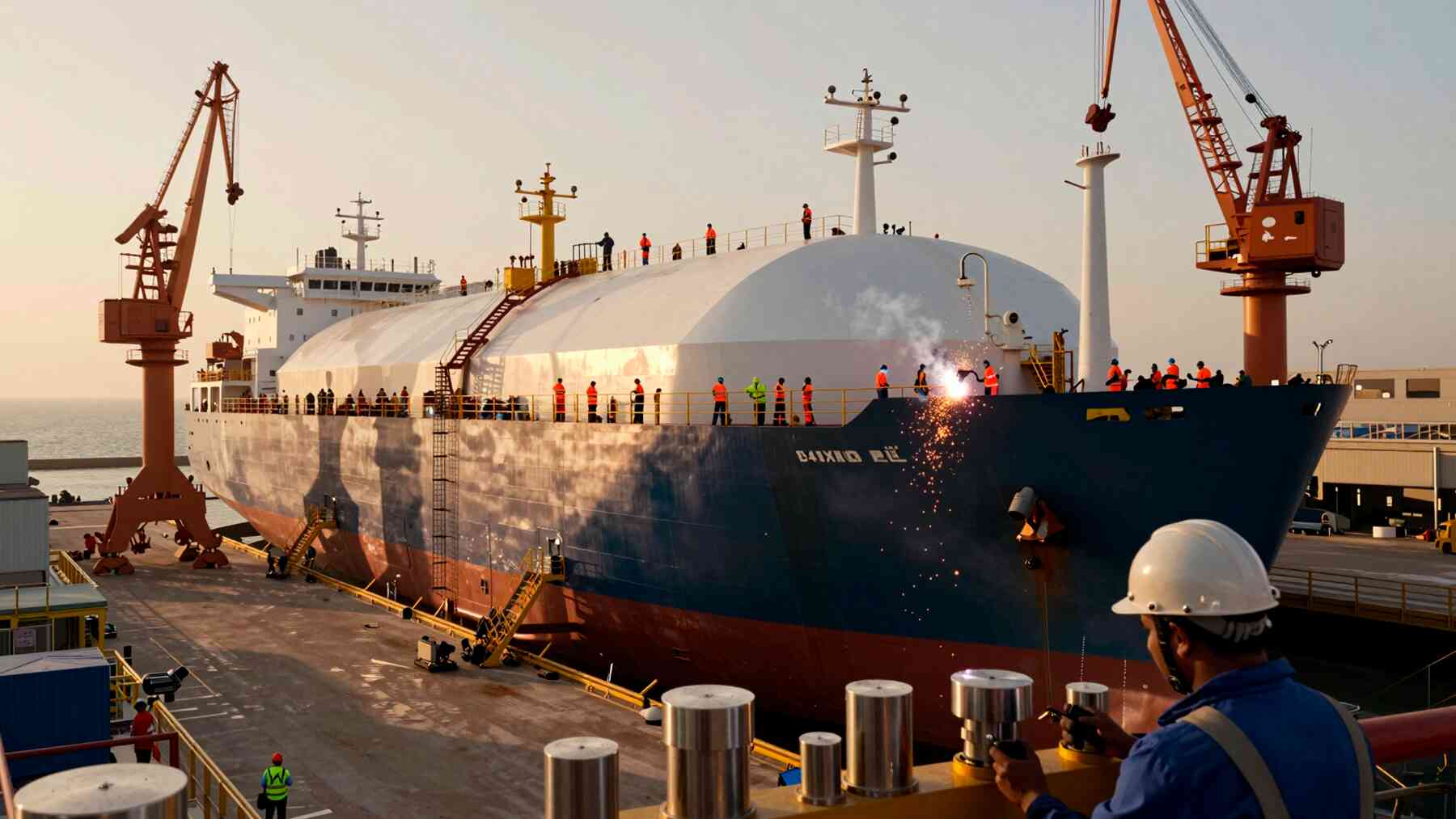 AI-made
Danish pump and safety systems specialist Svanehoj has signed a contract with Drydocks World Dubai to supply four LTD gauging systems for the conversion of the LNG carrier LNG Bayelsa into the floating storage unit (FSU) Cap Lopez.
The project is being carried out for Dixstone Lower Gulf FZCO as part of a broader offshore gas development in Gabon. Work is underway at Dubai’s drydock facilities, with the converted FSU targeted for completion in Q3 2027.
Svanehoj signs contract for LTD gauging systems on FSU conversion
Svanehoj will supply four LTD gauging systems for the vessel conversion at Drydocks World Dubai’s facilities. The client is Dixstone Lower Gulf FZCO, and the converted FSU Cap Lopez carries classification under Lloyd’s Register. Completion is targeted for Q3 2027.
The LNG Bayelsa’s existing float-type level gauges were designed for a different operational context, and in its new FSU role, those systems no longer cut it.
The overall conversion scope is substantial—covering steel fabrication, piping installation, new process modules, tank coating, and life extension work. It’s a full overhaul that repositions the vessel from an active LNG carrier to a long-term offshore storage unit.
For Svanehoj, this contract carries real strategic weight. The company describes it as an important step into the LNG conversion market, a segment it sees as a key growth area for its LTD gauging technology and its broader ambitions in offshore LNG infrastructure.
Why new gauging systems are required for the conversion
When a vessel changes roles, the equipment it carries doesn’t always follow. That’s a problem. The LNG Bayelsa’s existing float-type level gauges were designed for a different operational context, and in its new FSU role, those systems no longer cut it.
“In conversion projects, existing equipment is often no longer sufficient for the vessel’s new role,” said Fabrice Vandewalle, sales manager for LNG/cryogenic at Svanehoj France. “Advanced monitoring and safety systems are essential for safe and reliable long-term offshore operation.”
The four LTD gauging systems replace those float-type gauges with a more capable solution, enabling automatic, continuous measurement of LNG density and gas composition directly inside the storage tanks. That level of precision is something long-term offshore deployment demands. Conditions are less controlled out there, and maintenance access is far more limited than in port, which means the monitoring equipment has to do more, more reliably.
Operational benefits: Real-time data and rollover prevention
The practical value of the LTD systems goes beyond measurement. Real-time data from the gauging systems feeds directly into rollover prediction software, giving operators a live picture of what’s happening inside the LNG storage tanks at any given moment.
LNG stratification is a serious risk. When layers of LNG at different densities form inside a tank, they can suddenly mix — a phenomenon known as ‘rollover’ — releasing large volumes of vapor rapidly. For an offshore storage unit, the consequences can be severe.
The rollover prediction software detects stratification early and flags potential events before they occur, giving crews time to respond rather than react. It’s a meaningful difference for both operational efficiency and onboard safety. This is also a first for Svanehoj: the company hasn’t previously supplied its LTD gauging systems for an LNG carrier-to-FSU conversion, and the Cap Lopez project marks its entry into that specific segment.
Project context: Gabon’s offshore gas infrastructure and flaring reduction
The Cap Lopez FSU doesn’t exist in isolation. It’s part of a larger FLNG development aimed at expanding Gabon’s offshore gas infrastructure—a project with real implications for the country’s energy sector.
The wider development is expected to reduce gas flaring, a significant environmental concern in oil and gas production, and is projected to increase Gabon’s production capacity by approximately 105 million ft³/d. Once operational, the FSU will support offshore gas storage and export, serving as a critical link between production and market—which is precisely why its monitoring and safety systems need to hold up over the long term.
The project also reflects something happening more broadly across the LNG industry. Converting existing LNG carriers into floating offshore infrastructure capable of supporting gas liquefaction, storage, and export has become an increasingly common approach, letting operators repurpose existing assets instead of building from scratch, compressing timelines and making use of vessel structures that are already there.
Continuous measurement of density and composition
Here’s the short version: Svanehoj has contracted with Drydocks World Dubai to supply four LTD gauging systems for the conversion of the LNG carrier LNG Bayelsa into the FSU Cap Lopez. The client is Dixstone Lower Gulf FZCO, the work is classified under Lloyd’s Register, and completion is targeted for Q3 2027.
The LTD systems replace existing float-type gauges no longer adequate for the vessel’s FSU role. They provide continuous, automatic measurement of LNG density and gas composition, with real-time data feeding into rollover prediction software to support both safety and operational efficiency.
The project is part of a broader FLNG development in Gabon expected to reduce gas flaring and increase production capacity by around 105 million ft³/d. For Svanehoj, it marks the first time the company has supplied its LTD gauging systems for an LNG carrier-to-FSU conversion.
Kelly is an experienced writer with 15 years of experience exploring the big stories that shape our world, from tech breakthroughs and space exploration to climate, energy, and the fascinating quirks of science. She has a talent for turning complex ideas into sharp, memorable insights that stay with readers long after they’ve finished reading.
