
Beside a Marine Corps surf break in San Diego County, 73 canisters of spent nuclear fuel sit buried in a crumbling coastal bluff, and the ocean is closing in
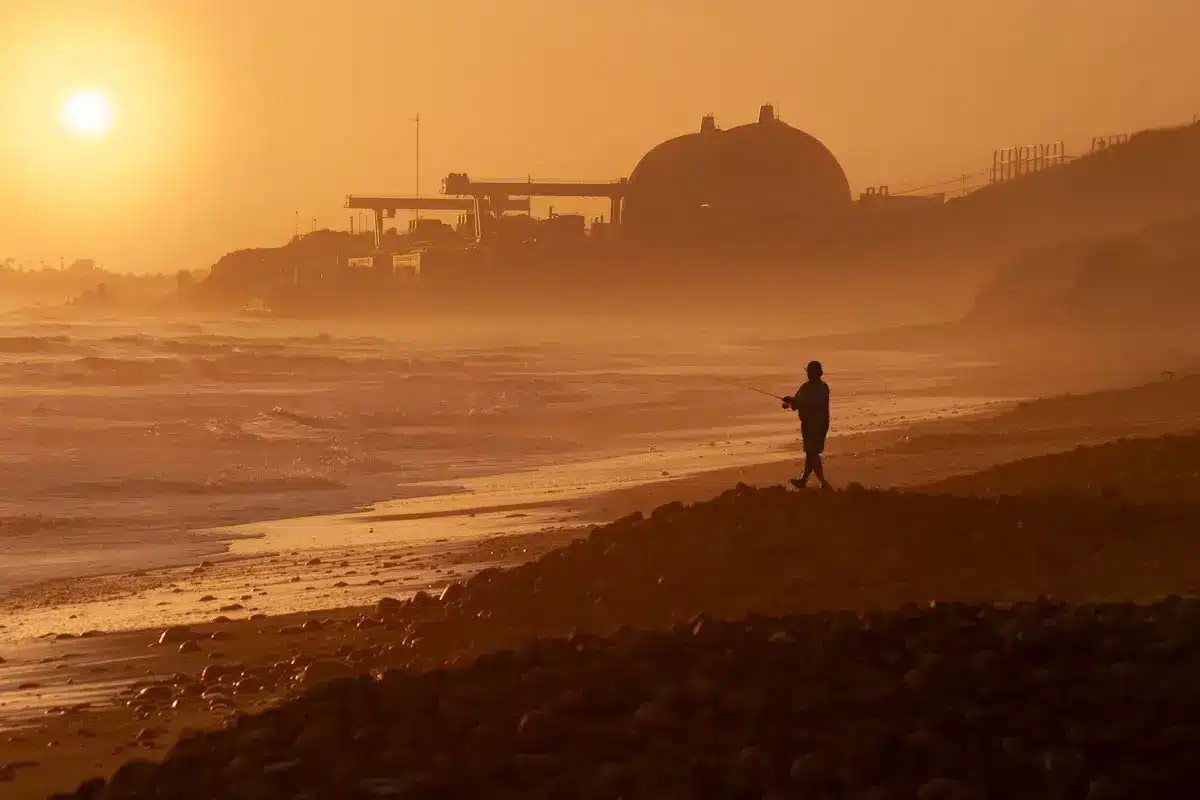
Surfers paddle out most mornings near a fence line most of them never look at twice.
Behind it sits a flat concrete pad.
Under that pad sits every pound of spent fuel a shuttered nuclear plant ever produced.
No community in the United States has agreed to host a permanent repository, so fuel from every retired reactor in the country sits exactly where it was last used.
The plant is the San Onofre Nuclear Generating Station, wedged onto an 84 acre strip of coastline inside Marine Corps Base Camp Pendleton.
It has not generated a watt since 2012, yet it still holds 73 loaded canisters of used reactor fuel a few dozen yards from the surf.
So why does a dead reactor still need a fortress by the beach?
Why a dead reactor still needs a fortress by the beach
Spent nuclear fuel does not stop being dangerous just because the reactor that made it has gone cold. The used fuel assemblies pulled from San Onofre’s two retired reactors spent years cooling in indoor pools before engineers sealed them inside thick steel storage cylinders.
Those canisters were then lowered into round concrete vaults built into the bluff itself, a configuration called dry cask storage. So the fuel is not sitting in a pool anymore, and it is not actively cooled by pumps or operators.
Instead it relies on the mass of steel, concrete and earth around it to block radiation and shed heat passively, a design meant to need almost no maintenance for decades. The system is built into the bluff above the Pacific, engineered to withstand fire, flood and even a tsunami, according to plant documentation.
That passive design is precisely why the location matters so much. A system meant to sit undisturbed for generations was placed on a stretch of coastline that was never going to sit still.
A plant with nowhere left to put its own waste
Walk the site today and the two domed reactor containment structures are long gone, demolished during a decommissioning effort that has stretched across more than ten years. What remains is the fuel storage installation itself, holding dozens of sealed canisters arranged in neat rows on the pad.
Because there is still no federal repository anywhere in the country willing to take the fuel, the plant’s owner has nowhere to ship it. The same stalemate that stranded fuel at the abandoned nuclear site in Washington State has left San Onofre holding material it finished using more than a decade ago.
Meanwhile the Pacific keeps doing what oceans do along an eroding bluff. Local reporting has tracked the shoreline retreating closer to the storage pad year after year, turning a waste problem into a geography problem as well.
What the erosion survey actually found
A review published this fall traced the bluff’s retreat using repeated site surveys and aerial imagery gathered over the plant’s decommissioning period, rather than a single snapshot. The pattern was consistent, not a one time storm event, showing the toe of the bluff creeping measurably closer to the fenced storage pad with each passing year.
The plant’s owner has publicly acknowledged the urgency even while standing behind the engineering. One assessment framed it starkly: despite confidence in the system’s protective engineering, the utility wants the waste moved off site as soon as a destination exists, according to reporting on the facility.
That is a notable admission for an operator whose canisters are rated to survive fire, flood and tsunami. The concrete is not the weak point, the absence of anywhere else to put the fuel is.
Why the fix is bureaucratic, not structural
None of this means the canisters are in imminent danger. The storage system still has engineering margin, and federal regulators continue to inspect the site on a regular cycle.
The complication is entirely procedural. No community in the United States has agreed to host a permanent repository, so fuel from every retired reactor in the country sits exactly where it was last used.
That national gridlock explains why advanced reactor developers are now exploring different storage geometries altogether. A Kansas power deal tied to an underground reactor concept proposes burying reactors well below grade from the start, partly to sidestep the above ground storage dilemma places like San Onofre never anticipated decades ago.
So the lesson from this stretch of Camp Pendleton coastline is not that the canisters are failing. It is that an engineering solution built to last a human lifetime was never paired with a political solution on the same timeline.
A fence line that will outlast the plant it guards
For now, the arrangement holds. Surfers keep paddling out nearby, Marines keep training close by, and the canisters keep shedding heat and blocking radiation without complaint.
Nothing published so far suggests the fuel is at risk within any near term window, and the operator continues to monitor bluff conditions as part of routine site management. The advocacy group Surfrider, which has long pushed for the fuel’s removal, has documented the transfer of all 73 canisters into the coastal storage pad and continues to flag the corrosion risk that comes with keeping steel this close to salt air.
Someday, if the country finally picks a permanent home for its spent fuel, this fence line on the Pacific could simply disappear. Until then, the ocean is the one institution actually keeping to a schedule.
Hugo is an engineer with strong technical expertise. Multilingual from an early age, his writing combines technical clarity with a strong interest in science and energy.
