
Rolls-Royce supplies 40 MTU Series 4000 engines for ten new hybrid offshore vessels chartered by Petrobras
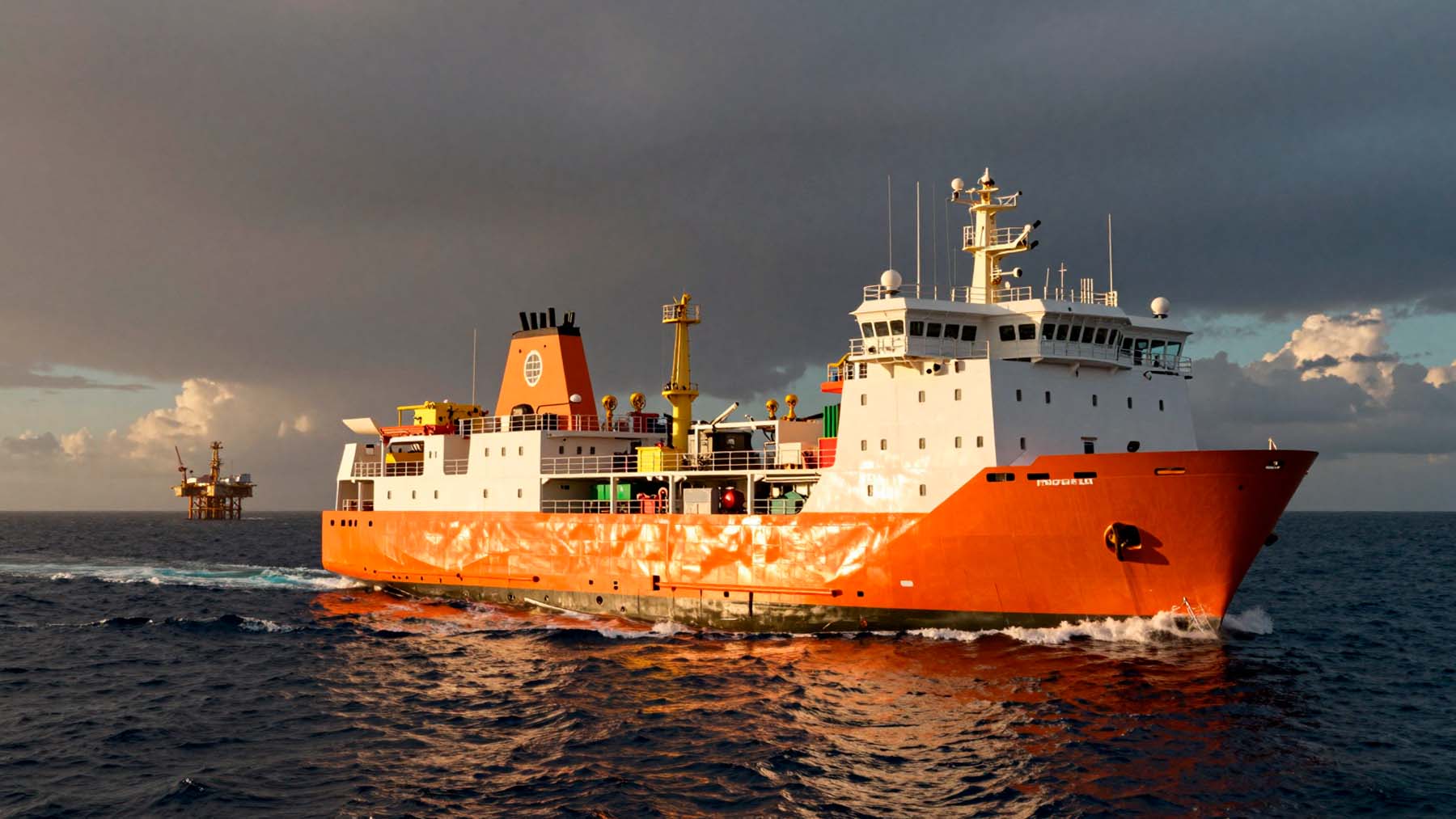 AI-made
Rolls-Royce has delivered 40 MTU 16V 4000 M33S engines to Rio de Janeiro-based Starnav Serviços Marítimos to power ten new hybrid offshore vessels contracted to serve Petrobras under 12-year charters. The fleet—six platform supply vessels and four oil spill response vessels—is being built by Detroit Brasil Ltda. and is scheduled to enter service between 2026 and 2028.
It’s the first time integrated battery systems have been used across this vessel series.
Rolls-Royce delivers 40 engines for Starnav’s ten-vessel fleet
The 40 engines arrived in two separate phases, giving Detroit Brasil Ltda. a manageable installation schedule across ten hulls under simultaneous construction. Six are platform supply vessels; the remaining four handle oil spill response. That mix reflects Petrobras’s need for both routine logistics support and environmental emergency capability.
Each vessel runs four engine-powered gensets supplemented by battery banks, with SCR systems fitted for IMO Tier III compliance and HVO compatibility built in.
Each vessel operates under a 12-year charter once complete. That long contract horizon signals confidence from Brazil’s state energy company in both the technology and the operator — and it gives Starnav a stable revenue base to justify the investment in hybrid systems.
The vessels roll out gradually, entering service between 2026 and 2028 rather than all at once.
Why hybrid propulsion and IMO Tier III compliance drove the engine choice
Each vessel carries four gensets, with one MTU 16V 4000 M33S engine driving each unit. The arrangement is straightforward diesel-electric, but the hybrid element comes from dedicated battery banks integrated alongside those gensets. It’s the first time this vessel series has used integrated battery systems, giving operators the ability to draw on stored energy during lower-demand periods and cut both engine run time and fuel burn.
Emissions compliance shaped the engine selection just as much. Each genset is paired with a selective catalytic reduction (SCR) system supplied by Hug Engineering. SCR technology chemically converts nitrogen oxides in exhaust gas into harmless nitrogen and water, allowing the engines to meet IMO Tier III standards—currently the most stringent tier in force for NOx emissions within designated emission control areas.
HVO compatibility adds another layer. Hydrotreated vegetable oil is a renewable diesel substitute that can significantly reduce lifecycle carbon emissions without requiring hardware modifications, giving Starnav flexibility as fuel availability and carbon regulations continue to shift.
Operational and technical specifications of the new vessels and engines
The MTU 16V 4000 M33S is rated at 2,080 kW at 1,800 RPM—substantial output for a genset engine. Rapid load response matters in offshore environments where power demand can spike without warning, particularly in dynamic positioning systems holding a vessel steady beside a platform in rough seas.
Rolls-Royce describes the engine as engineered for long running hours and reduced maintenance intervals. Offshore, unplanned downtime is expensive, and getting a technician to a vessel mid-operation is logistically complicated. The engine’s track record in offshore power generation and diesel-electric drive applications brings proven reliability to the specification.
The vessels themselves are substantial: 302 feet in length, a 65.6-foot beam, a 26.2-foot depth, and 4,985 gross tons. These are mid-size offshore support vessels built for sustained operations in demanding conditions off the Brazilian coast — not small workboats.
A 15-year partnership and broader context in offshore marine decarbonization
This contract has roots going back more than 15 years. Rolls-Royce, Starnav, and Detroit Brasil Shipyard have maintained a consistent working relationship over that period, during which Rolls-Royce supplied more than 170 MTU Series 4000 engines for Starnav vessels and as exchange engines. That volume reflects a deep commercial relationship, not a one-off arrangement.
That history likely smoothed the path for a more technically ambitious project. Operating the same engine family across a large fleet for over a decade builds institutional knowledge—maintenance patterns, spare parts logistics, and performance expectations. Familiarity reduces risk when you’re scaling up and layering in new technology like battery integration.
The project fits a recognizable pattern across the offshore support vessel sector. Operators and charterers face mounting pressure to cut emissions from regulators and from energy company clients pursuing their own decarbonization targets. Hybrid propulsion — diesel gensets combined with battery storage — is emerging as a practical near-term solution that sidesteps the need for a full switch to alternative fuels or unproven technology.
Starnav’s CEO Carlos Eduardo Pereira framed the project as positioning the company as “a pioneer in adopting cutting-edge technologies for a more sustainable maritime future.” Battery banks, SCR systems, and HVO compatibility together represent a layered approach to emissions reduction rather than a single-technology bet.
Rolls-Royce is sending 40 engines to Starnav
The core facts: Rolls-Royce has supplied 40 MTU 16V 4000 M33S engines to Starnav to power ten new hybrid offshore vessels for Petrobras. Six are platform supply vessels; four are oil spill response vessels. All are being built by Detroit Brasil Ltda. and will enter service between 2026 and 2028 under 12-year charters.
Each vessel runs four engine-powered gensets supplemented by battery banks, with SCR systems fitted for IMO Tier III compliance and HVO compatibility built in. The project extends a 15-year supply relationship during which Rolls-Royce has delivered more than 170 MTU Series 4000 engines to Starnav—and marks the first use of integrated battery systems across this vessel series.
Kelly is an experienced writer with 15 years of experience exploring the big stories that shape our world, from tech breakthroughs and space exploration to climate, energy, and the fascinating quirks of science. She has a talent for turning complex ideas into sharp, memorable insights that stay with readers long after they’ve finished reading.
