
Ignitis secures additional 2 TWh of annual regasification capacity at Klaipeda LNG terminal through 2044
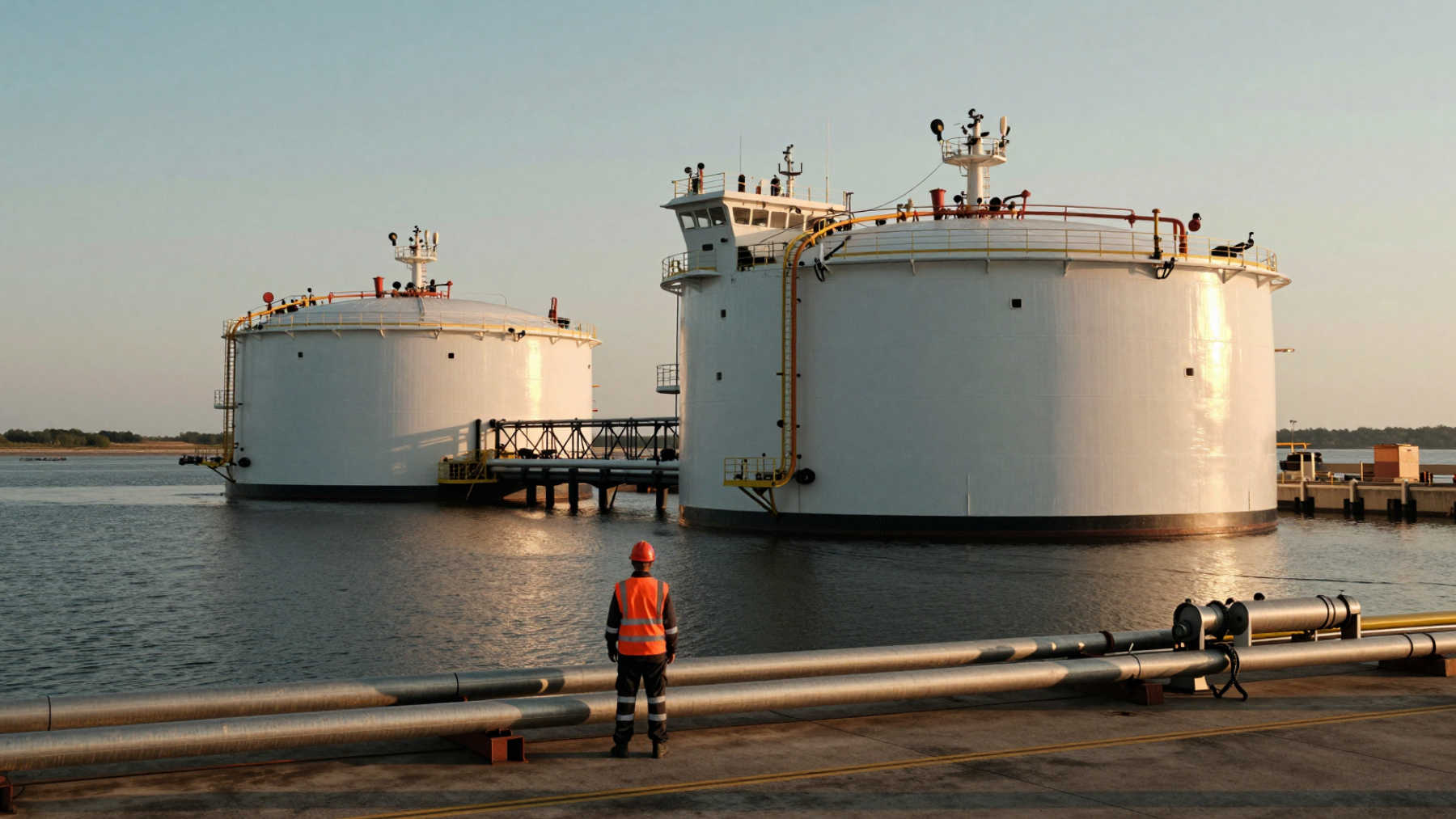 AI-made
UAB Ignitis has secured an additional 2 TWh of annual regasification capacity at the Klaipeda LNG terminal, the company’s parent group, AB Ignitis grupe, announced. The allocation was confirmed through a secondary market procedure administered by terminal operator AB KN Energies under the Regulations for Use of the LNG Terminal, covering the period 2033–2044.
The move brings Ignitis’s total long-term capacity at the facility to 6 TWh per year and raises questions about what’s driving the company’s expanding footprint at one of the Baltic region’s most strategically significant gas infrastructure assets.
Ignitis adds 2 TWh of capacity on the secondary market
The additional 2 TWh came through the secondary market, following a long-term capacity allocation procedure run by AB KN Energies, the Klaipeda terminal’s operator. UAB Ignitis, a subsidiary of AB Ignitis grupe, completed the transaction under the Regulations for Use of the Liquefied Natural Gas Terminal.
The fact that Ignitis pursued a secondary-market allocation on top of its primary booking suggests available capacity at the terminal is being actively competed for.
The secondary market works differently from primary allocation — it lets capacity change hands after the initial long-term booking round has closed. Going this route points to active management of terminal access strategy, not simply holding onto whatever was originally booked.
The allocation covers 2033 through 2044. Eleven years. Locking in regasification capacity that far out is a deliberate, long-range commitment—not a short-term hedge.
Earlier primary allocation raised total capacity to 6 TWh per year
This secondary-market deal didn’t come out of nowhere. On June 10, 2026, AB Ignitis grupe announced it had already reserved 4 TWh of annual regasification capacity for 2033–2044 through the primary long-term allocation procedure organized by KN Energies.
That primary booking was already a significant move — 4 TWh of annual regasification capacity is a substantial long-term claim on one of the Baltic region’s key LNG import facilities. Add the latest 2 TWh, and UAB Ignitis now holds 6 TWh of total annual regasification capacity at Klaipeda for 2033–2044. Both allocations went through procedures administered by AB KN Energies, and together they represent a much larger footprint at the facility than either transaction alone would suggest.
Long-term access supports gas supply flexibility and source diversification
Why does it matter that these bookings run all the way to 2044? Because long-term terminal access fundamentally changes how a company can plan its gas supply operations.
With confirmed regasification capacity across more than a decade, Ignitis can structure supply contracts, negotiate LNG procurement deals, and manage delivery schedules with a level of certainty that spot access simply can’t provide. That flexibility carries real operational and commercial weight. There’s also a diversification angle: regasification capacity at an LNG terminal opens the door to imports from a wide range of global suppliers—the US Gulf Coast, Qatar, Norway, or wherever competitive LNG supply is available at any given moment. Pipeline gas offers no such range.
Securing regasification capacity is, in this sense, a concrete mechanism for managing supply risk. For a region historically dependent on Russian pipeline gas, that’s not a minor consideration—it’s a strategic imperative. Long-term capacity bookings translate energy security goals from policy language into physical infrastructure commitments.
Klaipeda terminal’s role in Baltic energy resilience
The Klaipeda LNG terminal isn’t just Lithuania’s primary LNG import facility. It’s one of the foundational pieces of Baltic regional energy infrastructure—and when it opened in 2014, it gave Lithuania its first real alternative to Russian pipeline gas.
That was significant then. It became considerably more significant after 2022. The terminal lets Lithuania and its Baltic neighbors import LNG from global markets, independent of Russian pipeline supply, and that independence has taken on heightened strategic value following the geopolitical shifts that accelerated after Russia’s full-scale invasion of Ukraine. The broader European push to cut dependence on Russian gas made facilities like Klaipeda far more central to regional energy planning than they might have seemed a decade ago.
Long-term capacity bookings by regional energy companies reflect the continued strategic prioritization of energy security across the Baltic. These aren’t short-term reactions to market conditions—they’re multi-decade commitments that embed energy independence directly into infrastructure planning. The fact that Ignitis pursued a secondary-market allocation on top of its primary booking suggests available capacity at the terminal is being actively competed for.
4 TWh reserved through the primary long-term capacity allocation
Here’s what’s now confirmed: UAB Ignitis has secured a total of 6 TWh of annual regasification capacity at the Klaipeda LNG terminal for 2033–2044. That total breaks down into 4 TWh reserved through the primary long-term capacity allocation procedure announced on June 10, 2026, and an additional 2 TWh obtained through the secondary market under a procedure administered by terminal operator AB KN Energies. Both allocations were completed under the Regulations for Use of the Liquefied Natural Gas Terminal. According to AB Ignitis grupe, long-term terminal access supports greater flexibility in gas supply planning, enables source diversification, and contributes to energy resilience in Lithuania and the wider Baltic region.
Kelly is an experienced writer with 15 years of experience exploring the big stories that shape our world, from tech breakthroughs and space exploration to climate, energy, and the fascinating quirks of science. She has a talent for turning complex ideas into sharp, memorable insights that stay with readers long after they’ve finished reading.
