
EnBW and Zelestra sign tolling agreement for 300 MW battery storage project in northern Italy
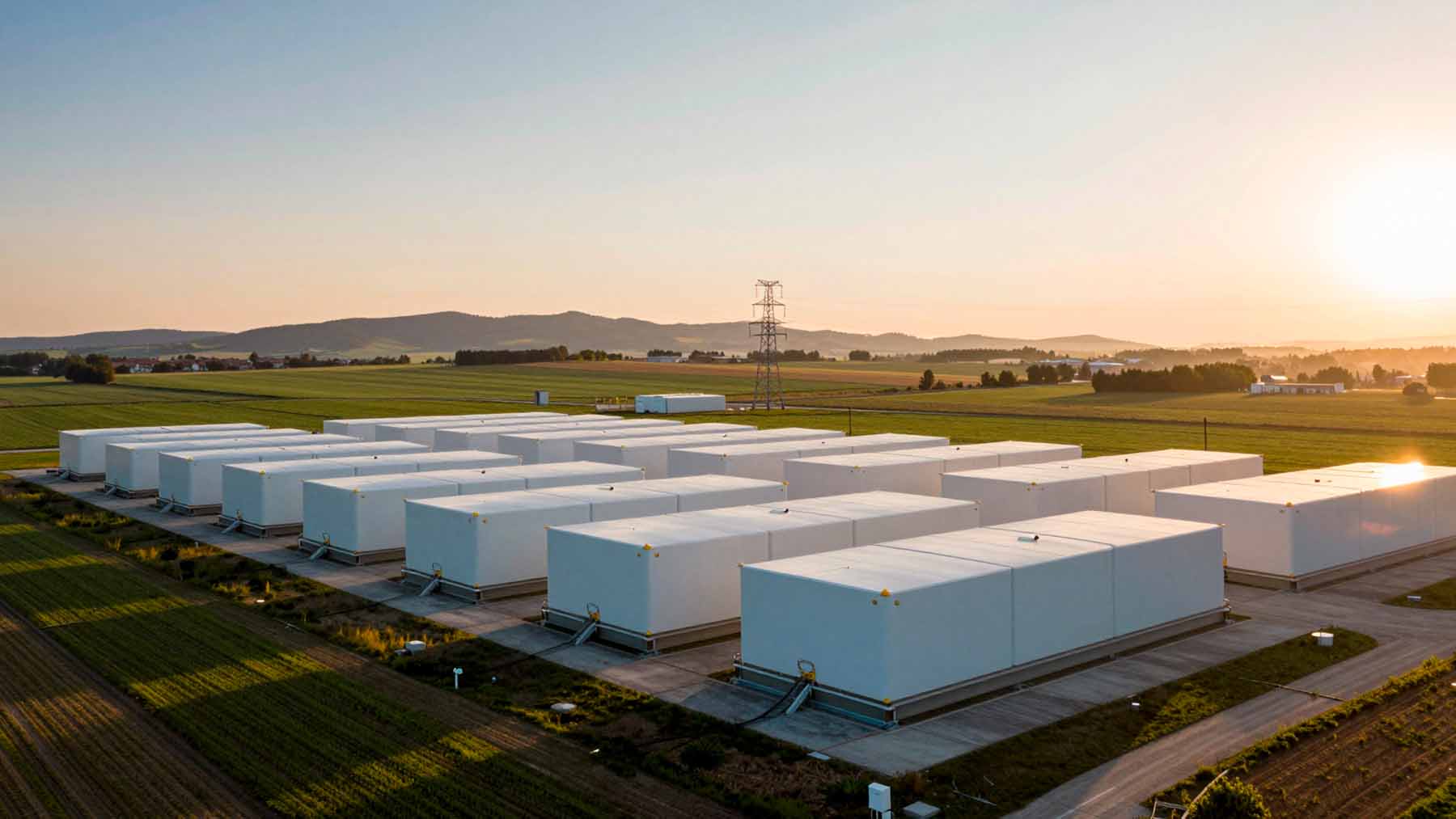 AI-made
German energy company EnBW and renewable developer Zelestra have signed a long-term tolling agreement covering 300 MW — or 1.2 GWh — of battery storage capacity at a project in Emilia-Romagna, northern Italy. Construction is scheduled to begin in 2027, with full operations expected in 2028.
The deal secures EnBW’s share of what will be one of Europe’s largest standalone battery storage projects—and signals how contracted revenue structures are increasingly shaping the economics of utility-scale storage across the continent.
Deal overview: 300 MW secured under long-term tolling agreement
The 300 MW EnBW is off-taking represents a share of Zelestra’s larger, approximately 500 MW, four-hour battery storage project in Emilia-Romagna. That 300 MW slice translates to roughly 1.2 GWh of flexible capacity — enough to make a real difference in Italy’s grid balancing picture.
Zelestra’s experience across Spain, Germany, and Italy also made the deal easier to structure—both parties came to the table with complementary capabilities.
Under the tolling structure, Zelestra handles development and construction while EnBW offtakes the agreed share of capacity over the long term. The developer builds; the energy company commercializes. Clean and simple.
This agreement also completes Zelestra’s broader ambitions for the site. The company’s full 2 GWh battery storage project is now entirely contracted—previously only part of that capacity had been secured, and this deal fills the remaining gap, clearing the path to construction.
Why the agreement was structured: Grid flexibility and revenue certainty
Italy’s power grid is under growing pressure. As solar and wind generation expands, the system needs more flexible capacity to absorb surpluses, fill gaps, and keep frequency stable. Battery storage is increasingly the answer, but the economics only work when there’s a reliable revenue stream attached.
That’s where long-term tolling agreements come in. Without a contracted offtake, standalone large-scale battery projects struggle to attract financing—lenders want predictability, and a deal like this gives them exactly that: a known counterparty, a fixed structure, and a defined term.
For EnBW, the agreement fits neatly into its existing Italian footprint. The company already operates there and has been building out its flexibility and storage portfolio across Europe. Adding 1.2 GWh of contracted Italian capacity strengthens that position without requiring EnBW to take on development risk. Zelestra’s experience across Spain, Germany, and Italy also made the deal easier to structure—both parties came to the table with complementary capabilities.
Expected effects: Grid resilience and renewable integration in Italy
Emilia-Romagna isn’t a random location. The region has strong industrial electricity demand, rising renewable penetration, and a recognized need for flexible capacity to manage grid congestion and maintain stability—a logical place to site one of Europe’s largest standalone battery assets.
Once operational in 2028, the project is expected to provide grid balancing services, support renewable integration, and help reduce transmission congestion. Those are broad claims, but they reflect the genuine role large-scale battery storage plays in modern power systems: absorbing excess generation and discharging when demand peaks.
Italy has committed to significant emissions reductions and renewable expansion targets. Flexible storage capacity is a prerequisite for hitting those targets without compromising grid reliability. At approximately 500 MW and 2 GWh total, this project would rank among the continent’s biggest when it comes online—and calling it one of Europe’s largest standalone battery storage assets isn’t an overstatement.
Background: Zelestra’s growth in Italy and the wider European storage market
Zelestra has been moving fast in Italy. The company currently holds a 1.4 GW pipeline of solar and battery storage projects in the country and has stated it aims to double that figure in 2025 — an aggressive target, but recent deal activity suggests it’s not just talk.
In December 2025, Zelestra secured contracts for nine projects under Italy’s FER X renewable energy auctions, adding 168 MW of new solar capacity. Taken together with the Emilia-Romagna battery deal, a clear picture emerges: a company scaling quickly across multiple technologies in a single market.
EnBW, one of Germany’s largest energy companies, has been expanding its flexibility and storage portfolio as part of a broader energy transition strategy. Italy’s evolving market offers real opportunities for that kind of positioning, and this agreement reinforces the company’s foothold there.
Step back further, and the deal reflects a pattern playing out across Europe. Utility-scale battery storage is growing fast, but it needs long-term offtake agreements to get built. Developers need revenue certainty; energy companies need flexible capacity. Tolling agreements bridge that gap — and deals like this one are becoming the template.
EnBW has a share of Zelestra’s 500 MW, 4-hour project
EnBW and Zelestra have signed a long-term tolling agreement for 300 MW — roughly 1.2 GWh — of battery storage capacity at a project in Emilia-Romagna, northern Italy. The agreement covers EnBW’s share of Zelestra’s larger approximately 500 MW, 4-hour project, which is now fully contracted at 2 GWh total.
Construction begins in 2027, with full operations expected in 2028. The project is intended to provide grid flexibility, support renewable integration, and contribute to Italy’s decarbonization goals and is described as one of Europe’s largest standalone battery storage assets. For Zelestra, it adds to a rapidly growing Italian pipeline. For EnBW, it reinforces an established position in the Italian power market.
Kelly is an experienced writer with 15 years of experience exploring the big stories that shape our world, from tech breakthroughs and space exploration to climate, energy, and the fascinating quirks of science. She has a talent for turning complex ideas into sharp, memorable insights that stay with readers long after they’ve finished reading.
