
Engineers flattened a power module into a dinner-plate-sized “pancake,” and it now moves electricity with up to nine times less hidden resistance
 AI-made
Our power grids are hitting a wall. AI data centers are devouring electricity at record speeds. Electric cars, trucks, and high-tech factories are pulling more power than ever before.
Our current infrastructure simply cannot keep up with this massive demand.
The standard fix seems obvious: just build more power plants. But researchers at the National Renewable Energy Laboratory (NREL) have a smarter idea. Instead of generating more electricity, they want to stop wasting what we already have.
It can easily swap in future wide-bandgap semiconductors like gallium nitride or ultra-wide-bandgap materials like gallium oxide as they hit the market.
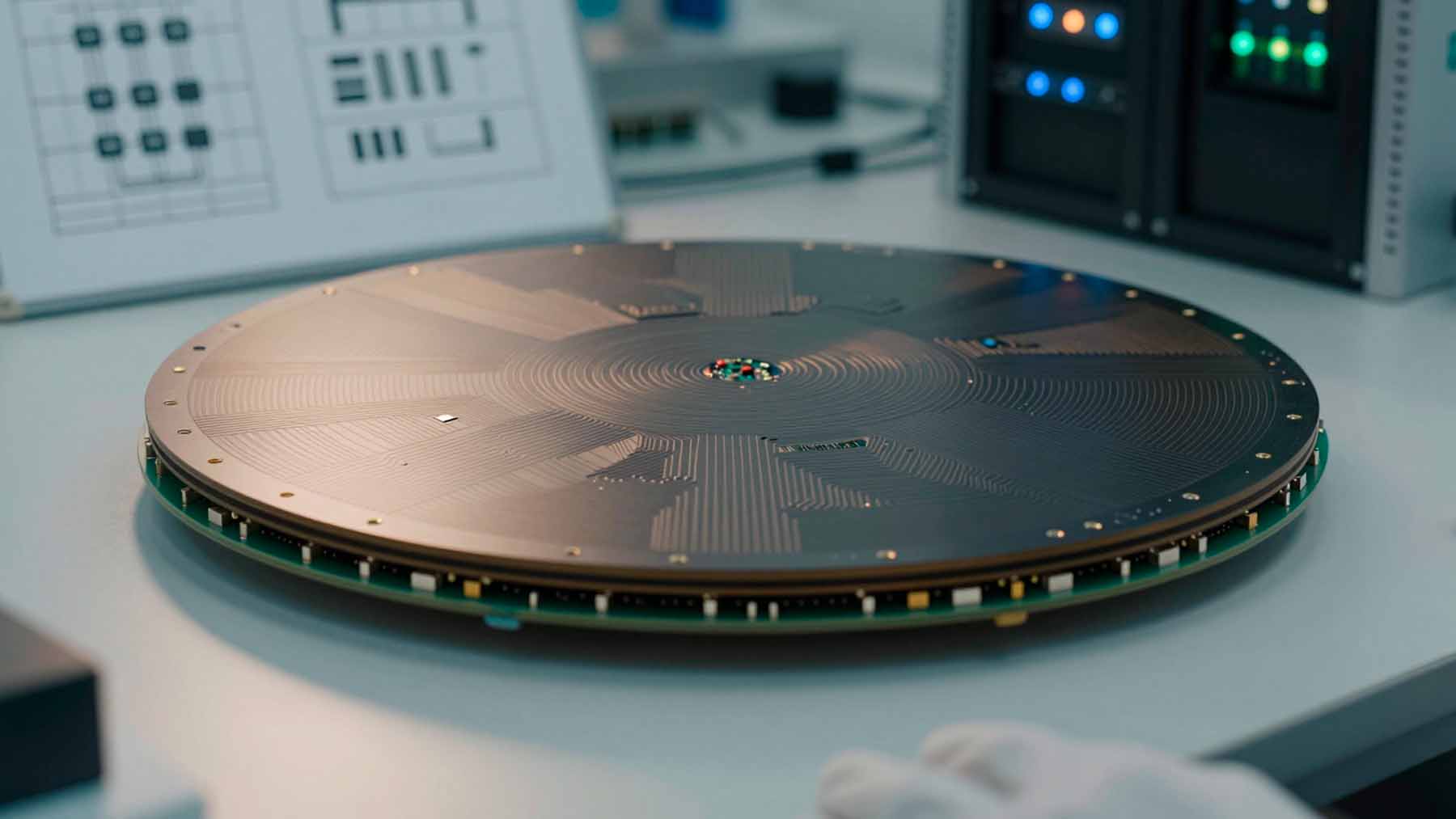
To do that, they built something remarkable. It looks like a simple dinner plate, but it could change everything.
A power grid under pressure
Think about how electricity travels. It goes through many conversion steps before it powers your home.
Power leaves the plant and hits a local transformer. It travels to a substation, enters your building, and powers your device. At every single step, power electronics control the flow.
These electronics work behind the scenes everywhere, but they are quiet energy thieves.
Tiny amounts of power get lost at every single junction. Across millions of devices and miles of power lines, those tiny losses add up fast. In fact, grid losses in the U.S. average around 5% of total electricity transmitted. That equals billions of wasted dollars each year.
Plugging more generation into a leaky pipeline does not fix the leaks.
What ULIS is—and why it’s different
Enter NREL’s Ultra-Low Inductance Smart Power Module, or ULIS.
This little device uses advanced silicon carbide semiconductors. Because of this, it packs five times the power density of older module designs. It is rated at a massive 1,200 volts and 400 amps.
ULIS can handle heavy-duty jobs anywhere. It can run AI servers, power local grids, support microreactors, and fly in advanced aircraft.
Its real secret weapon is how it handles “parasitic inductance.”
Parasitic inductance is a hidden form of resistance. It slows down changes in electrical current and wastes energy as heat. ULIS cuts this unwanted resistance by seven to nine times compared to top-tier commercial modules.
With less resistance, electricity switches faster and cleaner. You get more usable power without burning extra fuel.
The ‘pancake’ design that made it possible
Traditional power modules stack their parts inside boxy, heavy packages. ULIS throws that old design out the window.
Instead, engineers arranged the circuitry in a flat, octagonal layout. It measures roughly 10 inches across—about the size of a dinner plate. This compact shape packs way more components into a much smaller footprint. It slashes both total size and weight.
Getting to this point took some weird experiments.
Early prototypes looked like hollow cylinders or blooming flowers. While those 3D shapes worked well electrically, they were a nightmare to manufacture. They were far too complex and expensive for real-world use.
Then came a breakthrough from researcher Sarwar Islam. He suggested flattening the whole structure out.
Engineer Shuofeng Zhao designed the module’s unique flux cancellation architecture. He summed up the fix perfectly: “We squished it flat, like a pancake, and suddenly we had a low-cost, high-performing design that was much easier to fabricate.”
That flat layout naturally cancels out magnetic interference, delivering super clean power.
Flexible materials and wireless operation
The physical materials make this design even smarter.
Standard modules bond copper onto heavy, rigid ceramic bases. That setup manages heat well, but it adds unwanted weight and bulk. ULIS replaces ceramic with a flexible polymer called Temprion.
This change lets engineers build a much thinner structure. Even better, it bonds using simple heat and pressure. No exotic, multi-million-dollar factory tooling required.
Manufacturers can build ULIS using standard equipment already on factory floors. This slashes production costs from thousands of dollars per unit down to just a few hundred dollars.
In the hardware world, low cost means fast adoption.
ULIS also operates completely wirelessly. It is controlled and monitored without physical signal cables, making it a self-contained unit.
Engineers can snap these modules together like Lego bricks. They fit into everything from cloud servers to high-altitude jets. NREL even filed a patent for its fast wireless communication protocol.
Where ULIS could make the biggest difference
On the U.S. electrical grid, ULIS can instantly eliminate conversion losses. It handles high heat easily and switches power fast, reducing long-term maintenance costs.
In aviation, weight is everything. Electric vertical takeoff and landing (eVTOL) aircraft struggle with heavy equipment. ULIS gives them a lightweight converter that fits into tight spaces without sacrificing power.
Looking further ahead, clean energy researchers are working hard on nuclear fusion. Fusion devices require ultra-fast pulses of intense electricity. ULIS’s low resistance makes it a prime candidate for these extreme systems.
What comes next
NREL has already made ULIS available for commercial licensing.
Engineers built this pancake to evolve over time. It can easily swap in future wide-bandgap semiconductors like gallium nitride or ultra-wide-bandgap materials like gallium oxide as they hit the market.
This small module delivers big results across the board. Making power electronics smaller, cheaper, and more efficient creates a massive ripple effect. We get cleaner energy, cheaper infrastructure, and hardware ready for the future.
Which brings us back to that simple dinner plate.
Why did engineers spend years perfecting a flat, wireless power disc?
Because the quickest way to solve a global energy crisis isn’t building bigger power plants—it’s stopping energy from leaking out of the system in the first place. This little pancake might just be the quiet key to keeping our high-tech world plugged in.
Kelly is an experienced writer with 15 years of experience exploring the big stories that shape our world, from tech breakthroughs and space exploration to climate, energy, and the fascinating quirks of science. She has a talent for turning complex ideas into sharp, memorable insights that stay with readers long after they’ve finished reading.
