
Deep-sea mining waste turns the ocean’s twilight zone into a “junk food” cafeteria, and marine life is already paying the price
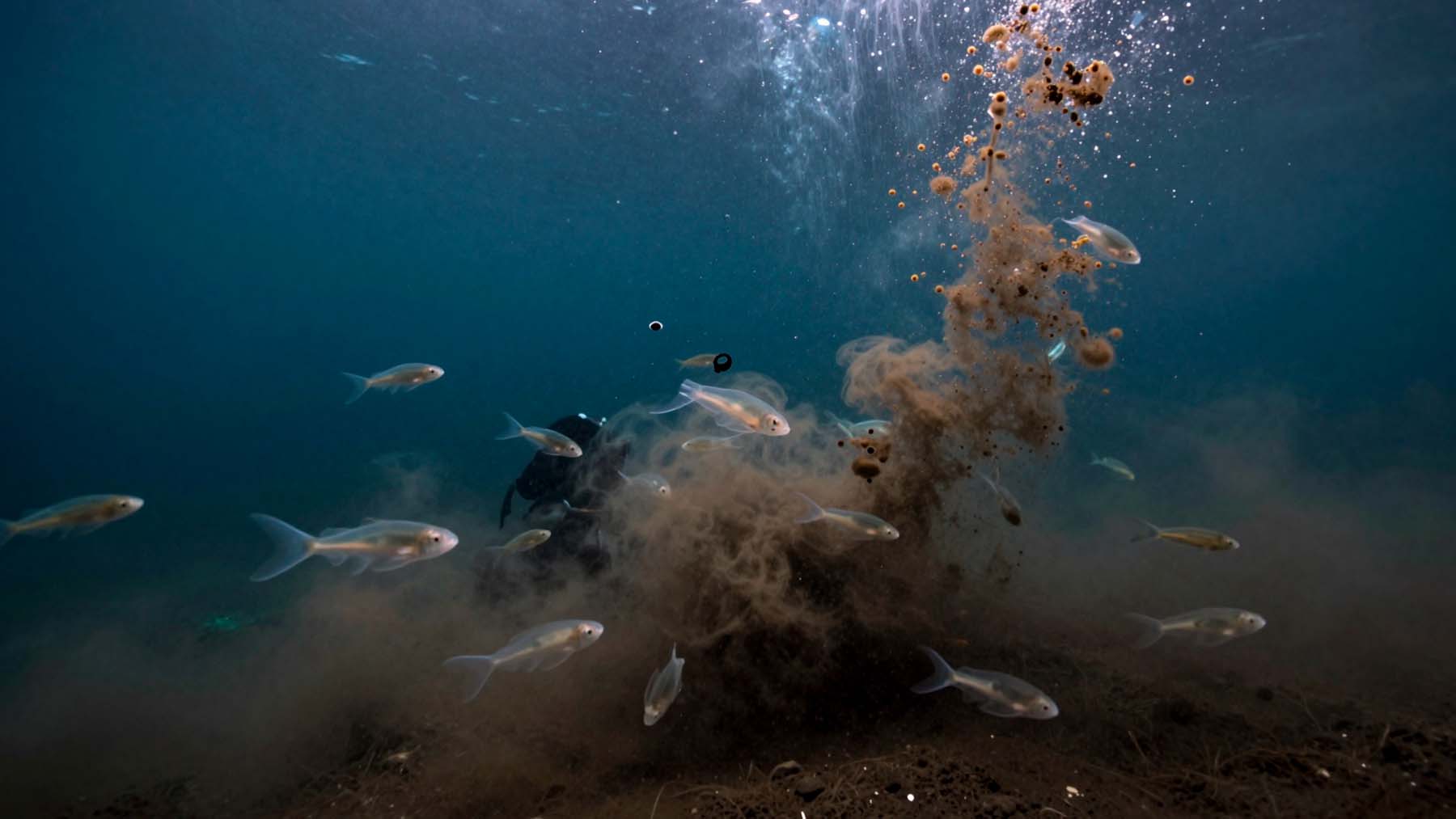
Hundreds of meters below the Pacific’s surface, in a dimly lit stretch of ocean most people have never heard of, the water can turn as murky as the mud-filled Mississippi River — not from a natural event, but from waste released during deep-sea mining operations.
That zone, known as the twilight zone, isn’t empty. It teems with zooplankton, krill, squid, and small fish that form the foundation of marine food webs stretching all the way to the surface. And for the first time, researchers have found direct evidence that mining plumes don’t just cloud those waters — they change what’s available to eat.
A hidden ecosystem under siege
The twilight zone — that dim corridor between 200 and 1,500 meters below the surface — is one of the ocean’s least understood habitats. It may also be one of the most important. Vast populations of zooplankton, krill, squid, small fish, and jellyfish-like creatures live here, forming the base of marine food webs that reach all the way up to the top predators we actually recognize by name.
Roughly 1.5 million square kilometers of the CCZ are already licensed for mining exploration, making it one of the most contested stretches of ocean on the planet.
Zooplankton and micronekton aren’t glamorous. But without them, the entire chain above collapses.
The Clarion-Clipperton Zone, a vast stretch of the central Pacific seafloor, has become the focal point for deep-sea mining interest. The seabed there is littered with polymetallic nodules — potato-sized rocks packed with cobalt, nickel, and copper, all minerals in high demand for electric vehicles and renewable energy technologies. Roughly 1.5 million square kilometers of the CCZ are already licensed for mining exploration, making it one of the most contested stretches of ocean on the planet.
What the mining process actually releases
Mining those nodules isn’t a clean operation. Machines crawl along the seafloor, scooping up nodules along with surrounding sediment and seawater, and that slurry gets pumped up to a surface vessel where the nodules are separated from the waste. What’s left — fine sediment, nodule fragments, displaced seawater — has to go somewhere.
That somewhere is back into the ocean.
Some companies have proposed releasing this waste within the twilight zone, at depths where it would mix into the water column rather than settling immediately back to the seafloor. It sounds like a practical solution. The problem is that nobody, until very recently, had measured what that discharge actually does to the life already living there.
The ‘junk food’ effect: first direct evidence
A 2022 mining test in the CCZ gave researchers from the University of Hawaiʻi at Mānoa a rare opportunity to study the plumes directly. By collecting and analyzing water samples from the depths where waste was discharged, the team documented something that hadn’t been recorded before: mining particles contained far fewer amino acids than the natural particles that zooplankton normally eat.
Amino acids are a direct measure of nutritional quality. Natural detrital particles — the microscopic organic material drifting down from upper waters — are what twilight-zone animals have evolved to consume. Mining plume particles look similar in size and density, but they’re essentially empty. When those particles flood the water column, they dilute the real food.
“It’s like dumping empty calories into a system that’s been running on a finely tuned diet for hundreds of years,” said co-author Jeffrey Drazen, a deep-sea ecologist and professor of oceanography at UH Mānoa. The junk food analogy isn’t just evocative — it’s mechanistically accurate. Animals can’t easily distinguish nutritious particles from barren ones. They eat what’s there.
How far the damage could ripple
The numbers from the study are hard to ignore. Researchers determined that 53% of zooplankton and 60% of micronekton would be affected by mining waste discharge at twilight-zone depths. That’s not a marginal impact on a handful of species — it’s a majority of the animals keeping the food web functional.
The consequences don’t stay contained to the twilight zone.
Many of these species are vertical migrants, traveling upward toward the surface each night to feed, then descending again by day, carrying carbon with them. That daily movement is part of how the ocean sequesters carbon and maintains its chemical balance. Disrupt the travelers, and you disrupt the transport. Follow the chain further and you reach fish, seabirds, and marine mammals — and then commercial fisheries. The CCZ sits along tuna migration routes, so a disruption to zooplankton populations in that corridor can ripple outward to seafood markets on the other side of the world.
A regulatory gap at the worst possible moment
Here’s what makes this finding especially urgent: no international rules currently govern where or how mining waste can be discharged into the ocean. The International Seabed Authority is in ongoing policy discussions, and NOAA is conducting environmental reviews, but binding regulations don’t yet exist.
Commercial-scale deep-sea mining hasn’t started. That’s not a reason for complacency — it’s a window.
“Before commercial deep-sea mining begins, it is essential to carefully consider the depth at which mining waste is discharged,” Drazen said. “The fate of these mining waste plumes and their impact on ocean ecosystems varies with depth, and improper discharge could cause harm to communities from the surface to the seafloor.”
The researchers are calling for discharge-depth regulations to be established before any commercial operation begins. The science now exists to inform those rules. What happens next depends on whether policymakers move before the machines do — and whether the twilight zone gets a seat at the table before it’s too late to matter.

Carlos is an engineer with strong expertise in technical and industrial topics. He previously worked at international companies such as Siemens and is multilingual.
