
Omega Oil & Gas begins multi-well Taroom Trough drilling program in Queensland, Australia
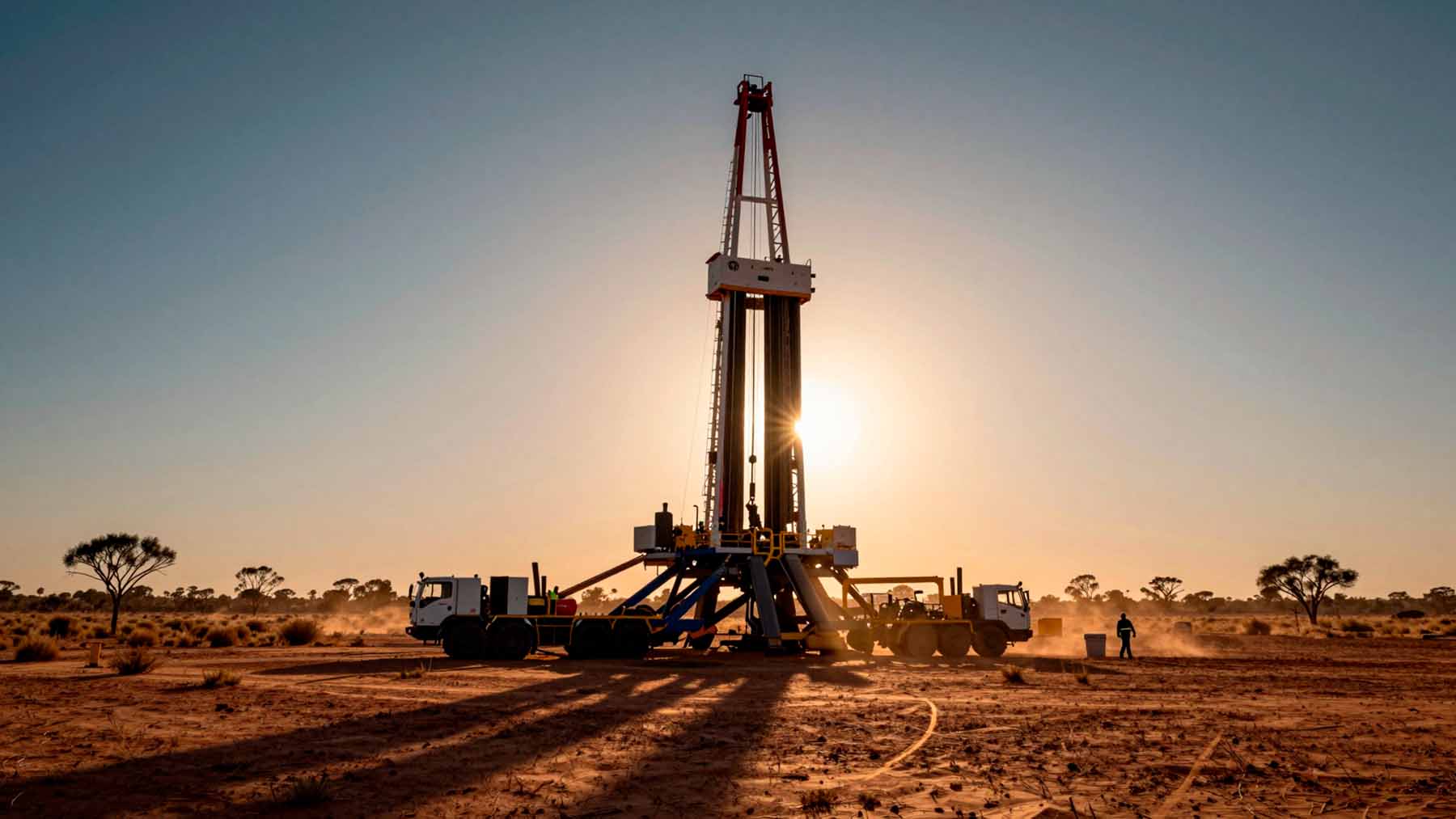 AI-made
Helmerich & Payne FlexRig 648 has started moving to the Canyon-3 well location on the eastern flank of Queensland’s Taroom Trough, and that means Omega Oil & Gas’s 2026/27 drilling program is officially underway. It’s the company’s biggest campaign yet—and Omega says it could be the most consequential drilling program in Australia in more than a decade.
Program launch and scope
The 2026/27 campaign covers four vertical wells and one or two horizontal wells, with fracture stimulation and flow testing planned across the board. Omega calls it “fully funded”—which matters in a sector where capital constraints routinely slow or kill exploration work before it gets going.
The ambition here is real. The program will evaluate five stacked Permian tight-sand reservoir intervals across Omega’s acreage in the Taroom Trough. That kind of multi-interval, multi-well approach is built to give a complete picture of the play — not just a snapshot from a single well. FlexRig 648 is now mobilizing to Canyon-3, and each vertical well, including rig moves between locations, is expected to take around 30 days.
At its core, Omega wants to confirm that overpressured, oil-and-gas-bearing Permian sands run continuously across its acreage—not just at one or two isolated spots.
Why the eastern flank was chosen
Omega’s focus on the eastern flank isn’t a random call. The company points to geological characteristics comparable to some of the top unconventional basins in the US — depositional setting, reservoir targets, structural configuration, and the presence of oil.
One factor stands out above the rest: reservoir overpressure. Significant overpressure across the eastern flank is considered a key productivity driver in unconventional reservoirs, supporting stronger oil and gas flow rates and improving commercial development potential. In tight-sand plays, where natural reservoir energy is everything, that’s a real edge.
Omega’s confidence isn’t just geological theory. The earlier Canyon-1, Canyon-1H, and Canyon-2 wells gave the company both early results and a technical foundation to build on. CEO Trevor Brown put it plainly: the company’s confidence “is supported by well results and a geological model built on many years of technical work and regional studies.”
Expected outcomes and commercial targets
The program has clear, layered goals. At its core, Omega wants to confirm that overpressured, oil-and-gas-bearing Permian sands run continuously across its acreage—not just at one or two isolated spots. Proving that continuity is the first step toward demonstrating resource scale.
From there, the target is repeatable commercial flow rates. A single good well can be encouraging, but it can also be misleading. Repeatable performance across multiple wells is what takes a play from interesting to credible.
The vertical wells do double duty. They generate standalone appraisal data and inform where horizontal wells go next — results from the vertical program will provide the technical basis for assessing commercial flow performance under stimulated conditions, so the horizontal wells won’t go in blind. That sequencing is a disciplined way to deploy capital.
Infrastructure and access progress
Drilling programs don’t start with a rig. They start with pads, roads, and access agreements — and Omega had already made solid progress on that front before the campaign kicked off.
Two well pads are built in PCA 342, covering Canyon-3 and Canyon-4. A third is under construction at the southern end of ATP 2081, ready for the program’s later wells. The land-access timeline for ATP 2081 is worth calling out separately: Omega secured access for the first well location in that tenure in just over three months from the date the tenure was granted. In Australian onshore exploration, where access negotiations can drag on far longer, that’s a genuine operational win.
Broader context for Australian energy
Omega’s program fits into a bigger story about Australian energy supply. The company has framed the Taroom Trough’s hydrocarbons as potentially significant not just commercially but also for Australia’s energy and liquid fuel security—a pointed claim in a country that imports the majority of its liquid fuels and produces limited domestic oil.
In Omega’s view, the eastern flank represents an internationally significant petroleum system, defined by scale, reservoir quality, structural setting, and liquid potential. Whether that holds up depends on what the wells actually find. Omega isn’t the only operator in the Taroom Trough either; multiple companies are running appraisal work across the basin, and that activity keeps improving regional geological understanding for everyone working the play.
Omega Oil & Gas has officially launched its 2026/27 drilling program in Queensland’s Taroom Trough, with FlexRig 648 mobilizing to the Canyon-3 well location. The fully funded campaign — Omega’s largest to date — will drill four vertical wells and one or two horizontal wells, evaluating five stacked Permian tight-sand intervals. Each vertical well is expected to take around 30 days. Well pads are already in place for Canyon-3 and Canyon-4, with a third under construction. The program aims to confirm reservoir continuity, demonstrate resource scale, and establish repeatable commercial flow rates, with results expected to flow steadily as the campaign progresses.
Kelly is an experienced writer with 15 years of experience exploring the big stories that shape our world, from tech breakthroughs and space exploration to climate, energy, and the fascinating quirks of science. She has a talent for turning complex ideas into sharp, memorable insights that stay with readers long after they’ve finished reading.
