
Jadestone Energy cuts 2026 production guidance after Cyclone Narelle disrupts Stag field and CWLH FPSO restart delays
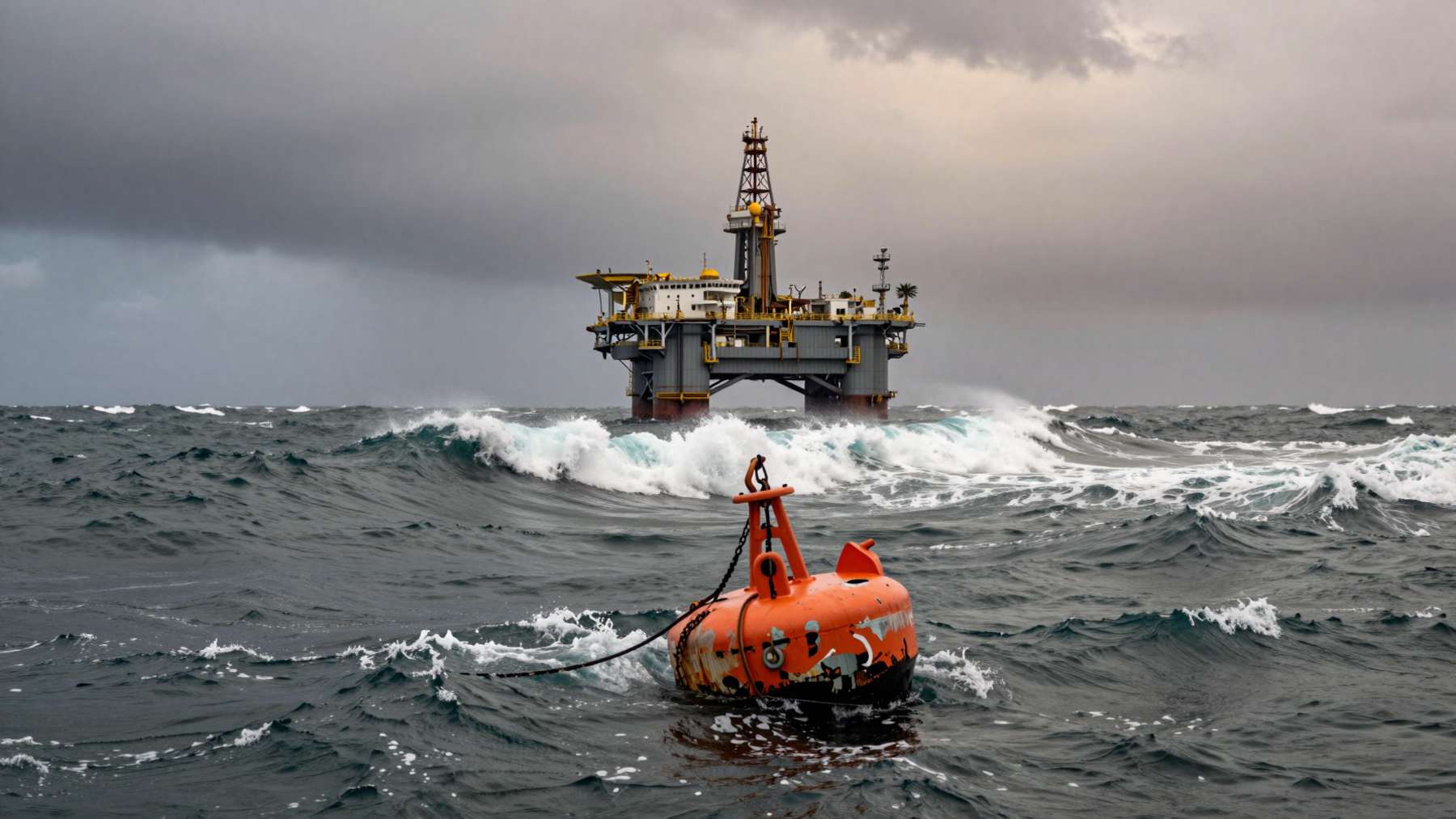 Image generated with artificial intelligence
Jadestone Energy posted average group production of 15,281 boepd for the first half of 2026—down roughly 25% from 20,368 boepd in the same period a year earlier. The AIM-listed oil and gas company has since cut its full-year 2026 production guidance to 16,000–18,000 boepd from a prior range of 18,000–21,000 boepd.
Two assets are behind the gap: the Stag field off Australia, shut in since March after Cyclone Narelle caused damage, and the CWLH fields, where the restart of the Okha FPSO has been held up by a subsea riser issue. Jadestone’s unaudited half-year results are due August 27, 2026.
Production falls and guidance is revised downward
H1 2026 average group production came in at 15,281 boepd, down roughly 25% from 20,368 boepd in the same period of 2025. That gap pushed Jadestone to revise its full-year 2026 production guidance to 16,000–18,000 boepd from a prior range of 18,000–21,000 boepd.
Business interruption insurance cover for the Stag shut-in runs to May 2027, and an initial insurance payment of approximately US$12 million is expected in Q3 2026.
The midpoint of that revision is 2,500 boepd—actually smaller than the 3,250 boepd of annualized deferred output from Stag and CWLH combined. The difference reflects stronger-than-expected performance from the rest of the portfolio.
Jadestone Energy left its other guidance unchanged. Operating cost guidance stays at US$260–300 million, though the company now expects to land in the upper half of that range because of Australian dollar strength and higher oil-linked costs. Capital expenditure guidance of US$50–80 million is also unchanged, even after the decision to drill a third Malaysia well.
Cyclone Narelle and the CWLH riser issue drive the shortfall
The Stag field, offshore Western Australia, was shut in on March 23, 2026, ahead of Cyclone Narelle. The storm generated estimated wave heights of 59 feet at the field, damaging the CALM buoy used for tanker mooring and offloading. Efforts to refloat the existing buoy didn’t pan out.
Jadestone has since identified a replacement CALM buoy, currently going through final engineering due diligence. Deployment is expected in Q1 2027, with production restart targeted for Q2 2027. Business interruption insurance cover for the Stag shut-in runs to May 2027, and an initial insurance payment of approximately US$12 million is expected in Q3 2026.
At CWLH, the Okha FPSO returned from scheduled dry-dock in May 2026, and pre-return inspections uncovered a fault in the subsea riser’s J tube. Operator Woodside has confirmed the repair requirements and developed detailed plans for a safe return to operations, with production resumption targeted for around the end of Q3 2026, subject to regulatory approval.
Those disruptions pushed H1 2026 operating costs to US$142.2 million, up from US$112.8 million in H1 2025. The increase reflects the CWLH dry-dock, Australian dollar strength, higher fuel-related logistics costs, and roughly US$6 million in Stag cyclone-related expenses—the latter expected to be recovered through insurance.
Malaysia drilling delivers record results under budget
While Stag and CWLH weighed on output, Jadestone’s Malaysia campaign went the other way entirely. The company drilled three infill wells at the East Belumut field within the PM323 PSC, where it holds a 60% interest, and brought all three online. The overall campaign came in more than 20% below budget.
The first two wells alone increased East Belumut production by over 150%, adding approximately 6,000 bopd—strong enough to justify drilling a contingent third well, EBA-19ST2, which wasn’t part of the original plan. That well featured a 2,625-foot horizontal reservoir section at a total measured depth of 16,814 feet and came onstream at approximately 2,500 bopd.
East Belumut is now producing at a gross rate of around 12,000 bopd, more than three times its pre-campaign rate. The campaign also set a record for extended-reach drilling across all basins in Malaysia.
Vietnam gas project advances toward year-end sanction
Jadestone’s most significant growth asset is the Nam Du/U Minh gas development offshore Vietnam. The first half of 2026 brought several concrete milestones on that front.
The Vietnamese government approved the field development plan in March 2026, enabling the booking of approximately 32 MMboe of gross 2P reserves for the project’s initial phase. A gas sales and purchase agreement followed in April. A farm-out process launched in May attracted what Jadestone describes as “strong interest” from reputable industry players, with bids due by the end of July. Separately, a preferred bidder for the FPSO contract has been selected and recommended to upstream regulator Petrovietnam for approval.
Jadestone says it’s on track to conclude the farm-out and formally sanction the initial project phase before the end of 2026.
Financials: revenues up 3%, net debt reduced after bond issue
Despite lower production volumes, H1 2026 revenues came in at US$234.0 million, up 3% from US$228.3 million in H1 2025. A 17% rise in the average realized oil price—to US$90.43/bbl from US$77.45/bbl—offset the impact of fewer liftings.
In March 2026, Jadestone completed a US$200 million senior secured bond issue at a 12% coupon, maturing in 2031, with proceeds going toward repaying the company’s reserves-based lending facility. Net debt fell to US$25.7 million at June 30, 2026, down from US$89.1 million at end-2025, with cash (including restricted cash) of US$174.3 million.
Capital expenditure of US$35.3 million in H1 2026 came in well below the US$69.4 million spent in H1 2025, with the East Belumut campaign accounting for most of that spend. The company’s 2025–2027 free cash flow guidance of US$200–240 million (pre-debt servicing) stays unchanged. Full unaudited H1 2026 results are scheduled for release on August 27, 2026.
Kelly is an experienced writer with 15 years of experience exploring the big stories that shape our world, from tech breakthroughs and space exploration to climate, energy, and the fascinating quirks of science. She has a talent for turning complex ideas into sharp, memorable insights that stay with readers long after they’ve finished reading.
