
Cheniere Energy’s second-quarter net income nearly doubles to $3.07 billion as LNG demand surges
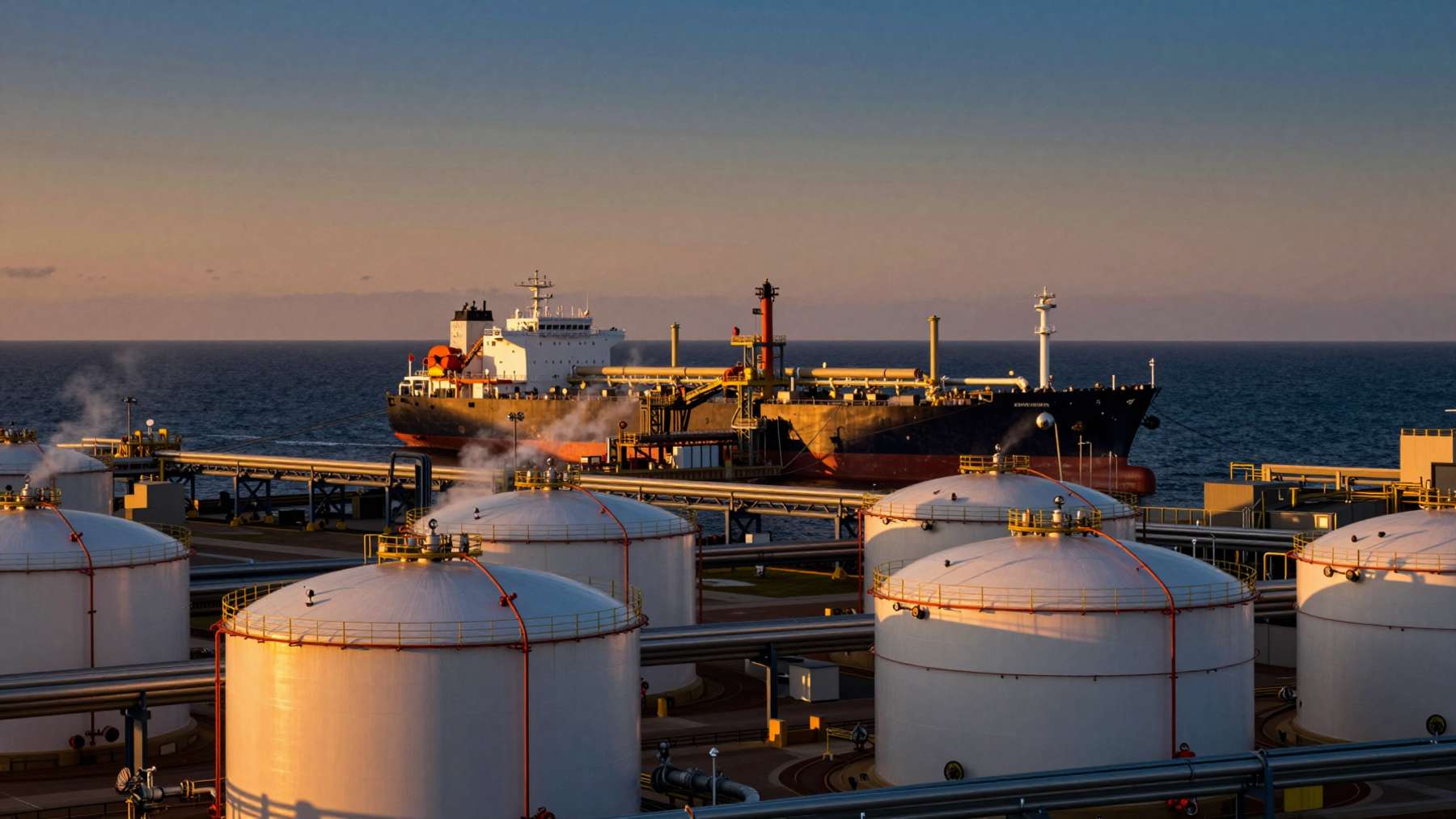 Image generated with artificial intelligence
Cheniere Energy nearly doubled its second-quarter net income on Thursday, reporting $3.07 billion in profit for the quarter ended June 30—up from $1.63 billion a year earlier. The Houston-based LNG producer also posted revenues of $5.64 billion from liquefied natural gas sales, compared with $4.52 billion in the same period last year, as demand for the fuel continued to climb.
Cheniere posts strong Q2 financial results
The numbers are hard to ignore. Cheniere’s net income jumped from $1.63 billion in Q2 2025 to $3.07 billion in Q2 2026—nearly 90% growth in a single year. That kind of swing doesn’t happen by accident.
LNG revenue was the main engine. The company pulled in $5.64 billion from LNG sales during the quarter, up from $4.52 billion a year ago—over a billion dollars in additional revenue from one product line, in twelve months.
Net income nearly doubled to $3.07 billion, driven primarily by a sharp increase in LNG revenues—up from $4.52 billion to $5.64 billion compared to Q2 2025.
Regasification revenues held flat at $34 million, unchanged from the prior year. That segment didn’t drag results down—it just didn’t add anything to the growth story.
Investors responded fast. Shares rose roughly 2% in premarket trading after the announcement, and for a company already seen as a cornerstone of U.S. energy export infrastructure, that reaction signals continued confidence from Wall Street.
Rising global LNG demand drives revenue growth
Behind Cheniere’s numbers is a broader shift in global energy markets. Demand for liquefied natural gas has been climbing steadily, and the U.S. has put itself right at the center of that growth.
According to the U.S. Energy Information Administration, the U.S. shipped 15 billion cubic feet per day of LNG in 2026—a 26% increase compared to 2025. That scale of expansion in a single year helps explain why companies like Cheniere are reporting dramatically higher revenues.
The U.S. is now the world’s largest LNG exporter, ahead of Qatar and Australia. That title carries real commercial weight—American producers are supplying a growing share of the fuel powering homes, factories, and power plants across Europe and Asia. Cheniere, as one of the country’s biggest LNG operators, sits directly in the path of that demand.
Trump’s removal of LNG export moratorium adds sector momentum
Policy played a role too. When President Donald Trump took office in early 2026, one of his first moves was lifting a moratorium on new LNG export permits—removing a significant regulatory obstacle that had been hanging over the sector.
The effect showed up quickly in commercial activity. With permitting uncertainty reduced, companies could move forward on deals, contracts, and capacity planning with far more confidence. The broader LNG export sector gained momentum as a result.
Cheniere, headquartered in Houston, Texas, is among the companies best positioned to benefit from that shift. Its existing infrastructure and operational scale mean it can capitalize on an expanded permitting environment faster than newer entrants. The policy change didn’t create Cheniere’s success, but it helped clear the runway.
U.S. LNG export sector context
Cheniere’s results don’t exist in isolation. They reflect a larger transformation in how the U.S. fits into global energy trade—a country that surpassed both Qatar and Australia to claim the top LNG exporter title, a shift that would’ve seemed unlikely just a decade ago.
Cheniere Energy operates some of the most significant LNG infrastructure in the country, including the Sabine Pass facility in Louisiana, which has served as a key export hub moving large volumes to international buyers across multiple continents.
European countries accelerated their search for non-Russian gas supplies in recent years, and American LNG has filled a meaningful part of that gap. Asian markets have similarly driven long-term contract activity. Sustained investment has followed, with new projects and terminal upgrades advancing as producers and buyers locked in supply agreements. Cheniere has been part of that expansion wave throughout.
Company-specific execution and favorable market conditions
Cheniere Energy’s Q2 2026 results mark a significant year-over-year improvement across its core business. Net income nearly doubled to $3.07 billion, driven primarily by a sharp increase in LNG revenues—up from $4.52 billion to $5.64 billion compared to Q2 2025.
The results reflect both company-specific execution and favorable market conditions. U.S. LNG exports grew 26% in 2026, reaching 15 billion cubic feet per day according to the EIA, with the U.S. now holding the top spot globally ahead of Qatar and Australia.
President Trump’s decision to lift the LNG export permit moratorium added further momentum to the sector early in 2026. Cheniere, with its established terminals and operational capacity, is among the primary beneficiaries of that policy environment. Regasification revenues remained flat at $34 million—a minor footnote in an otherwise strong quarter. Shares rose about 2% in premarket trading following the announcement.
Kelly is an experienced writer with 15 years of experience exploring the big stories that shape our world, from tech breakthroughs and space exploration to climate, energy, and the fascinating quirks of science. She has a talent for turning complex ideas into sharp, memorable insights that stay with readers long after they’ve finished reading.
