
Fred. Olsen Renewables submits planning application for 144MW Invercassley wind farm in Sutherland
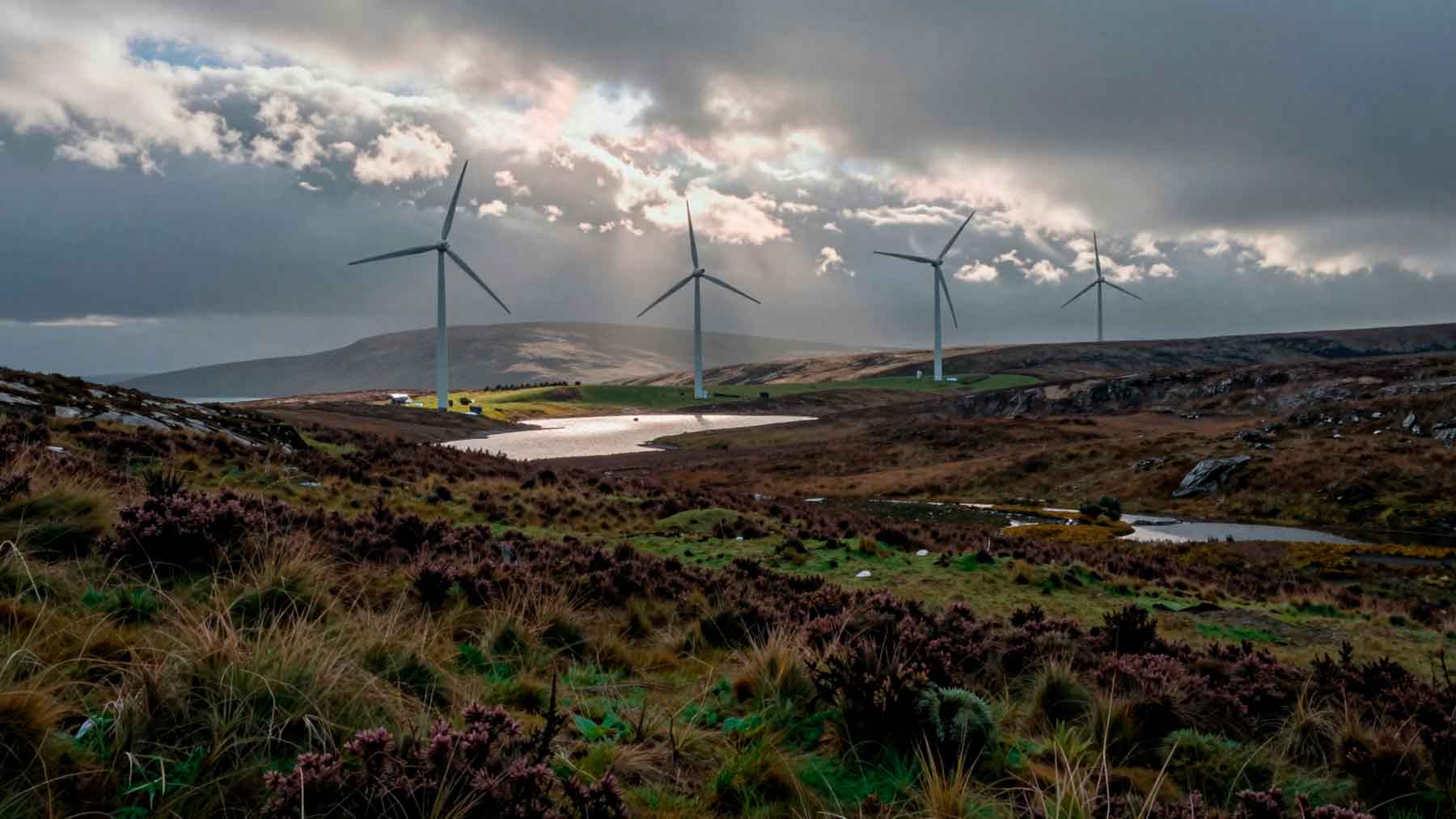 Image generated with artificial intelligence
Fred. Olsen Renewables has filed a Section 36 application with Scottish ministers for a wind farm at Invercassley in Sutherland. The proposed development would place 20 turbines roughly 2.8 miles northwest of Rosehall, near Lairg, with a combined capacity of 144 megawatts.
Planning application filed for Invercassley wind farm
Scottish ministers now have the application on their desk—they hold authority to approve or reject large-scale energy projects like this one. Fred. Olsen Renewables ran two rounds of public consultation before filing, and that process actually shaped what ended up getting submitted. The site sits in Sutherland’s Kyle of Sutherland area, known for strong, consistent wind. If it gets the green light, the project will run for 35 years.
Design changes made in response to community feedback
What Fred. Olsen Renewables submitted looks pretty different from what they first showed the public. Six consultation events, plus follow-up discussions, generated enough feedback to push the developer into making real changes—not cosmetic ones.
Two rounds of public consultation led to the removal of a battery storage facility, a reduction from 22 to 20 turbines, and height reductions on two of them.
The biggest shift: the battery storage facility is gone entirely. Local opposition was strong, and the company dropped it. Project Manager Laura Bell said the decision “was not taken lightly,” but that the strength of community feeling made clear how much the issue mattered to residents.
The turbine count fell from 22 down to 20. Two of those turbines also got shorter—from 755 feet to 656 feet. That’s a meaningful back-and-forth, not a tick-box consultation exercise.
Projected energy output and carbon impact
At 144MW, Invercassley is designed to power around 118,800 households per year, giving a sense of where it fits in Scotland’s broader energy picture.
On carbon, the developer projects the wind farm will reach carbon neutrality after just 2.1 years, based on a grid mix calculation. After that point, it’s estimated to offset around 107,167 tons of carbon annually—a significant cumulative reduction over 35 years, though these remain projections rather than guarantees. That 35-year lifespan matters on its own terms: any community benefit, environmental commitment, or economic arrangement tied to this project is a long-haul proposition.
Community Benefit Fund and local commitments
Fred. Olsen Renewables has put a specific number on what the local area would receive: £720,000 per year in community benefit payments. Over the project’s 35-year life, that totals an estimated £25.2 million for the North Highland region.
Bell said the company plans to work closely with the community on traffic management to “minimize impacts wherever possible” and pointed to local supply chain opportunities alongside ensuring “long-term community wealth building opportunities are meaningful and tailored to the community’s needs.” These are broad commitments at this stage—the specifics would be worked out if and when the project gets consent.
One local resident, Alexander Mcaughtrie from Bonar Bridge, came out in support. He cited the informative November exhibition and pointed to practical benefits—road improvements, funding for local groups—that he connects to wind development in the area, and also welcomed the peatland restoration and riparian planting in the proposal. His view reflects one strand of local opinion. Bell herself acknowledged “a mix of feelings about the proposal.”
Environmental and biodiversity measures included in the proposal
The application includes a Habitat Management Plan covering several types of environmental work: native broadleaf and riparian woodland planting, peatland restoration, and grassland habitat enhancement.
These aren’t optional extras—they’re part of the formal submission. Peatland restoration is especially relevant in Sutherland, where peatlands are both ecologically significant and sensitive to construction disturbance. Riparian planting along watercourses, as Mcaughtrie noted, can deliver benefits reaching well beyond the wind farm’s own boundary. The site’s wind resource is described as consistent, a basic but essential factor when assessing whether a project this size makes practical sense in a given location.
Community Benefit Fund estimated at £25.2 million
Fred. Olsen Renewables has submitted a Section 36 planning application to the Scottish Government for a 20-turbine, 144MW wind farm at Invercassley in Sutherland, around 2.8 miles northwest of Rosehall near Lairg. Two rounds of public consultation led to the removal of a battery storage facility, a reduction from 22 to 20 turbines, and height reductions on two of them.
If approved, the project would run for 35 years, generating electricity for an estimated 118,800 households annually and offsetting around 107,167 tons of carbon per year after a projected 2.1-year payback period. A Community Benefit Fund estimated at £25.2 million—paid at £720,000 per year—is planned for the North Highland region. Environmental commitments include peatland restoration, native woodland planting, and grassland habitat enhancement. More information is available at www.invercassleywindfarm.co.uk.
Kelly is an experienced writer with 15 years of experience exploring the big stories that shape our world, from tech breakthroughs and space exploration to climate, energy, and the fascinating quirks of science. She has a talent for turning complex ideas into sharp, memorable insights that stay with readers long after they’ve finished reading.
