
Piling up at 260,000 tons a year inside solar wafer plants, silicon kerf waste enters batteries as an anode and cuts production carbon by 77 percent
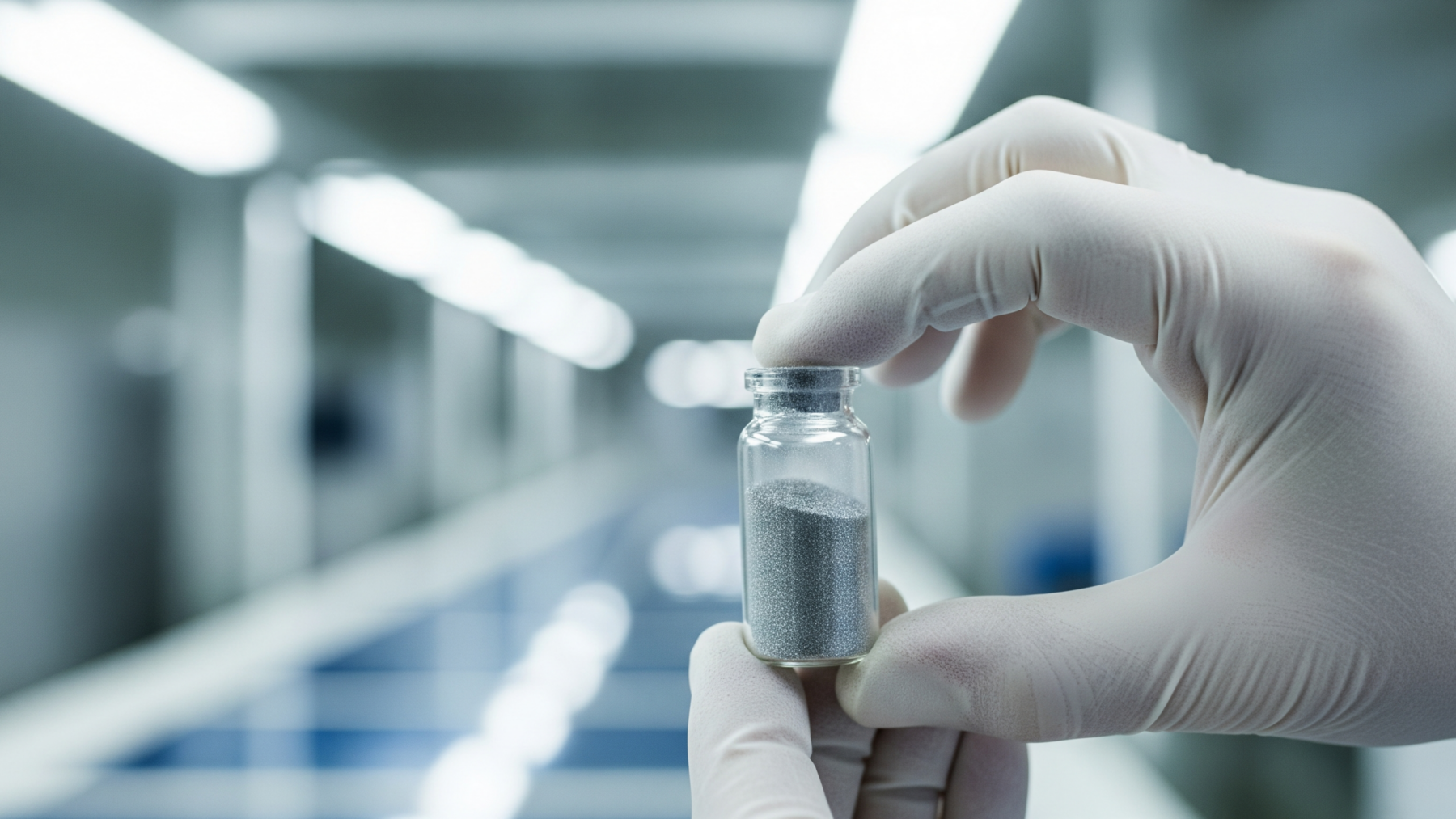 Image generated with artificial intelligence
A thin steel wire coated in diamond grit slices a silicon ingot into wafers barely thicker than a human hair.
The dust it leaves falls into a slurry tray below the blade.
That slurry, grey and fine and slightly iridescent, is the part of solar manufacturing that almost nobody discusses in public.
If the anode in the storage system paired with that panel is also made from reclaimed kerf, the embodied carbon savings stack across both assets in the same project.
It is called silicon kerf, and every wafer factory on earth produces it by the barrel, shift after shift.
That barrel is now being reconsidered, because the same powder that once went to landfill turns out to be one of the most promising battery anode materials available at scale.
So what, exactly, makes it work?
Why silicon outperforms graphite in a battery anode, and why kerf makes it cheap
Graphite has dominated the battery anode for decades, but it stores only a fraction of the lithium that silicon can absorb. Silicon anodes can hold roughly ten times more lithium per unit of weight than graphite, which is why battery engineers have chased the material for years despite its tendency to crack as it swells during charging.
The cracking problem is real, but particle size controls it. When silicon is ground fine enough, the expansion forces are distributed across billions of tiny grains rather than concentrated in a single large crystal. Kerf powder arrives at roughly the right size without any additional milling step, because the wire saw already reduces bulk ingot material to micron scale particles.
That shortcut matters enormously for cost. Producing engineered nano silicon from raw feedstock is energy intensive and expensive. Kerf skips most of that process, which is why lifecycle carbon drops so sharply when researchers substitute it for conventionally processed silicon anode material.
Inside the wafer plant, where 260,000 tons of powder accumulate every year
A modern wafer plant runs its wire saws around the clock. Each pass through an ingot removes a slice roughly 150 microns thick and generates a kerf loss of almost the same width, meaning that for every wafer produced, nearly half the ingot is turned to dust before it ever sees sunlight.
Scaled across the global solar supply chain, that loss adds up to an estimated 260,000 metric tons of silicon kerf per year. Most of it has historically been mixed with coolant fluid and either landfilled or sold at very low value for minor industrial uses such as steel deoxidation or low grade abrasives.
The powder is not contaminated in any dangerous sense. It is simply a byproduct the solar industry never needed to care about, because wafer economics made recovery seem not worth the trouble. That calculation is shifting fast as battery demand accelerates and anode grade silicon commands a real market price.
The evidence: 77 percent lower carbon and cycle performance that holds
Researchers processing reclaimed kerf into anode grade silicon powder have reported a 77 percent reduction in production phase carbon emissions compared with synthesizing silicon anode material from virgin feedstock. The saving comes from avoided mining, avoided high-temperature chemical reduction steps, and the shorter processing chain that kerf requires.
On performance, cells built with kerf-derived anodes have demonstrated cycle stability competitive with engineered nano silicon in laboratory conditions. The key is surface treatment: a thin carbon coating applied after particle sizing prevents the silicon from reacting destructively with the electrolyte and limits volume expansion over hundreds of charge cycles. As the lead researcher on one recovery program described it, the material is not a compromise but a genuinely high-performing input that carries a much lower environmental cost than anything synthesized from scratch. The cycle data supports that assessment across multiple independent test programs.
The complication: logistics, purity and the supply chain that does not yet exist
The obstacle is not chemistry. It is infrastructure. Kerf currently leaves wafer plants mixed with polyethylene glycol coolant and metallic wire fragments, and separating those contaminants at scale requires a recovery step that most wafer manufacturers have never invested in.
Purity requirements for battery anodes are strict. Even small traces of iron from the wire saw can degrade cell performance, so the recovery process must include acid washing and particle classification before the powder is usable. That adds cost and requires facilities sitting between the wafer plant and the cell factory, a logistics gap that no standard supply chain currently fills. Some wafer producers have begun piloting on-site recovery units, and at least one partnership between a wafer manufacturer and a battery materials company is processing kerf at commercial volumes.
What it means for the solar-to-battery supply chain taking shape now
If kerf recovery scales, it creates a closed loop inside the clean energy supply chain itself. The same manufacturing step that converts silicon into a solar wafer would also generate the raw material for the battery that stores the electricity that wafer eventually produces. That circularity is rare in industrial systems and genuinely valuable when it appears.
The carbon arithmetic compounds over time. A solar panel built from kerf-wasting ingots already carries a lower manufacturing footprint than one from a plant that landfills its byproduct. If the anode in the storage system paired with that panel is also made from reclaimed kerf, the embodied carbon savings stack across both assets in the same project. Battery manufacturers sourcing silicon anodes are beginning to move from laboratory curiosity toward procurement discussion, and the U.S. Department of Energy has moved in the same direction, backing a program to recycle solar silicon into battery-grade anode material. Projects pairing solar generation with grid storage, including large-scale developments reshaping grid capacity in Arkansas, create exactly the demand signal that makes a kerf-to-anode supply chain worth building. The powder that fell beneath the blade for a decade may yet become one of the energy transition’s more elegant solutions.

Hugo is an engineer with strong technical expertise. Multilingual from an early age, his writing combines technical clarity with a strong interest in science and energy.
