
BLM accepts $1.15 million in bids for geothermal leases on Oregon’s Mount Hood National Forest
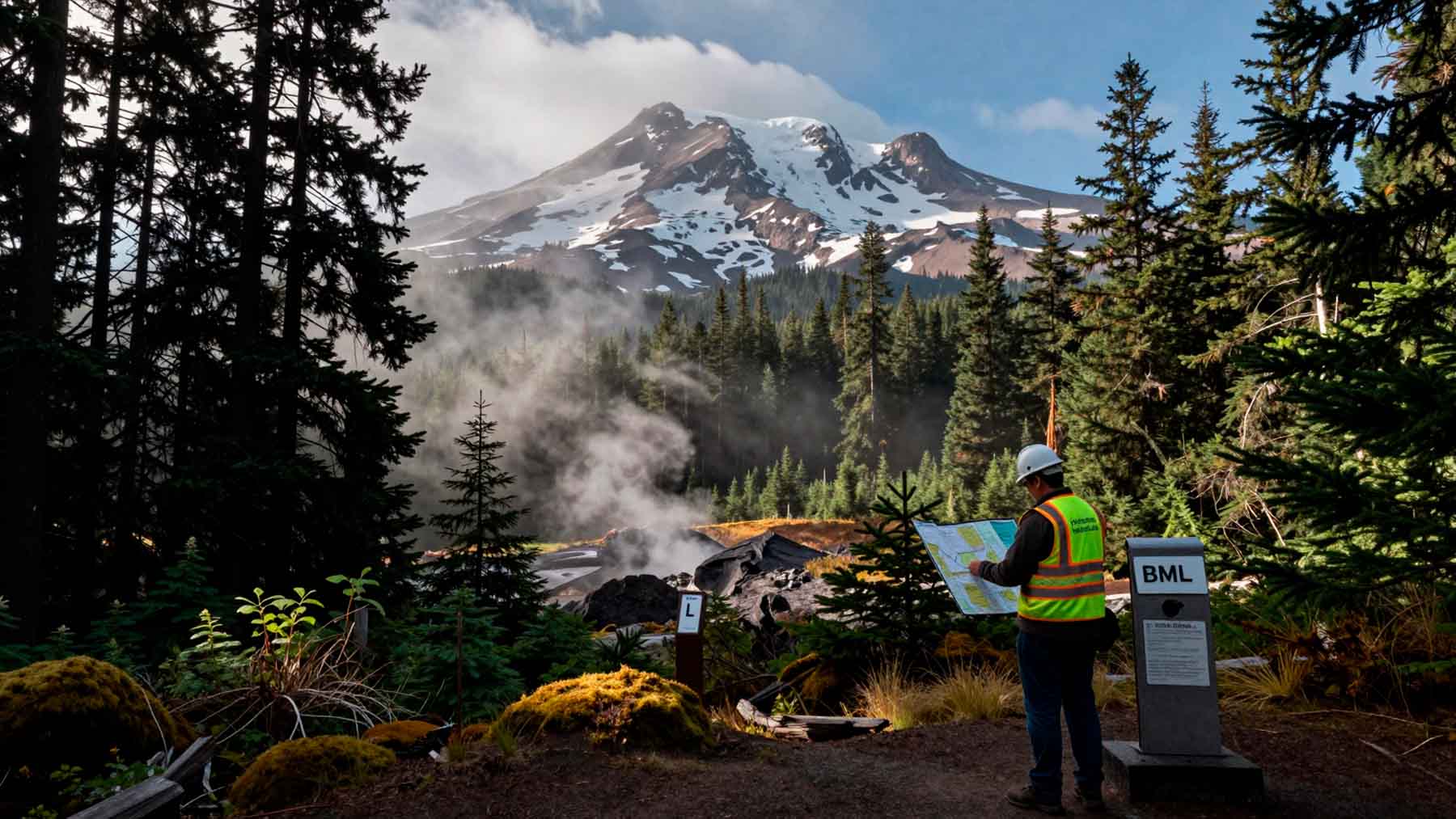 Image generated with artificial intelligence
The Bureau of Land Management has accepted winning bids totaling $1,155,706 for two geothermal lease parcels spanning more than 9,500 acres on Oregon’s Mount Hood National Forest. The sale, conducted by BLM Oregon/Washington, marks a meaningful step toward tapping the region’s underground heat resources for domestic energy production. The leases aren’t final yet—BLM can issue them once review and payment are complete.
BLM closes geothermal lease sale for two Oregon parcels
The two parcels cover more than 9,500 acres inside Mount Hood National Forest. BLM Oregon/Washington accepted the winning bids and recorded total receipts of $1,155,706. That’s a real number—but it doesn’t guarantee a single watt of electricity. Not yet, anyway.
Formal issuance won’t happen until BLM wraps up its review and the winning bidders submit full payment. Only then does the clock actually start on any development. The dollar figure is concrete, but the road from signed lease to working geothermal facility is still a long one.
The West sits on substantial geothermal resources, its volcanic geology and tectonic activity making it particularly well-suited for this kind of energy extraction.
Why the BLM held the sale: Policy and energy mandates
This sale didn’t come out of nowhere. It lines up directly with Executive Order 14154, “Unleashing American Energy,” which directs federal agencies to expand domestic energy production. Geothermal leasing is one of the tools BLM uses to fulfill that mandate.
The agency manages geothermal leasing under the National Environmental Policy Act of 1969 (NEPA), which requires federal agencies to assess environmental impacts before approving major actions on public land. Geothermal development isn’t exempt. BLM has to confirm any project meets those requirements before things move forward.
The scale of BLM’s authority is worth pausing on. The agency holds leasing jurisdiction over roughly 245 million surface acres of public land, with geothermal development being just one of many resource activities it oversees across that territory.
Revenue distribution and economic impact for Oregon
The money from this sale won’t all flow to Washington, D.C. Combined bonus bids, rentals, and future royalties will be split among the U.S. Treasury, the State of Oregon, and Marion County—a local share that means geothermal development on federal land can translate into real revenue for the communities closest to it.
BLM Oregon/Washington State Director Kim Prill pointed to that local angle directly. “Geothermal is an abundant resource, especially in the West, with the potential to provide reliable energy,” she said. “The BLM is committed to unlocking that potential to support American energy production and our local economies.”
The sale was conducted online through EnergyNet, the platform BLM uses for geothermal lease auctions. That digital format keeps things accessible to a wide pool of bidders without requiring anyone to show up in person. Still, it’s worth being clear about what a lease sale actually represents—BLM describes leasing as the first step toward developing federal geothermal resources, not the last. Winning a bid gives a company the right to explore and potentially develop a parcel, but significant permitting, investment, and work all come before anything reaches the grid.
Context: Geothermal leasing on federal lands in the western US
To understand why this Oregon sale matters, it helps to zoom out. BLM manages approximately 245 million acres of public land, mostly across 12 western states, including Alaska. It also administers 700 million acres of subsurface mineral estate nationwide — meaning it controls what happens underground even where someone else owns the surface.
That combination of surface and subsurface authority gives BLM enormous influence over where and how geothermal energy gets developed across the country. The West sits on substantial geothermal resources, its volcanic geology and tectonic activity making it particularly well-suited for this kind of energy extraction.
Unlike solar or wind, geothermal can provide baseload power—consistent electricity generation regardless of weather or time of day. That reliability is a big part of why policymakers see it as a useful piece of a diversified energy mix. Planning documents related to the Mount Hood sale are publicly available through the BLM National NEPA Register, so the environmental review process is open to anyone who wants to dig into it.
The BLM needs to complete a review
Here’s where things stand: The Bureau of Land Management has accepted $1,155,706 in winning bids for two geothermal lease parcels covering more than 9,500 acres on Oregon’s Mount Hood National Forest. Formal issuance follows once BLM completes its review and bidders finish payment.
Revenue—including bonus bids, annual rentals, and eventual royalties—will be shared between the U.S. Treasury, the State of Oregon, and Marion County. The sale aligns with Executive Order 14154 and BLM’s broader mandate to support domestic energy production.
Geothermal development on these parcels is a future possibility, not a certainty. Leasing is only the first step in a longer process governed by NEPA and other federal requirements. For Oregon and the surrounding region, though, this sale puts two large parcels of geothermally promising land one meaningful step closer to potential development.
Kelly is an experienced writer with 15 years of experience exploring the big stories that shape our world, from tech breakthroughs and space exploration to climate, energy, and the fascinating quirks of science. She has a talent for turning complex ideas into sharp, memorable insights that stay with readers long after they’ve finished reading.
