
Washington’s Big Horn I wind farm plans component upgrades to extend power generation by another 20 years
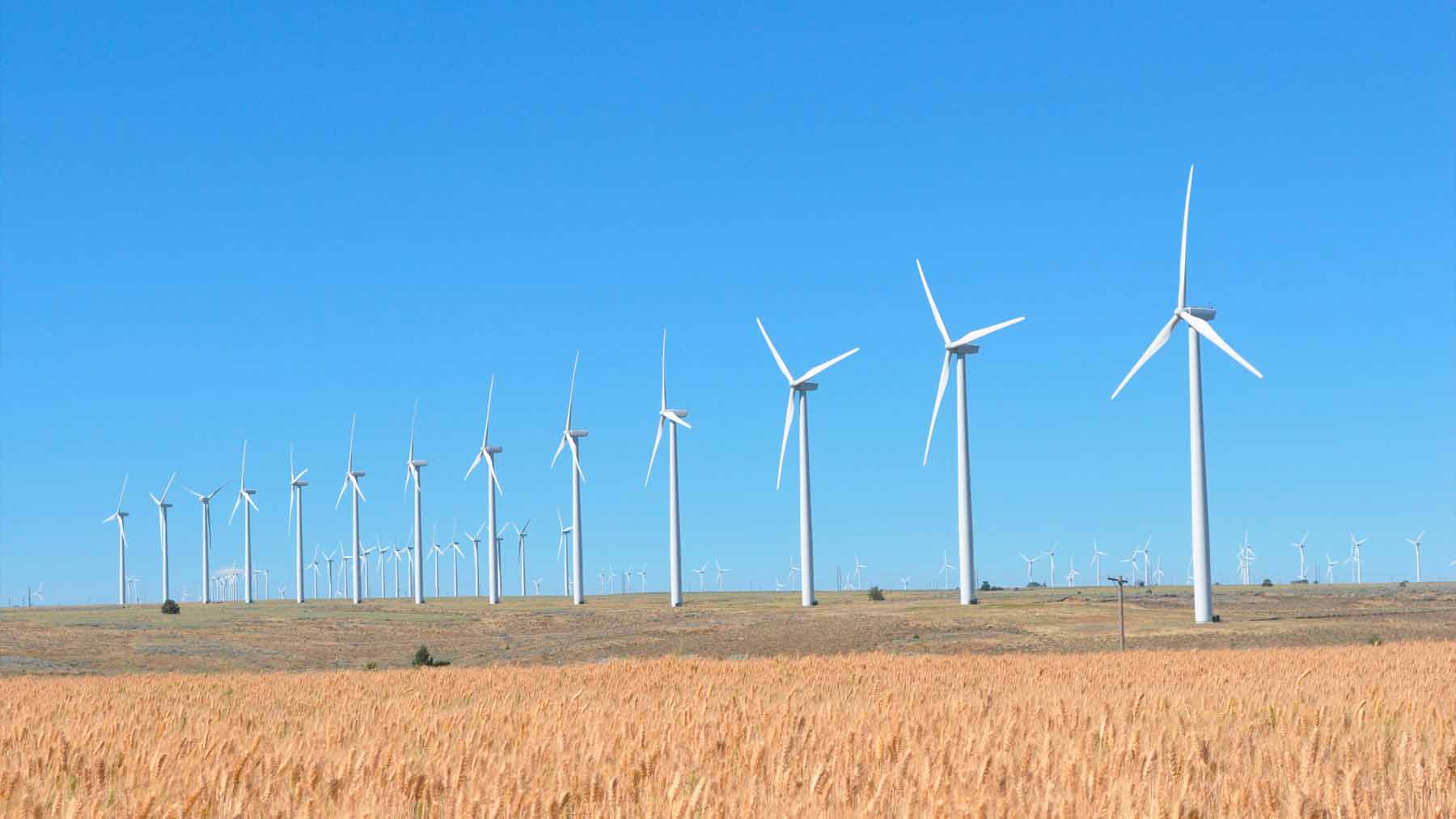 Big Horn Wind Farm row - Brianrlind via CC BY SA 3.0 (https://commons.wikimedia.org/wiki/File:Big_Horn_wind_farm_2013.JPG)
It has been a long time since electricity was produced using wind turbines in the Klickitat County high desert of Washington, utilizing the steady winds of the Columbia River Gorge to produce electricity for the Pacific Northwest area. Such kind of energy infrastructure has been built keeping sustainability in mind. In the energy industry, however, a new concept is emerging slowly but surely; it is the idea of not retiring old wind farms.
Big Horn I, a 199.5 MW wind farm, has become one of the examples of such a concept through the recent signing of the long-term power purchase agreement between Puget Sound Energy and Avangrid.
A wind farm built to last — and then some
Big Horn I is located in Klickitat County, Washington. The Big Horn I Wind Energy Center lies in the path of some of the most steady winds in the Pacific Northwest that run through the Columbia River Gorge. With a power capacity of 199.5 MW, Big Horn I makes a sizeable contribution to the local power needs.
Engineers need to take into account the limitations of the current tower structures and foundations, which were not necessarily built with future upgrades in mind.
The wind farms, such as Big Horn I, have initially been designed for an operational lifetime of about 20 to 25 years. With this period nearing an end, the developer has to decide whether to abandon the plant, reconstruct it from scratch, or make improvements to the existing plant components to ensure further decades of production. The third option is gaining a lot of attention both from developers and utility firms.
Renovation can prove more economically feasible compared to reconstruction. The cost of foundation, transmission facilities, and roads is already sunk. It can be much cheaper to improve the existing facilities than construct a new plant from the beginning.
The deal that keeps the turbines turning
According to Puget Sound Energy, a Power Purchase Agreement has been signed with Avangrid for the Big Horn I Wind Project on May 19, 2026. This agreement was publicly announced by the Puget Sound Energy office in Bellevue, Washington. Thus, it is a piece of evidence that the utility company is committed to buying wind energy from this specific project for many years ahead.
PPA refers to a case whereby the utility company enters into a contract to buy power from the Big Horn I project for a certain period of time. The only reason why the project owners are willing to develop this large project is due to the assured revenue.
In case there is no guarantee of a buyer for a long time, modernization of the old turbines is a risky business. The PPA eliminates this risk and thus makes the upgrades of components possible.
What the upgrades actually involve
Wind farm life-extension projects typically target the components that bear the most stress over decades of operation: rotor blades, gearboxes, generators, and control systems. Replacing them with modern equivalents doesn’t just restore function — it can meaningfully improve performance.
Newer blades are often longer and more aerodynamically efficient than the originals. Updated control systems can optimize turbine response to shifting wind conditions in ways older software simply couldn’t. The result is frequently a higher capacity factor than the farm achieved in its early years — sometimes by a noticeable margin.
The engineering problem is genuine. Engineers need to take into account the limitations of the current tower structures and foundations, which were not necessarily built with future upgrades in mind. However, by not decommissioning the facility, one also avoids the hassle of taking down the turbine components, an increasing problem with the aging of early wind power projects.
PSE’s broader clean energy ambition
This is consistent with a larger trend at Puget Sound Energy with respect to the Avangrid – Big Horn I upgrade agreement. PSE is steadily building out its green energy supply, and long-term wind power deals are integral to this strategy. Indeed, it has aggressive goals for carbon reduction in Washington State, and wind power helps to achieve this.
PPAs of this sort, with long lead times, are sending investors and project developers a clear message – that there is commitment from the utilities side. It’s important to remember this when it comes to investing in infrastructure over decades of time. Big Horn I is 199.5 MW, which is a lot in terms of generating capacity that will emit no carbon.
A model for the aging wind fleet
Big Horn I isn’t an isolated case. Across the United States, many early-generation wind farms built in the late 1990s and 2000s are now approaching or exceeding their original design lifespans. The industry is quietly facing a fleet-wide question about what comes next.
This strategy could work as a model for others to follow. However, it won’t always be easy. The permitting process, community relations, and finding parts that will work with existing turbines are just some of the real challenges that need to be overcome.
If the next two decades of activity at Big Horn I match the first, there will be even more reason to upgrade rather than retire the turbine. Look for such deals to proliferate throughout the Pacific Northwest and beyond as wind farms come to this crossroads.
Kelly is an experienced writer with 15 years of experience exploring the big stories that shape our world, from tech breakthroughs and space exploration to climate, energy, and the fascinating quirks of science. She has a talent for turning complex ideas into sharp, memorable insights that stay with readers long after they’ve finished reading.
