
Hoover Dam may replace three turbines to keep generating power as Lake Mead drops toward 950 feet

The Hoover Dam is crucial for clean, reliable power, but now it requires vital upgrades.
Across the United States, hydropower has played a significant role in shaping the economy and driving the green transition.
But the nation has been facing prolonged droughts, extreme heat, and declining water levels, posing serious challenges.
Ultimately, upgrading hydropower facilities nationwide will buy vital time, especially as technological adaptation must balance vanishing natural river flows.
To protect western power grids, federal investments are targeting vital equipment upgrades.
Will these improvements ensure long-term stability and secure renewable energy for millions?
How hydropower has shaped a nation
Hydropower has played a historic role in driving economic growth and industrial expansion in America.
The nation’s first water-powered plant opened in 1882.
Soon, these facilities fueled factories, modernized rural regions, and expanded urban communities.
By the twentieth century, massive projects turned iconic rivers into powerhouses, boosting regional economies and manufacturing nationwide.
Today, hydropower is essential to the U.S. renewable energy transition while meeting rising energy demand.
The nation is pursuing ambitious climate targets, such as 100% zero-emission electricity by 2035.
Currently, hydropower accounts for roughly 28% of all American green electricity, supplying baseload power to more than 25 million homes.
It is highly reliable, making it indispensable for stabilizing regional grid fluctuations while reaching net-zero nationally.
However, the operational future of massive dams such as the Hoover Dam is in trouble.
Climate change is accelerating due to record-high emissions, altering predictable weather patterns and affecting natural water systems.
Rising emissions and their risk to hydropower’s future
Despite the U.S.’s strict climate mandates, its total emissions remain high.
Annual greenhouse gas emissions are now above 6 billion metric tons.
This is due to increased energy demand driven by industrialization, rapid economic growth, digitization, and electrification.
The latter two are primarily responsible for record demand levels in 2026 and 2027.
To prevent catastrophic power fluctuations triggered by this unprecedented consumption, reliance on fossil fuels continues.
As a result, these emissions accelerate global warming.
The rise in atmospheric and ocean temperatures has triggered severe droughts and heatwaves across the American West.
This unpredictable weather is altering natural water systems, drastically lowering water levels in major reservoirs.
Reduced water levels result in lower pressure, reducing the efficiency of the nation’s traditional hydroelectric turbines.
Consequently, crucial hydropower facilities like the Hoover Dam face reduced power-generating capabilities.
Now, a Bureau of Reclamation – Hoover modernization Project will invest $52 million to safeguard its future.
Upgrading the Hoover Dam to preserve future power generation
As the Hoover Dam’s power quietly fades, immediate intervention is needed to ensure ongoing electricity supply.
It was constructed between 1931 and 1936 and has been a valuable asset for decades.
The dam provides low-cost power to approximately 1.3 million people across Nevada, California, and Arizona.
The power plant is located in the Black Canyon of the Colorado River.
Unfortunately, a historic drought across the basin and dropping water levels in Lake Mead have severely impacted the facility’s operation.
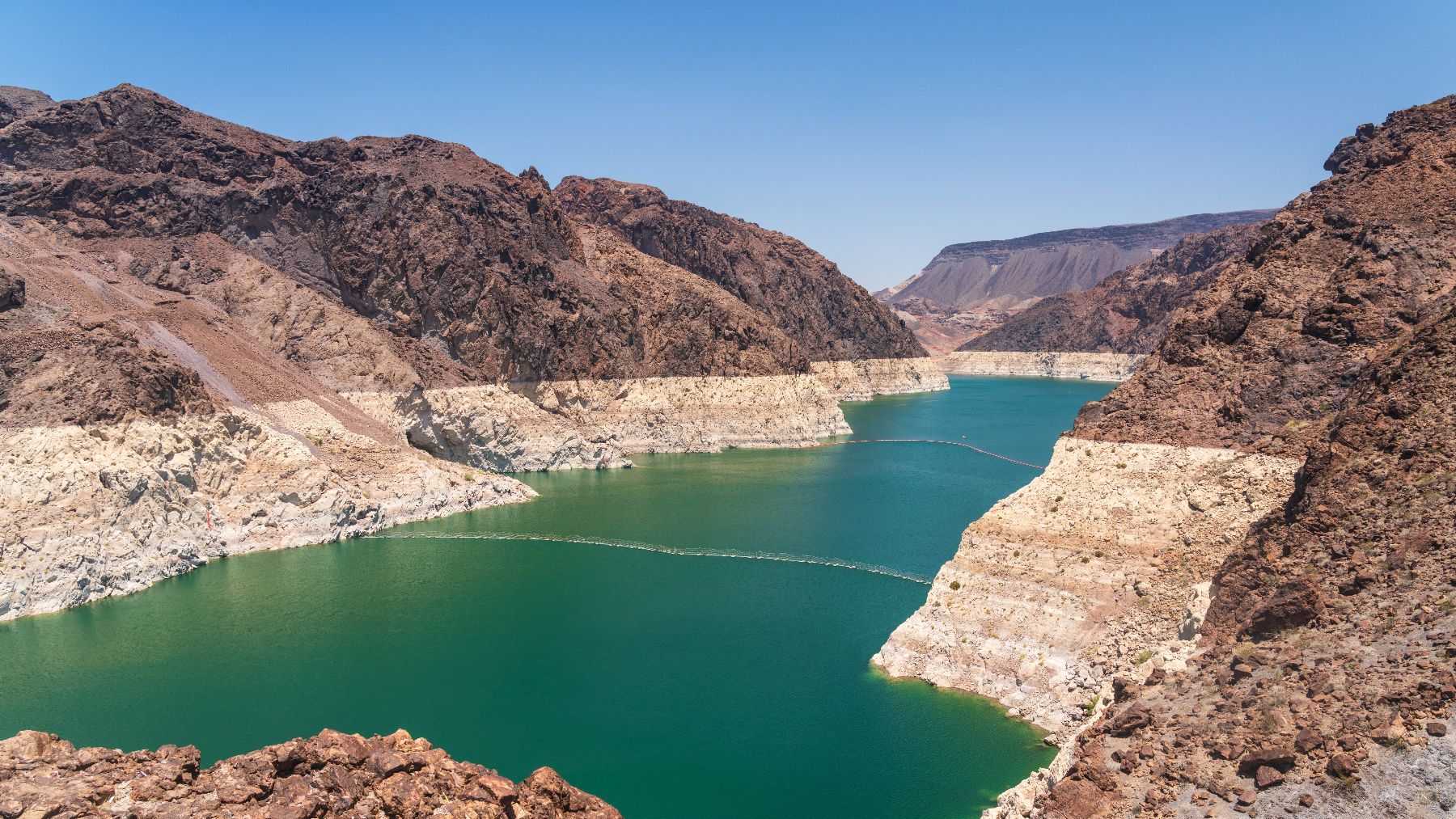
Some units were forced to shut down due to low reservoir levels threatening standard turbine efficiency.
Now, three aging units will be replaced with modern wide-head turbines with the hope of improving the plant’s hydropower reliability.
Upgrading the dam’s old turbines
The modern turbines are designed to operate efficiently at water elevations as low as 950 feet.
By installing these upgrades, approximately 160 megawatts of generating capacity will be restored.
The Hoover Dam’s $52 million modernization project is currently underway.
However, to ensure long-term stability, additional solutions will be required.
Some water managers are considering regional water conservation agreements and reduced reservoir releases.
Additionally, integrating solar power or battery energy storage as complementary power systems can help offset losses.
Ultimately, upgrading hydropower facilities nationwide will buy vital time, especially as technological adaptation must balance vanishing natural river flows.
Anke Maree is a writer with a clear and engaging editorial style. Her work focuses on making complex topics accessible, informative, and relevant for readers across different areas of interest.
