
A reactor near a town of 40,000 in Slovakia begun under communism finally sent power to the grid this October, decades after the first concrete was poured
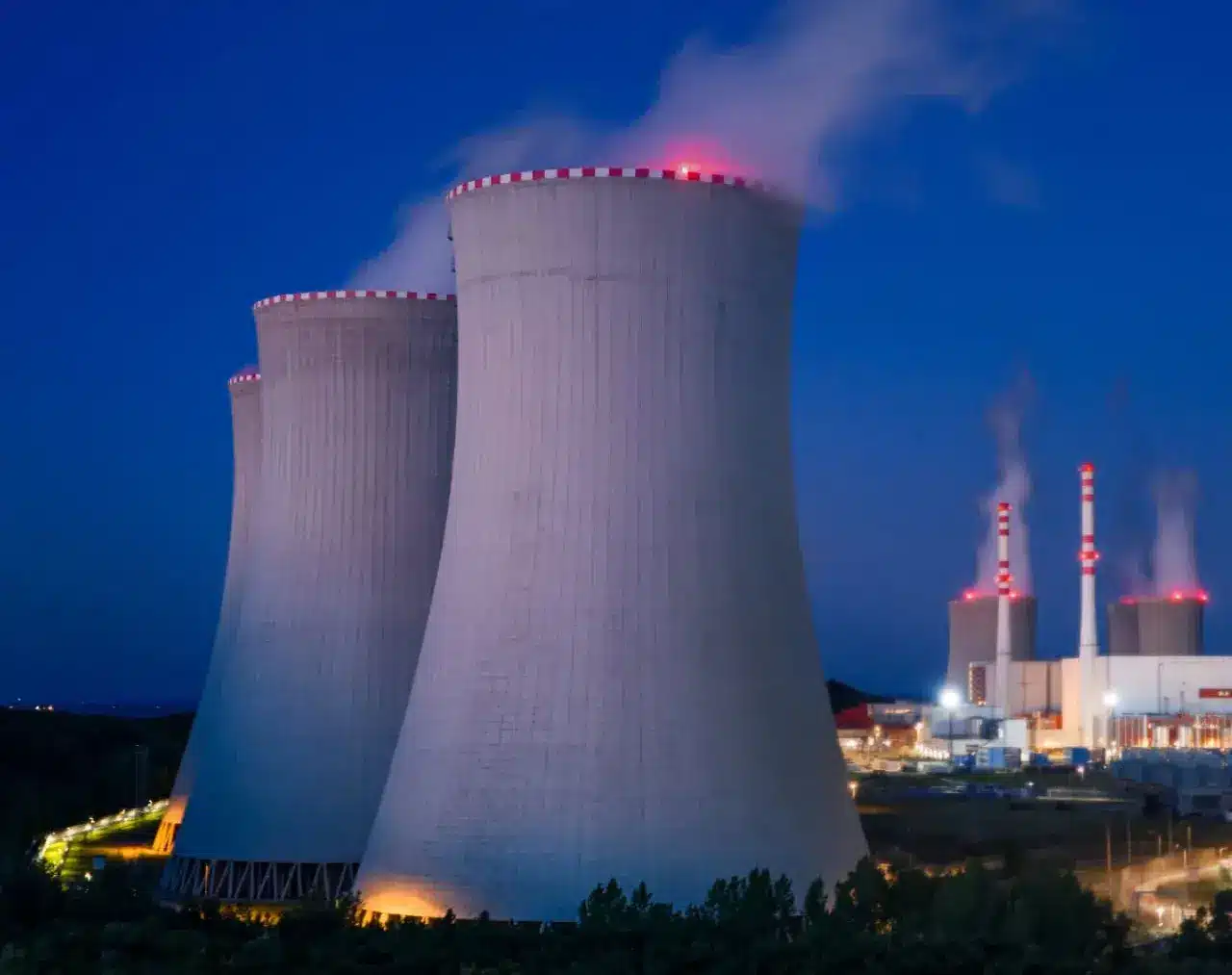
A control room outside Levice, Slovakia went quiet on the night of October 15.
Engineers watched a single needle creep toward 20 percent.
Behind them sat a reactor built from concrete poured by workers who never saw it finished.
The timeline behind October 15 is unusually well documented, since every stage of a reactor startup in Europe is logged and reported to the national regulator.
The government that ordered it collapsed. The currency that paid for it disappeared.
Yet the machine itself never stopped waiting.
So how does a reactor like this finally connect to a modern grid, and why does it arrive at a fraction of its strength?
Why does a reactor connect to the grid at a fraction of its power
A nuclear unit does not simply switch on at full strength the way a light bulb does. Workers bring the reactor core to criticality first, a sustained chain reaction that produces heat but not yet grid ready electricity. That heat spins a turbine, and only once the turbine reaches a matched speed and phase can engineers close the breaker that ties it to the wider network.
For Mochovce 4, that threshold arrived at 20 percent of design power, the point where the first of its two turbine generators could be safely synchronized. Slovenske elektrarne, the plant’s operator, put the exact moment at 20:41 local time on Thursday, October 15.
So the grid did not receive a finished power plant that night. It received a reactor still climbing, with a second turbine waiting its turn and a long sequence of power checks still ahead.
A single generator, a 1,375 megawatt heart, and a plant that waited decades
The machine behind that first trickle of power is a VVER 440 pressurized water reactor, a Soviet era design that still forms the backbone of several Central European grids. Mochovce 4 carries a thermal capacity of 1,375 MWt feeding into a net electrical output of 440 MWe, enough on its own to cover roughly 13 percent of Slovakia’s total electricity consumption once it reaches full power.
That scale sits inside a building whose footprint has barely changed since the 1980s. Work on Mochovce 1 and 2 began in 1982, and the Soviet designed shell for units 3 and 4 went up alongside them, then sat half finished once money and political will ran out after the fall of communism.
Completion work on unit 4 did not resume in earnest until well into the 2000s. Branislav Strycek, chief executive of Slovenske elektrarne, framed the moment plainly. “For the first time in history, Mochovce unit 4 is supplying electricity to the Slovak electricity system,” he said, calling it a new low emission source for the country.
How investigators and engineers actually confirmed the number
The timeline behind October 15 is unusually well documented, since every stage of a reactor startup in Europe is logged and reported to the national regulator. Fuel loading into Mochovce 4 wrapped up in July 2026, and the unit reached its first criticality on August 6, 2026, kicking off weeks of staged power ascension testing.
Technicians used that stretch to check generator protection systems, electrical circuits, and the equipment needed to carry electricity safely off site. Nuclear plants rarely skip this step even under schedule pressure, because a fault caught at low power is far cheaper and safer to fix than one caught at full output.
That caution showed itself two days before the connection happened. An odd reading on the generator forced Slovenske elektrarne to rerun a test and postpone a planned ceremony, saying it needed to repeat a technical test. The delay was brief, but it was a reminder that the grid does not get a free pass just because a reactor has waited decades.
The slow build behind one night’s headline
What makes Mochovce 4 unusual is not the reactor technology, which Slovakia has run safely for decades, but the arc of its construction, a project whose permit dates to the Cold War.
Its sister unit, Mochovce 3, only reached commercial operation in October 2023, itself the product of a startup process that dragged on far longer than its designers ever expected. That slowness carries a lesson for the current wave of nuclear construction worldwide, where financing packages like the conditional federal loan lined up for American uprates are meant to avoid exactly this kind of multi decade limbo.
A plant that takes decades to finish still works once it is finished. But the carrying costs, political turnover, and lost electricity along the way are their own kind of expense, and Mochovce’s history underlines why fuel supply chains matter years before a reactor ever reaches criticality, a concern echoed in the buildout of new fuel fabrication capacity now underway on this side of the Atlantic.
What comes next for the reactor and the grid it now feeds
The second turbine generator at Mochovce 4 is expected to join the grid within days of the first, following the pattern set by unit 3, whose second generator came online four days after its first connection. The operator’s own account of the startup describes the sequence as a brief synchronization preceded by weeks of inspection.
Only after both turbines are synchronized and tested at successive power levels will the unit be declared in commercial operation. Even then, Mochovce 4 will represent one plant in one country, a 440 megawatt addition to a continent still debating how fast it can build more of them.
But the reactor’s own history argues against despair. A machine that outlasted the government that ordered it, the currency that paid for it, and two generations of engineers has, in the end, done the only job it was ever built for.
Slovakia now runs five reactors across two sites, and for the first time in nearly three years, one of them is new.

Hugo is an engineer with strong technical expertise. Multilingual from an early age, his writing combines technical clarity with a strong interest in science and energy.
