
Off Aberdeenshire, a 560 megawatt floating wind farm won consent to power a dying oil field, so its biggest customer walked away before a single turbine floated
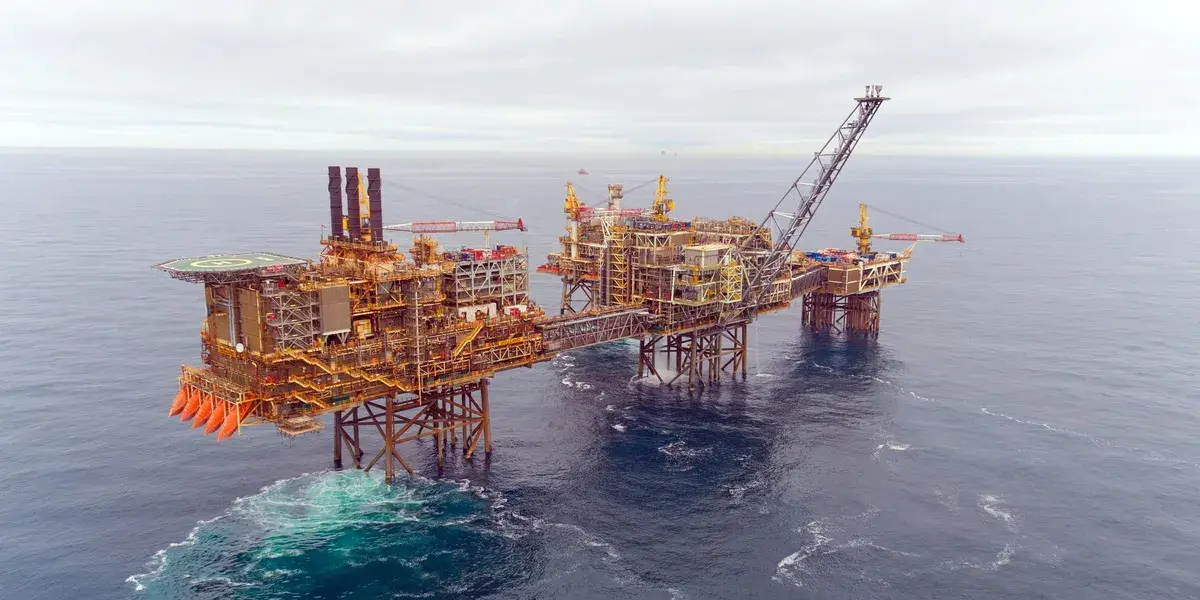
Fifty miles off Aberdeenshire, the water above the Ettrick and Blackbird oil fields looks empty.
Just whitecaps and a scattering of gulls.
Nothing floats there yet.
But the seabed below has already been promised to twelve floating turbines, each designed to send power to a platform that was supposed to be waiting for it.
But the seabed below has already been promised to twelve floating turbines, each designed to send power to a platform that was supposed to be waiting for it.
That platform’s owner has now walked away.
So what happens to a wind farm engineered around one buyer when that buyer changes its mind?
Why an oil platform was ever meant to run on wind
The project is called Green Volt, and it came out of a UK leasing round named INTOG, short for Innovation and Targeted Oil and Gas. INTOG was the first leasing round anywhere designed to put wind farms directly on the end of an oil platform’s power cable. The idea was simple on paper: stop burning diesel and gas turbines to run the pumps, compressors and living quarters offshore, and pipe in electricity from turbines floating nearby instead.
Most offshore wind farms work the other way around. A cable runs to shore, and a buyer is found afterward through a government auction.
Green Volt flipped that order. It designed its entire economic case around a single committed customer sitting a few miles away, on seabed above the aging oil fields the platform’s operator also ran.
So the wind farm’s business case depended on one operator’s continued appetite for buying clean power to run its own aging infrastructure, rather than on the wider grid.
A rig built on borrowed time, and a customer that backed out
Oil platforms are not permanent structures. They are built to a production forecast, and when the oil runs thin, the platform’s own economics start working against it.
The field feeding Ettrick and Blackbird had already entered its final production phase, which is precisely why its owner first looked at wind power as a way to keep lights and pumps running cheaply while the asset wound down.
Two years after Green Volt cleared planning, the arrangement unraveled. The rig’s operator, holding a large stake in one of the UK’s biggest producing fields, walked away from the deal that was supposed to anchor the project’s revenue.
Without a guaranteed buyer at the end of the cable, Green Volt’s developers have had to fall back on the same route every other offshore wind farm already uses, selling into the public grid instead of a single platform.
The auction price that was supposed to make the sums work
Green Volt did not win its capacity contract cheaply. Fixed bottom offshore wind cleared the same government auction at 58.87 pounds per megawatt hour, a price floating wind projects further out in deep water have had to beat while also carrying mooring lines and cables and towing distances that fixed turbines never face.
Floating technology remains the more expensive way to generate offshore power. That is exactly why Green Volt’s planners built in redundancy from the start, with a cable to shore so it can sell into the grid whether or not a platform is buying.
That backup plan is now the whole plan. Engineers studying how aging platforms behave over years of weather and wear have started leaning on long running instrumented datasets, with real turbine data already logging North Sea conditions that feed directly into how floating arrays like Green Volt get modeled before a single hull goes in the water.
What one withdrawal means for eleven other projects still waiting
Green Volt was never meant to stand alone. The entire INTOG leasing round includes twelve floating wind projects designed specifically to clean up North Sea oil production, each pairing a wind farm with a platform operator in the same backwards arrangement that just failed at Ettrick and Blackbird.
The operator behind that withdrawal was CNOOC International, running the Buzzard platform through its Nexen subsidiary, and it told Energy Voice it was “unable to find an investible solution” to electrify Buzzard, citing the economic climate as a barrier. If the economics do not hold for an operator with a large stake in a major producing field, the remaining eleven projects face the same question before they ever reach construction.
Even so, the grid connection Green Volt already built in gives it a path forward that a pure platform supply deal never would have. Floating wind elsewhere has shown turbines can adapt their job description midstream, much as engineers taming a dangerous wobble in floating hulls found a fix already built into the machine rather than a costly redesign.
A wind farm still waiting on an empty patch of sea
Nothing about Green Volt’s turbines has changed physically. The same twelve machines, the same mooring plan, the same fifty mile stretch of water are still consented and still scheduled.
What changed is who was supposed to be waiting at the other end of the cable when the power arrived.
That gap between a project built for one customer and a project that must now find many is not unique to the North Sea. It is the same tension facing every renewable asset designed around a single industrial buyer rather than a public grid, and it will decide whether floating wind’s strangest business model survives its first real test.
For now, the water off Aberdeenshire stays empty, and the platform that was supposed to run on borrowed wind keeps burning what it always has.

Hugo is an engineer with strong technical expertise. Multilingual from an early age, his writing combines technical clarity with a strong interest in science and energy.
