
Researchers just gained a “treasure chest” of ten years of real offshore wind farm data collected from sixty turbines in the North Sea
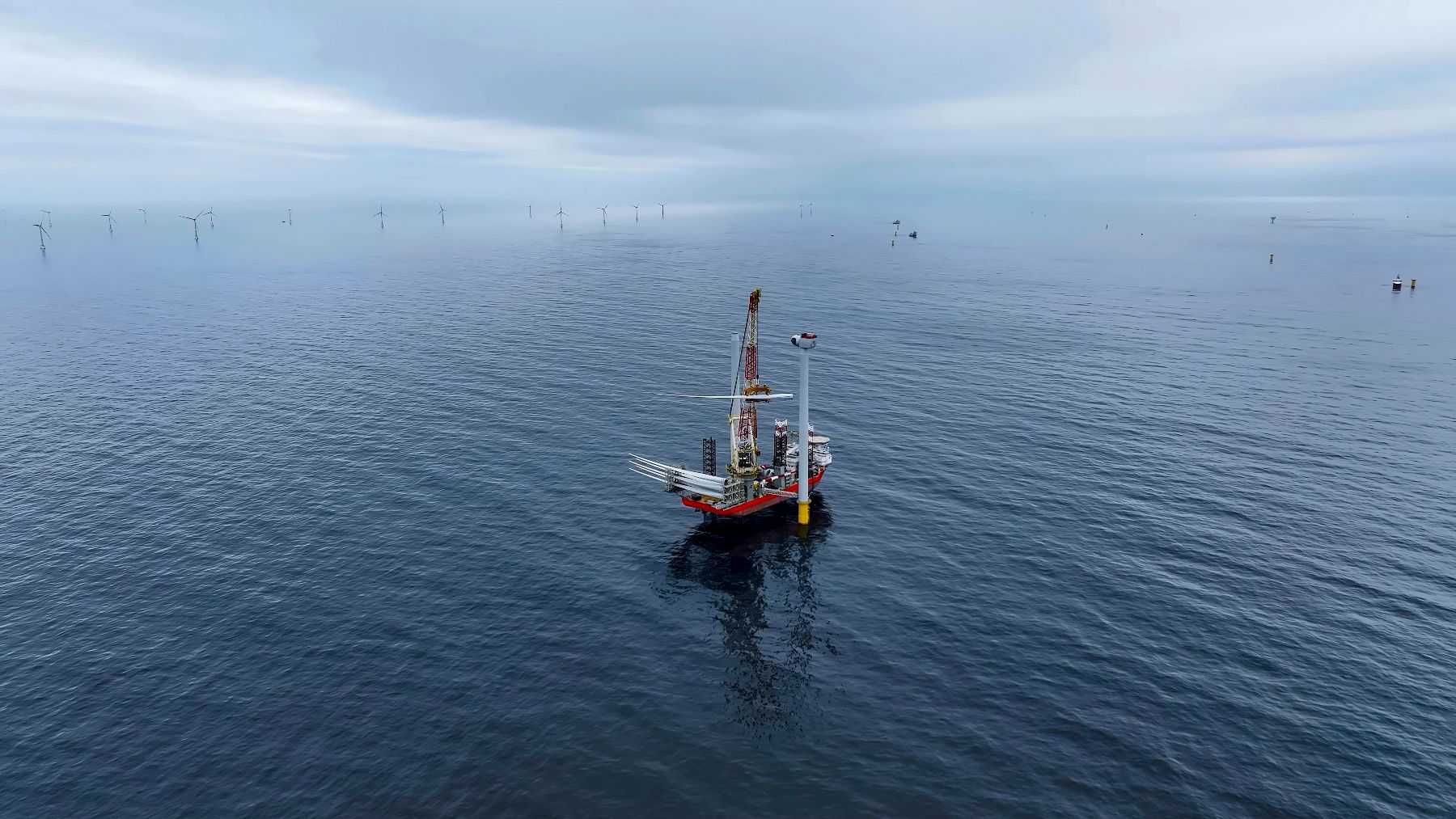
A decade of continuous operational data from a 60-turbine offshore wind farm has just been made freely available to researchers — and that’s not something that happens often.
The Princess Amalia wind farm, a 120-megawatt installation in the North Sea, generated that data between 2008 and 2017. Datasets this deep and this long are hard to come by in offshore wind research, where access to real-world operational records has historically been a limiting factor.
What the Princess Amalia dataset contains
The dataset covers the full ten-year window from 2008 to 2017, with continuous records across all 60 turbines. That unbroken temporal coverage is central to its value. You’re not working with snapshots or partial records — you’re getting a sustained, farm-wide view of how a real offshore installation behaves over time.
Reliability researchers can examine failure patterns and maintenance needs as they actually played out over a decade, rather than relying on modeled estimates.
The data comes from SCADA systems — Supervisory Control and Data Acquisition infrastructure that logs operational variables in real time. Recorded variables include meteorological measurements, power output, and control data for every turbine in the array. Having environmental and performance information together in one place is what makes this dataset so dense with research potential.
Access is straightforward. TNO hosts the dataset under a Creative Commons Attribution 4.0 license, so you can use it freely as long as you credit the source. No paywalls, no data-sharing agreements to negotiate.
The wind farm behind the data
Princess Amalia sits in the North Sea off the Dutch coast, with a rated capacity of 120 megawatts spread across its 60 turbines. Operational since the mid-2000s, the farm means the dataset captures a mature phase of working life — not early commissioning behavior, but years of steady-state operation.
The dataset documentation includes turbine coordinates and the full farm layout. That spatial detail matters considerably. Knowing exactly where each turbine sits relative to the others is essential for any analysis involving wake effects or turbine-to-turbine interaction.
Neighboring wind farms in the area — which can influence measurements depending on wind direction — are accounted for in the description. Relevant metocean and environmental measurement campaigns are included as background context, giving researchers the environmental framing needed to interpret the SCADA data.
Why long-term offshore wind data is so hard to come by
Offshore wind farms produce enormous volumes of operational data. The problem isn’t scarcity — it’s access. Most of that data stays proprietary, held by operators and developers who have little commercial incentive to share it publicly.
The result is a persistent gap in the scientific literature. Researchers building wake models or studying farm-wide behavior have often had to rely on short-duration datasets, onshore proxies, or synthetic data generated by simulations — none of which fully substitute for real, long-term offshore records.
A decade-long, 60-turbine dataset with consistent coverage is genuinely rare in the public domain. That absence has been a recognized bottleneck, limiting how well computational models can be validated against reality and how confidently researchers can generalize findings to real-world offshore conditions. This release directly addresses that gap.
Research applications the dataset could unlock
Wake model validation is one of the most immediate uses. When a turbine extracts energy from the wind, it creates a wake — a region of reduced wind speed and increased turbulence — that affects turbines downstream. Predicting those effects accurately is critical for farm design and energy forecasting, and a ten-year dataset from a real farm gives modelers something concrete to test against.
Wind farm control is another active research area this data could advance. Coordinated turbine strategies — where individual machines are adjusted to benefit the farm as a whole — are a growing focus in the field. Long-term operational records help researchers evaluate whether those strategies hold up under the variability of real offshore conditions.
The dataset also supports operational analysis: tracking long-term trends in performance, efficiency, and downtime across a full turbine fleet. Reliability researchers can examine failure patterns and maintenance needs as they actually played out over a decade, rather than relying on modeled estimates.
What comes next
The release of the Princess Amalia dataset doesn’t solve every data gap in offshore wind research — but it sets a meaningful precedent. As the industry scales up and more farms accumulate years of operational history, the case for broader data sharing becomes harder to dismiss.
Researchers now have a substantial, freely accessible benchmark to work with. What findings emerge will likely shape the next wave of work in wake modeling, farm control, and long-term performance analysis. That’s worth Cawatching closely.
Reference: Bos, R. and Kemp, R.: Ten years of SCADA data from the Princess Amalia offshore wind farm: dataset description and access, Wind Energ. Sci. Discuss. [preprint], https://doi.org/10.5194/wes-2026-193, in review, 2026.

Daniel García is an Editor-in-Chief with strong expertise in structural work and engineering principles. He combines this technical foundation with deep knowledge of energy, spatial design, and emerging technologies, bringing a forward-thinking and analytical approach to editorial leadership.
