
Redesigned turbines at Washington’s Ice Harbor Dam achieve 98.25% salmon survival while improving efficiency by 4%

A hydroelectric dam in Washington received upgraded turbines that address two crucial issues.
The state’s river hydropower is essential to supplying steady, low-carbon electricity and grid reliability.
However, legacy infrastructure does not always operate at full efficiency and presents environmental trade-offs.
Ultimately, replacing outdated hydropower components with modern, more nature-focused designs is key to meeting rising energy demand while conserving nature.
Operators and engineers addressed these challenges at the Ice Harbor facility by upgrading key turbine parts.
How do redesigned turbines balance efficient clean energy generation with healthy river ecosystems?
How river hydropower continues to shape Washington today
During the Great Depression and World War II, Washington State transformed.
In the 1930s, federal dam projects were launched, playing a vital role in this shift.
Abundant, affordable electricity became available thanks to facilities like Bonneville and Grand Coulee on the Columbia River.
That cheap power fueled vital industries like shipbuilding.
It also supplied irrigation to 700,000 acres across the Columbia Basin, creating productive farmland from dry land.
Today, this legacy infrastructure remains essential to the state.
The state’s power demand is steadily rising with population growth, widespread electrification, and data center expansion.
Hydropower usually supplies up to 70% of Washington’s electricity supply.
Beyond helping to close this growing gap, hydropower is also key to meeting decarbonization targets.
Under the Clean Energy Transformation Act, greenhouse-gas-neutral electricity generation must be achieved by 2045.
Legacy infrastructure forms the backbone of this by providing baseload clean power.
Despite these distinct advantages, aging hydroelectric dams do present unique challenges.
The bottlenecks faced by legacy dams
After decades of operation, many aging hydropower turbines begin to lose efficiency.
When this happens, megawatts of clean electricity remain unused when grid demand rises.
As a result, utilities may have to rely more on expensive market power or backup generation.
Legacy dam infrastructure also faces environmental trade-offs that add to the strain.
Hydroelectric dams meant to control rivers alter natural flows and block migration routes.
When fish cannot access these routes safely, they fail to reach vital habitats to complete their life cycles.
Others moving downstream through turbines face increased risk of blade strikes.
They also face sharp pressure drops, shear stress, and turbulence.
Consequently, fish populations decline, and river biodiversity shrinks, disadvantaging local economies and cultures.
That is why federal officials are funding the upgrades of aging hydropower plants.
This requires coordinated engineering and research.
The U.S. Army Corps of Engineers leads turbine modernization initiatives.
Washington’s Ice Harbor Dam recently received such vital upgrades.
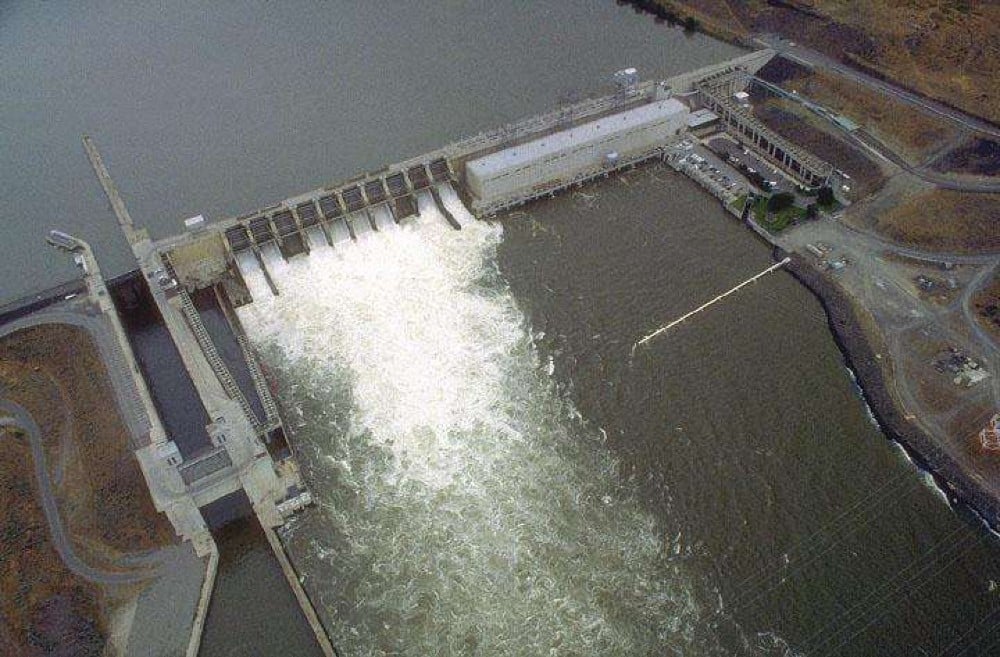
Modernizing the Ice Harbor Lock and Dam
Washington’s Ice Harbor Dam is located on the lower Snake River near Burbank.
It began generating power in 1961, followed by formal completion in 1962.
This makes the facility more than six decades old.
The U.S. Department of Energy funded research and testing for advanced fish-friendly passages and monitoring tools for the dam.
The U.S. Army Corps of Engineers partnered with Voith Hydro Inc. to replace legacy runners with newly designed turbines.
Distinct benefits of modern hydropower turbines
The new turbine fins are more fish-friendly and more efficient.
The blades smooth water flow while reducing gaps near the outer rim and hub.
This lowers blade-strike risks, sharp pressure drops, shear stress, and turbulence as fish and water pass through.
More carbon-free electricity was generated by the same water while downstream survival improved.
The new turbine was tested on Unit 2, which delivered 98.25% direct survival for juvenile Chinook salmon. Turbine efficiency was also boosted by 4%.
Today, the 603-megawatt dam remains active. Upgrades across its first three generating units have concluded.
These modernization efforts offer a scalable framework for similar hydroelectric plants across Washington and other states.
Ultimately, replacing outdated hydropower components with modern, more nature-focused designs is key to meeting rising energy demand while conserving nature.

Anke Maree is a writer with a clear and engaging editorial style. Her work focuses on making complex topics accessible, informative, and relevant for readers across different areas of interest.
