
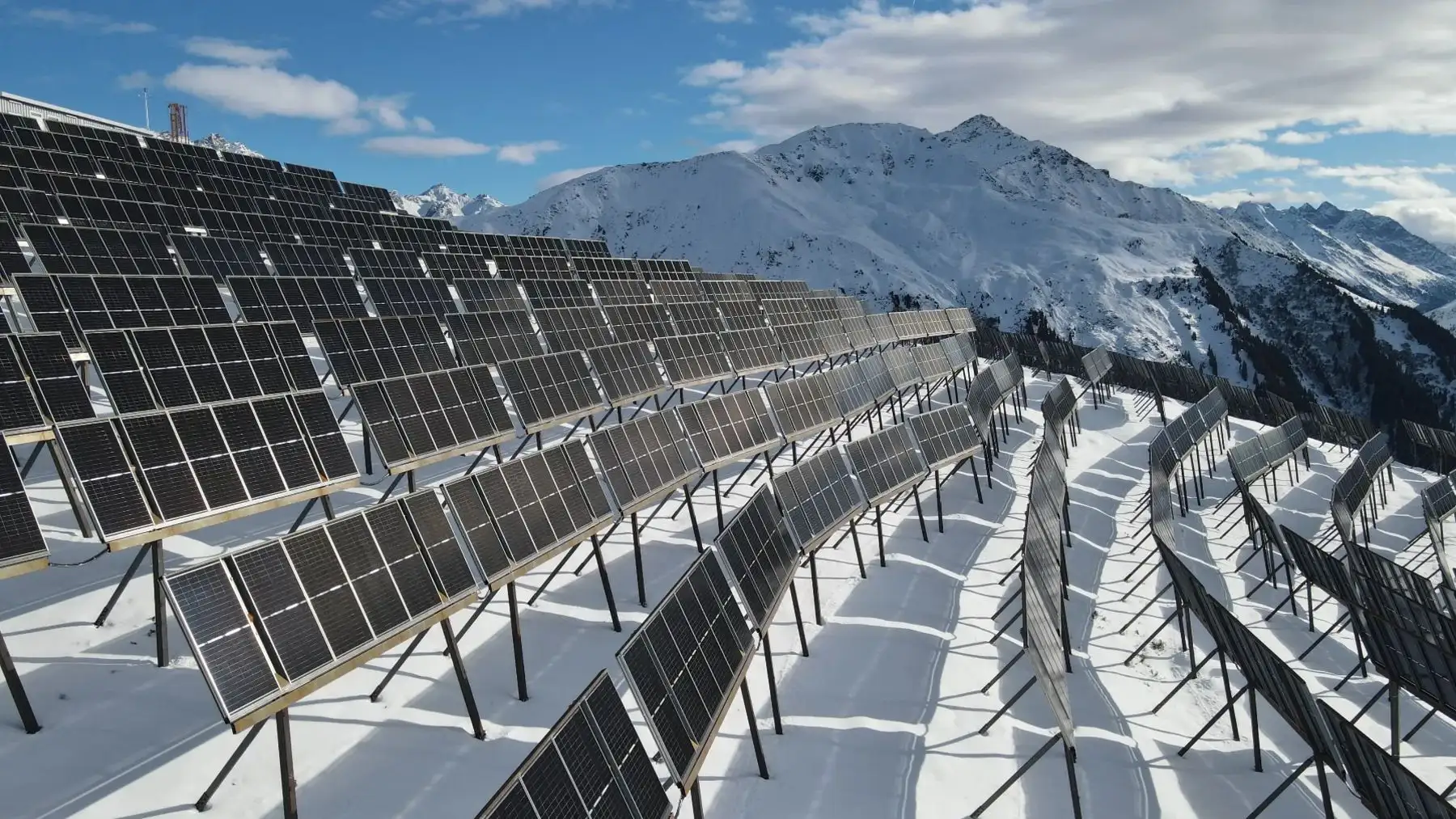
Switzerland’s Madrisa solar plant generated 1.5 million kWh in its first winter, with snowfall boosting panel output by 15%
 Madrisa Solar AG
Switzerland has turned to high-altitude solar power generation to overcome seasonal challenges.
Each winter, the nation’s electricity consumption increases even more, while domestic power output declines.
This supply deficit is usually bridged with imported energy, which conflicts with strict climate mandates and threatens national resilience.
Ultimately, by investing in bifacial solar modules, communities can sustainably meet surging power demands while reducing fossil fuel import reliance.
To close this gap, developers turned to bright alpine peaks, which delivered surprising results.
How does Switzerland’s mountainous photovoltaic energy generation actually boost winter output?
How modern power demand widens the Swiss winter energy gap
As society in Switzerland became more modern, so did the nation’s electricity needs.
Data centers, industrial electrification, electric vehicles, and heat pumps have all driven national power demand sharply upward.
Federal energy projections predict that Swiss electricity consumption will increase by almost 25% to 40% by 2050.
This means annual usage will reach between 75 and 85 TWh.
Switzerland’s transmission grid is strained under this rapid load growth.
Increasing peak demand threatens regional supply stability, creates distribution bottlenecks, and increases grid congestion risks.
While Switzerland operates an extensive hydroelectric fleet, not even this can keep up with the widening supply gap.
Nearly 60% of the nation’s annual electricity is supplied by hydropower, but every winter, output drops dramatically.
This is driven by surging seasonal heating demand and a decline in run-of-river generation due to freezing conditions.
Additionally, aging nuclear reactors are being decommissioned, removing vital winter baseload capacity.
This makes alternative domestic winter generation crucial.
Breaking the increased reliance on imported power
As the seasonal supply gap widens each year, Switzerland is forced to turn to expensive, carbon-heavy electricity imports.
This exposes the nation to severe financial and environmental risks.
When domestic generation drops, power must be purchased from neighboring European grids at steep market prices.
The imported electricity often comes from fossil-fuel-generated sources, like coal and natural gas.
This directly conflicts with Switzerland’s legally binding climate mandates, like the 2050 net-zero target and carbon reduction agreements.
That is why Swiss developers are turning to solar generation as a complement to hydropower to supply clean daytime energy.
However, more innovative approaches to solar deployment are needed due to persistent winter fog and low winter output.
Utility providers realized that they had to look beyond standard valley solar installations.
Elektrizitätswerke des Kantons Zürich formed Madrisa Solar AG to pioneer utility-scale alpine photovoltaic energy.
Another utility provider, Repower, alongside the municipality of Klosters, formed part of this innovation.
Using alpine solar generation to bridge the widening supply gap
Across Europe, solar panels are increasingly covering mountains.
The Madrisa Solar plant is located at about 6,500 feet high on a south-facing slope above Klosters, Switzerland.
In September 2025, the plant began feeding electricity to the grid.
It was the nation’s first operational large-scale alpine solar project under the national Solarexpress framework.
The facility uses robust mounting structures and double-sided bifacial modules that withstand harsh mountain winter conditions.
During its maiden winter season (October through March), it featured approximately 3,600 solar panels.
A record-breaking first winter above Klosters
Roughly 1.5 million kWh of clean power was generated during the first winter half-year.
This beat initial operational predictions.
Sunlight reflected off surrounding white snow cover boosted panel electricity output by about 15%.
The installation is positioned high above valley fog banks, ensuring uninterrupted winter sunshine absorption.
The Madrisa Solar plant’s construction is now progressing through multi-year phases.
By late 2027, the facility should be fully completed.
Its record-breaking first winter proves that high-altitude solar farms can successfully fill seasonal power deficits.
This commercial milestone serves as a vital blueprint for similar alpine regions worldwide that need to achieve climate targets.
Ultimately, by investing in bifacial solar modules, communities can sustainably meet surging power demands while reducing fossil fuel import reliance.

Anke Maree is a writer with a clear and engaging editorial style. Her work focuses on making complex topics accessible, informative, and relevant for readers across different areas of interest.
