
Inspectors cited an abandoned oil well in a Pittsburgh botanic garden for leaking 2 years ago. It still leaks, and the state’s own records list it as active
A rusted pipe stub comes out of the leaf litter on a wooded slope, ringed by dead brown vegetation while moss grows a foot away.
A metal tag hangs off it on a wire, carrying the name of the woman who farmed this land.
Through an infrared camera the air above the pipe is not empty. It moves.
The first commercial oil well in the country was drilled in this state in 1859, and the rush that followed covered whole counties in derricks within a generation.
An inspector recorded a methane reading of 6,235 here in 2024, on the path integrated scale those handheld detectors use.
The notice of violation is over 2 years old.
Which leaves the question the tag asks. How is something like this still unresolved?
Why 1 missing record outlives everybody
Because for most of the history of this industry nobody had to write anything down.
The first commercial oil well in the country was drilled in this state in 1859, and the rush that followed covered whole counties in derricks within a generation. Record keeping was not required until the 1950s.
That leaves roughly ninety years of drilling with no reliable paper trail. Wells were abandoned by walking away, sometimes with a log or a rock dropped down the hole, sometimes with nothing.
Steel casing corrodes and cement shrinks, so a hole that was quiet for decades can start passing gas or water later. A geologist at the federal survey describes the subsurface under parts of the state as looking like Swiss cheese.
Nobody knows where most of them are, which means the problem is not fixing wells. It is finding them first.
6,235 and 1 name on a tag
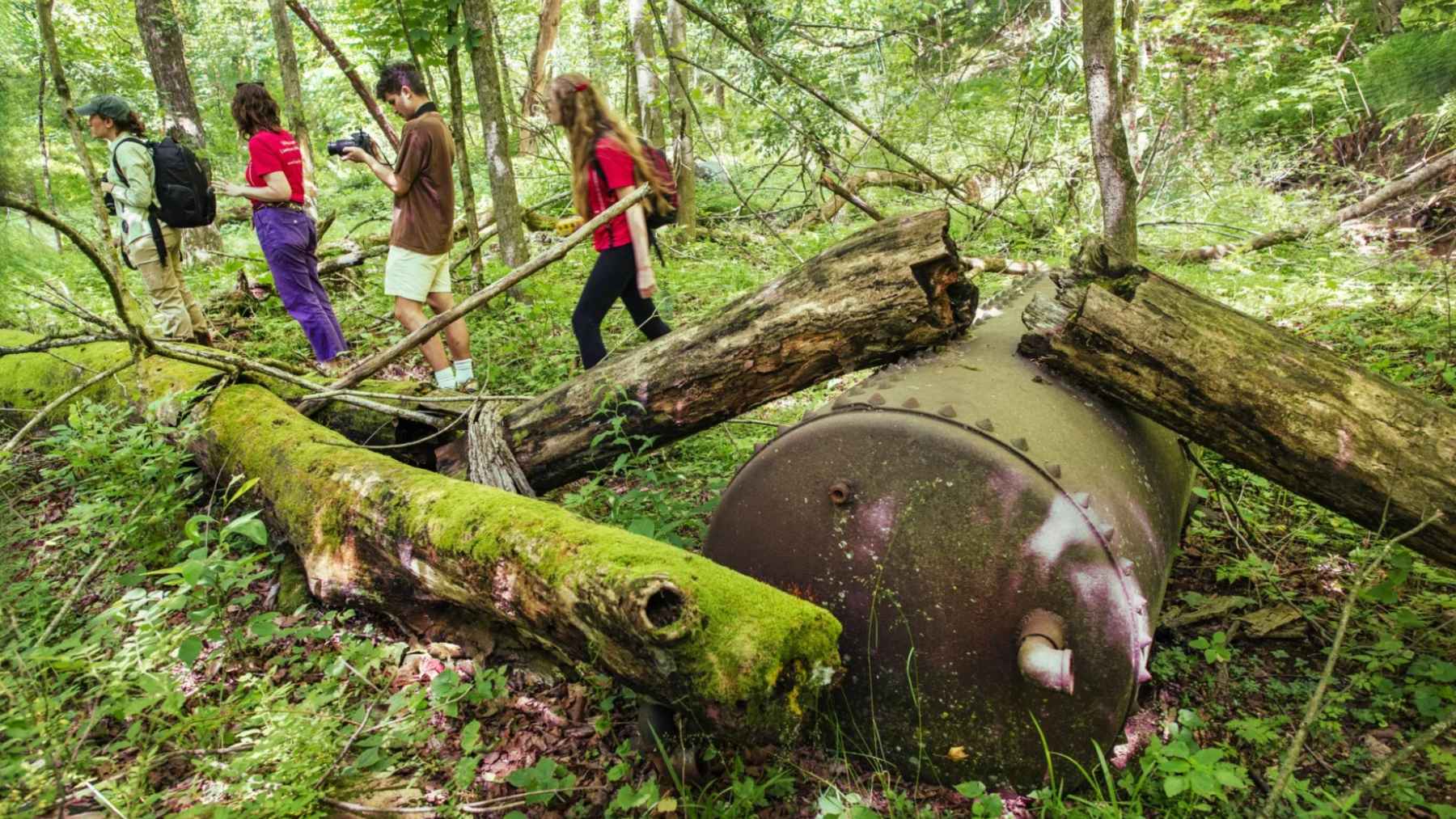
This particular well sits in the wooded southern part of a botanic garden west of the city, on ground closed to visitors.
It is named after the owner of the farm it was drilled on, a woman who lived here more than a century ago, and her name is still on the tag.
A state inspector measured the leak in 2024. A notice of violation followed, alleging the operator had failed to maintain the integrity of the well and failed to plug it on abandoning it.
An advocacy group walked the site again in the summer of this year with an infrared camera and the plume was still there, along with a sulfurous smell and a creek that gurgles oddly beside it.
In the state database the well was still classified as active.
3,800 plugged against 750,000 possible
Now the scale, and where the figures come from.
The state has plugged about 3,800 wells since it started that work in 1989. Private operators have sealed more than 50,000 over a longer period.
Against that, the estimate of what exists runs from 300,000 to 750,000 wells, a range wide enough to tell you how little is known.
Two measurements give the problem shape. A federal scientist puts surface emissions at roughly 10 to 20 percent of abandoned wells, while noting that 99 percent of them have never been measured at all.
And a published study found that nearly 25 percent of the state’s abandoned wells sit within a few hundred feet of a building.
What 500 in 4 years actually buys
Here is the arithmetic behind this month’s announcement.
The state has now sealed 500 wells since federal money arrived in the fall of 2022, in the way that an aerial survey or methane leaks turns into a solved backlog.
Set 500 against the low end of the estimate and the campaign has reached under a fifth of one percent of the wells that may be out there, and the data investigation maps how many sit beside houses.
Money is the binding constraint. The state reckoned in 2022 that plugging only its documented orphan wells would cost more than a billion dollars, and the reported account sets that against what has been spent.
The honest caveats belong here too. Plugging sometimes fails, and most old wells harm nobody.
Where the next 50 feet gets inspected
Strip the history away and this is a liability question wearing a geology costume.
Companies are legally responsible for plugging wells they stop producing from. Some go bankrupt or simply walk away first, and the bonds posted against that outcome are far below what the work costs.
For a homeowner the rules are narrower than the fear suggests. The agency says finding a well on your land does not make you responsible for it, but trying to produce from it, profit from it or hide the evidence of it can.
So the practical advice from the extension service is dull and correct. Report it, note the coordinates, and do not cut the pipe, pull it or try to light the gas.
An abandoned oil well is somebody’s property until the paperwork says otherwise.
Somebody still has to find the owner.

Hugo is an engineer with strong technical expertise. Multilingual from an early age, his writing combines technical clarity with a strong interest in science and energy.
