
Ten solar panels listed at 3,000 dollars apiece were taken from a Georgia property and sold to a scrap yard by the pound, where the metal a buyer can actually use is 8 percent of the weight
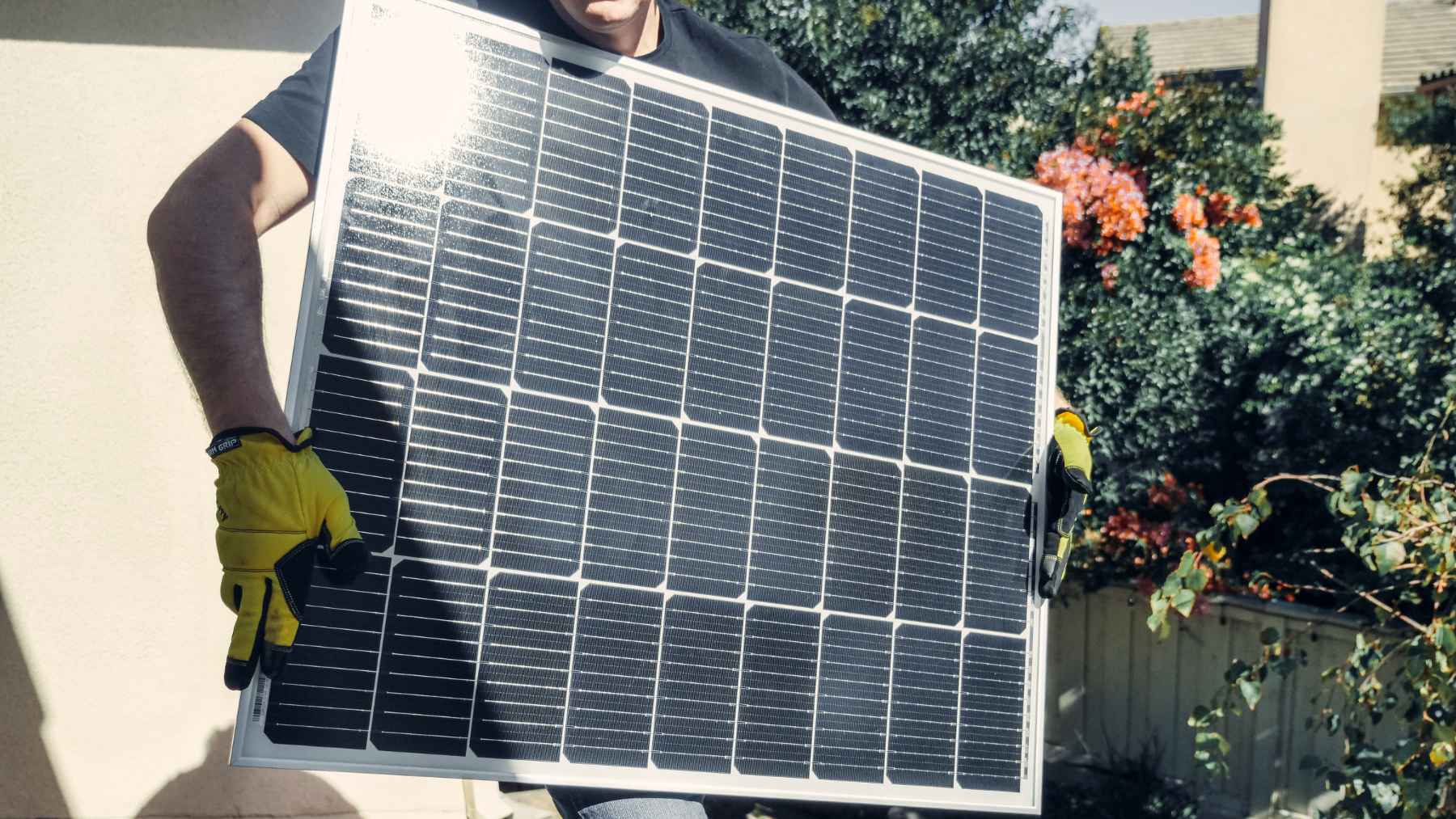
Ten solar panels lean in a stack against a fence in a scrap yard in south Georgia, glass out, frames scuffed.
They were weighed in like any other load of metal. Nobody asked where they came from.
A day earlier they had been bolted to somebody’s property an hour up the road.
It is heavy and awkward, the glass cracks if you drop a corner, and every unit carries a serial number printed on the back rail and recorded by whoever installed it.
The sheriff’s office took the report on the twenty eighth of October, 2026, and had all ten back within a day.
The reported loss was 30,000 dollars.
Which leaves the question the weighbridge answers. What is a panel worth as metal?
Why 1 stolen panel is hard to move
Because almost nobody will buy it.
A module is a poor thing to steal in the first place. It is heavy and awkward, the glass cracks if you drop a corner, and every unit carries a serial number printed on the back rail and recorded by whoever installed it.
The legitimate secondhand market wants that paperwork. Installers, brokers and insurers all ask where a used module came from, because a panel without provenance is a warranty claim nobody will honor.
That leaves one buyer who asks nothing at all. A scrap yard does not care what an object is, only what it weighs and what metal it contains.
So the thief who cannot sell a panel as a panel sells it as a pile of aluminum, which is the moment the value falls off a cliff.
10 panels and 1 recycling yard
The case itself is small and completely documented.
Investigators received a report that 10 panels had been removed from a property in Coffee County, Georgia. The brand was QCELLS and the owner put the value at about 3,000 dollars each.
The panels had been taken to a recycling business in Douglas, the county seat, where they were reportedly sold as scrap metal.
All ten were recovered there and positively identified by their owner. A man of 44 from Douglas was arrested and charged with two counts of theft by taking under the state code.
He is presumed innocent, and the sheriff’s office says the recovery took under 24 hours.
76 percent glass and 20 grams of silver
Now the arithmetic that makes the sale absurd.
By weight a typical crystalline silicon module is about 76 percent glass, 10 percent plastic polymer, 8 percent aluminum, 5 percent silicon, 1 percent copper and less than a tenth of a percent silver and other metals. Those shares come from an Australian research institute by way of a science advocacy group, not from a manufacturer.
Read that list as a scrap buyer. The glass is laminated to polymer and bonded to the cells, which makes it a contaminated stream rather than cullet, and the polymer is a cost.
What is left to pay for is the frame. Eight percent of the weight, at the going rate for aluminum extrusion.
Meanwhile a panel of 60 or 72 cells holds about 20 grams of silver, and a federal estimate puts that at roughly 10 percent of what the panel cost to build.
What 0.1 percent of the weight is worth
Here is where the two numbers collide.
The silver is under a tenth of a percent of the mass and about a tenth of the cost, in the way that a lab record or a railway array turns into a finished market.
No scrap yard separates it. Recovering silver, copper and silicon from a laminated module needs a dedicated line, which is why the plants being built for that job describe themselves as critical materials recovery rather than as recycling, and the materials breakdown is where those shares are set out.
So the sale converted a working asset into the price of its frame and destroyed everything else in the process.
Three things the record does not say. What the yard actually paid, how the panels were moved, and where the figure of 3,000 dollars per panel comes from, and the sheriff’s account gives the loss as reported rather than as appraised.
Where the same 8 percent shows up again
Strip the crime away and the thief did in one afternoon what the industry has been arguing about for a decade.
Conventional panel recycling goes after exactly the same two materials, the frame and the glass, because they are most of the weight and the easiest to separate. They are also the parts worth least.
That is the whole reason recycling a module in the United States still costs more than burying it, and why the new plants are pitched on silver and copper instead.
A yard paying by the pound is simply that economics taken to its conclusion, with no pretense attached.
Stolen solar panels are worth almost nothing to the person holding them.
Somebody still has to get the silver out.

Hugo is an engineer with strong technical expertise. Multilingual from an early age, his writing combines technical clarity with a strong interest in science and energy.
