
Hydrogen production is such a delicate process that requires great care and attention to detail. As such, not every country has a tried and tested corporation that can generate the energy source to the highest standard. This explains why many companies find themselves in the middle of executing hydrogen developments in a multitude of nations in which they are not headquartered.
Air Products seeks to elevate its status in the United States further
This trend has been most noticeable in 2026, and in another example of it, Air Products secured hydrogen supply agreements for launch operations at Kennedy Space Center and Cape Canaveral.
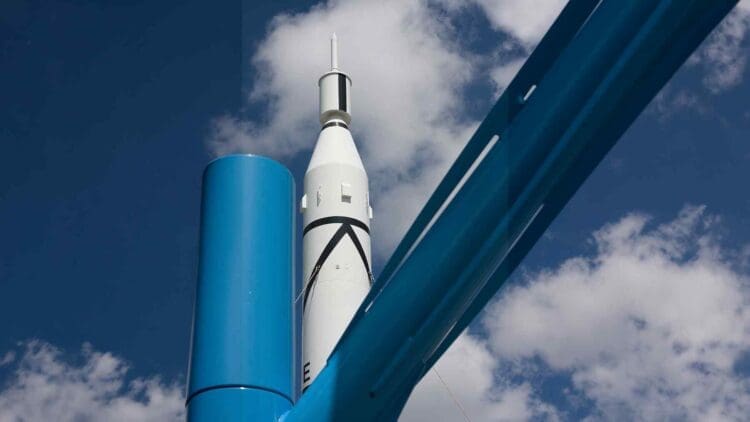
Unlike most countries, the United States has the privilege of relying on its own local corporations when it comes to generating energy because of the financial resources that it has. Air Products and Chemicals, Inc. is a US-based company that has managed to secure new hydrogen supply agreements with the National Aeronautics and Space Administration (NASA) to support certain functions at the Kennedy Space Center and Cape Canaveral Space Force Station in Florida.

This is a case of two different worlds colliding to have a devastating effect on the grand scheme of things. The contracts are worth an impressive $140 million, which is all intended to assist in providing liquid hydrogen.
Some people might wonder why a renowned space research department like NASA has become affiliated with the energy industry. Liquid hydrogen is actually an essential fuel for launching space systems, and it is versatile, being used in other ways by different nations.
Air Products and NASA America’s efficient duo that has delivered for decades
Something unbeknownst to the newer generation or newer energy industry enthusiasts is that NASA and Air Products have been involved in a partnership for decades. The two’s relationship began all the way back in 1957, but neither could have been aware of how long they would be in business with each other.
The dynamic of their partnership is that Air Products plays the role of fuelling major milestones that NASA pursues, which makes the company part of NASA’s well-documented success throughout the years.
As Air Products President Francesco Maione stated:
“‘From the inception of the United States (U.S.) space program, Air Products has supported NASA’s mission by supplying the critical industrial gases needed from the initial Apollo 11 moon landing to the upcoming Artemis II moon mission. For decades, Air Products has consistently demonstrated our ability to supply world-scale levels of liquid hydrogen and other industrial gases safely and reliably through our robust supply chain. We’re proud to play a role in helping NASA confidently continue its important work.”
Launching operations at Kennedy Space Center and Cape Canaveral
The brand-new contracts need Air Products to supply about 36.5 million pounds of liquid hydrogen to several of NASA’s strategic launch and testing hubs. As has already been made public, the main centers benefiting will be the Kennedy Space Center and Cape Canaveral Space Force Station.
Delving deeper into the importance of liquid hydrogen to NASA’s initiatives
Liquid hydrogen is not used alone but is mixed with liquid oxygen. Scientists established it as a vital propellant for cryogenic rocket engines used in many launch vehicles. The energy source has a relatively high energy-per-weight ratio, which makes it highly effective for deep-space missions that NASA operates in. The agreement sees yet another monumental hydrogen project in the US, but this one might be unique in comparison to the other ones.
When two entities produce positive results in their ventures, time seems to fly by without them fathoming just how long they have been affiliated. Such is the case for Air Products and NASA, who have now extended their multiple-decade-long partnership. Ultimately, the US has yet another opportunity to consolidate its place as a leader in hydrogen generation.

