
AltaGas in talks with Asian customers in India, Vietnam and Taiwan to supply propane and butane from B.C. terminal
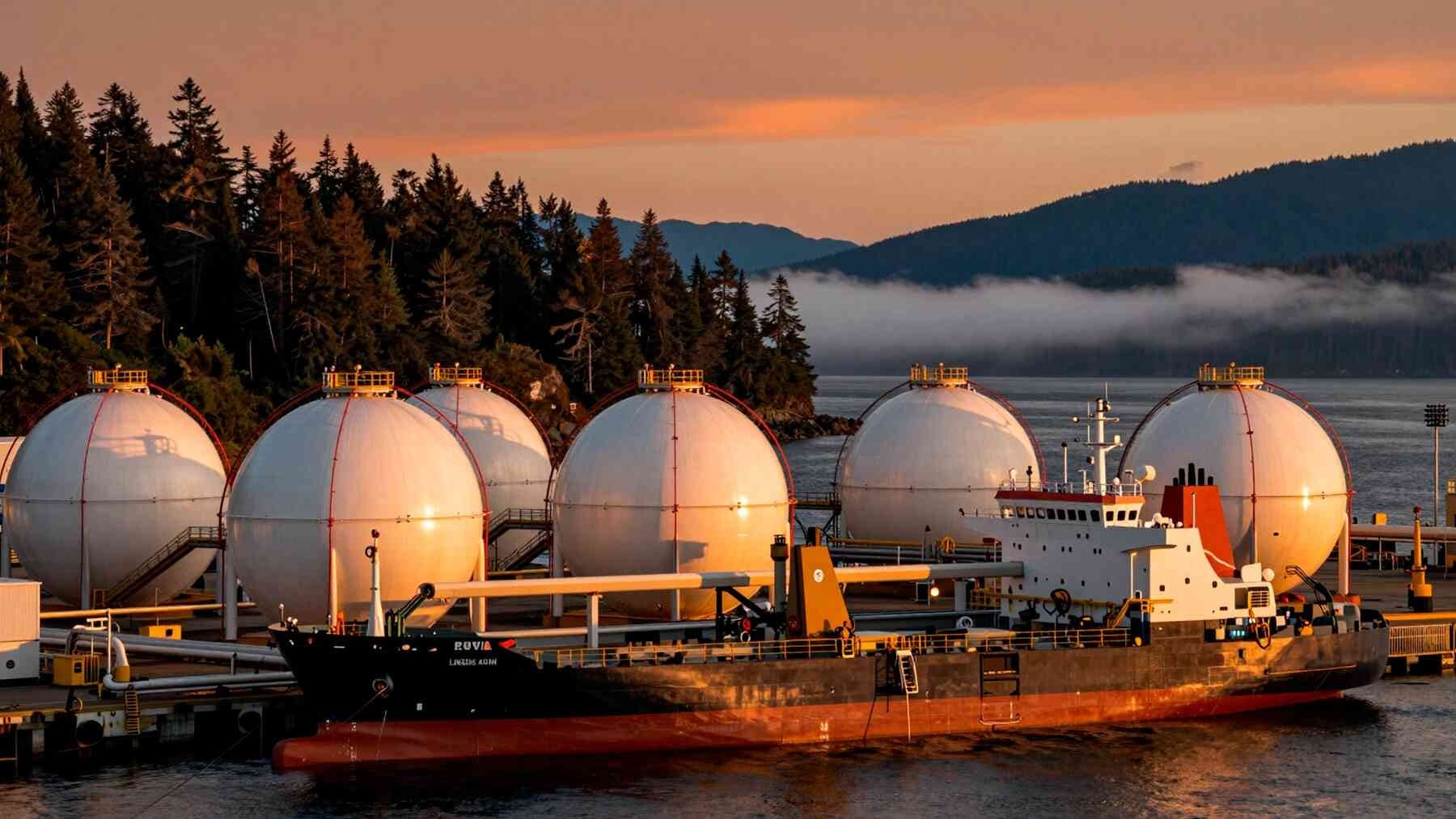 AI-made
AltaGas Ltd. is in active negotiations with customers in India, Vietnam, Taiwan, and other Asian markets to supply Canadian propane and butane from its export terminal near Prince Rupert, B.C. CEO Vern Yu disclosed the talks on the sidelines of the Global Energy Show on June 11, 2026.
Yu said many parts of Asia are “materially short” on those fuels, which are widely used for cooking and transport—and that buyers across the region are increasingly looking beyond their traditional suppliers.
AltaGas in active negotiations with multiple Asian buyers
The talks span a broad range of markets. Yu named India, Vietnam, and Taiwan specifically, alongside other unnamed Asian countries, as targets for Canadian liquefied petroleum gas exports. The conversations reflect a wider shift in how Asian energy buyers are thinking about supply security—and where they source it from.
CEO Vern Yu’s comments at the Global Energy Show on June 11, 2026, confirmed active negotiations with buyers in India, Vietnam, Taiwan, and other markets.
Propane and butane may not dominate headlines the way natural gas or crude oil do, but they are essential fuels across much of Asia. Hundreds of millions of households rely on them for cooking, and transport sectors use them as a cleaner-burning alternative to gasoline and diesel. Yu’s characterization of many Asian markets as “materially short” signals that demand is outpacing what current suppliers can reliably deliver—by a meaningful margin.
Why Asian buyers are looking beyond the U.S. and Middle East
For years, the United States has been the dominant supplier of propane and butane to Asian markets, with Gulf producers also shipping large volumes across the Indian Ocean to buyers in South and Southeast Asia.
Both supply relationships are now under strain. Trade grievances between Asian economies and the United States have made buyers cautious about depending too heavily on American exports. Conflict in the Persian Gulf region, meanwhile, has disrupted Middle Eastern supply chains, adding uncertainty to an already tight market. Asian buyers are actively seeking suppliers outside their traditional networks—and that is opening a window for Canadian exporters like AltaGas.
Canada’s geographic advantage and AltaGas’s competitive position
Distance works clearly in Canada’s favor. Shipping propane and butane from the B.C. coast to markets in East and Southeast Asia is meaningfully shorter than routing cargoes from the U.S. Gulf Coast or the Persian Gulf. Yu cited that geographic edge as a key commercial advantage—shorter voyages translate directly into lower freight costs and faster delivery times.
AltaGas was early to recognize this opportunity. The company opened Canada’s first propane export terminal near Prince Rupert in 2019, with Japan and South Korea as its initial customers. Since then, it has broadened its reach into China and other Asian markets, building an operational track record that now underpins the expansion talks Yu described at the Global Energy Show. AltaGas is no longer selling a concept—it has years of documented performance to point to.
New Ridley Island export facility nearing completion
The growth AltaGas is pursuing in Asia depends partly on having sufficient export capacity to serve new customers. That is where the Ridley Island Energy Export Facility becomes relevant.
The project sits adjacent to the existing Prince Rupert terminal. As of June 2026, construction is approximately three-quarters complete—a meaningful milestone that puts the facility on track for its planned launch. Unlike the original terminal, which focused exclusively on propane, Ridley Island is designed to handle both propane and butane exports. AltaGas is targeting the start of exports from Ridley Island later in 2026, which would give the company considerably more capacity precisely when it is working to close deals with new buyers.
Active negotiations with India, Vietnam, Taiwan
AltaGas is executing a concrete commercial strategy, not a speculative one. The company has an operating terminal, a near-complete second facility, and an established customer base in Asia that it is now working to expand. CEO Vern Yu’s comments at the Global Energy Show on June 11, 2026, confirmed active negotiations with buyers in India, Vietnam, Taiwan, and other markets.
The timing is favorable. Asian buyers face real pressure to diversify away from U.S. and Middle Eastern suppliers, and Canada offers a shorter shipping route than either alternative. Whether AltaGas converts these negotiations into long-term supply contracts remains to be seen—but the structural conditions driving those conversations appear durable. AltaGas trades on the Toronto Stock Exchange under the ticker ALA.
Kelly is an experienced writer with 15 years of experience exploring the big stories that shape our world, from tech breakthroughs and space exploration to climate, energy, and the fascinating quirks of science. She has a talent for turning complex ideas into sharp, memorable insights that stay with readers long after they’ve finished reading.
