
Amazon just made a 20-year bet on Earth’s own heat to keep its Nevada data centers running day and night
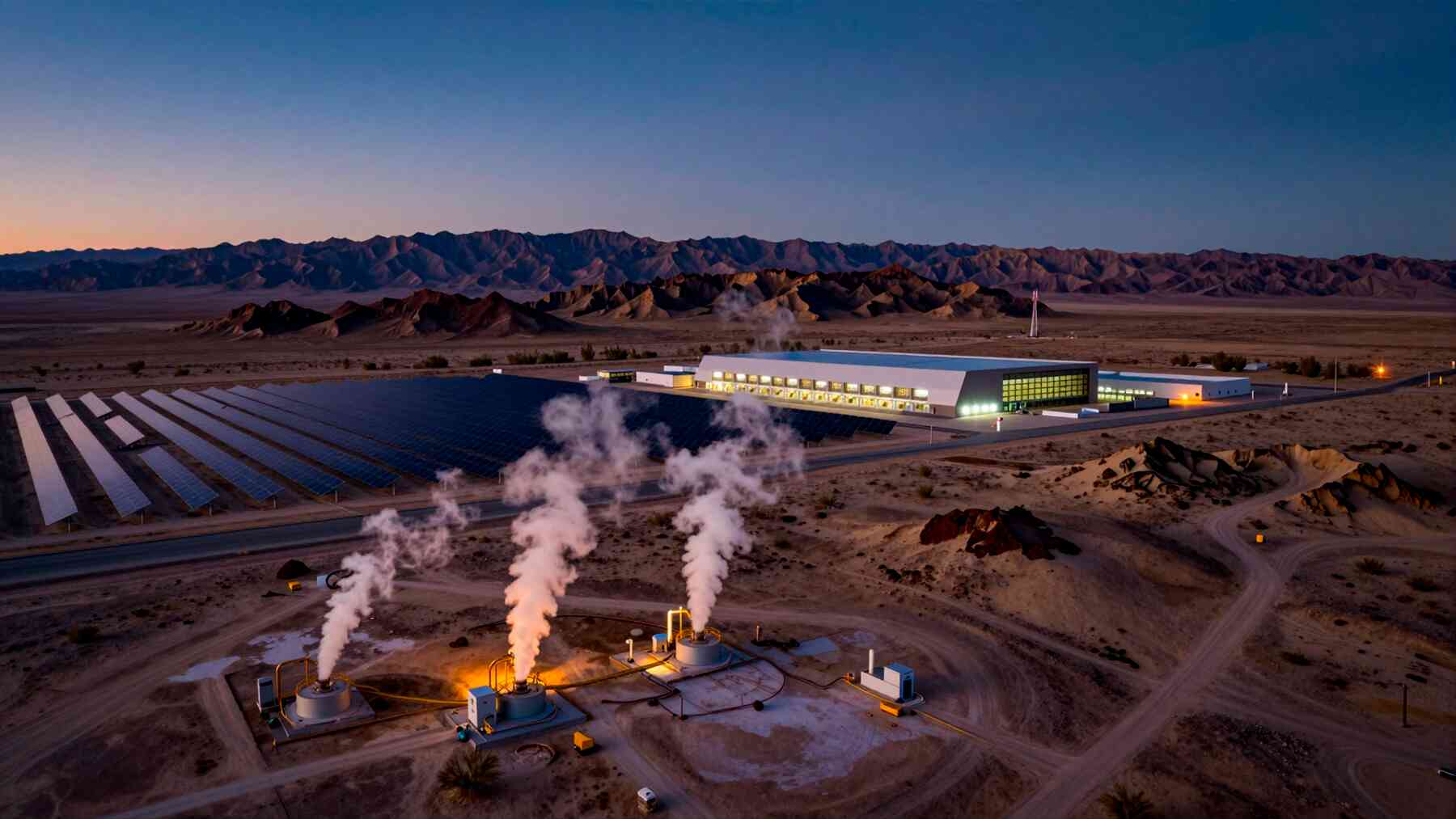 AI-made
Data centers rank among the most power-hungry facilities on the planet — running 24 hours a day, every day, with no tolerance for interruption. Finding clean energy that matches that relentless demand has become one of the defining challenges of the AI era.
Now Amazon is placing a major bet on solving it in Nevada. The company is committing to 700 megawatts of new carbon-free generation and storage near Reno — anchored by a 20-year geothermal agreement that marks a first for its data center operations.
Data centers that never sleep need power that never stops
Modern data centers operate like utilities unto themselves — constant load, zero margin for error. A brief outage that might inconvenience a factory can cascade into corrupted transactions, lost data, or broken services affecting millions of users. That reliability requirement shapes everything about how operators source their power.
These gaps are manageable on a grid with diverse sources, but they create real friction for facilities that need every megawatt accounted for around the clock.
Most renewable energy does not behave that way. Wind turbines slow when the air is calm; solar panels go dark after sunset. These gaps are manageable on a grid with diverse sources, but they create real friction for facilities that need every megawatt accounted for around the clock.
The result is growing demand for what the industry calls “firm” carbon-free capacity — generation that runs regardless of weather or time of day. It is the most constrained resource in clean energy markets, and the race to secure it is intensifying as AI workloads push data center electricity consumption higher.
Amazon’s Nevada announcement is a direct answer to that constraint. By combining geothermal, solar, and battery storage into a single coordinated portfolio, the company is assembling something close to continuous carbon-free coverage — stacking complementary strengths rather than betting on one source.
Geothermal takes center stage in Amazon’s clean energy plan
At the core of the Nevada deal is a 100 MW, 20-year power purchase agreement between Zanskar, a Salt Lake City-based geothermal developer, and NV Energy. The agreement runs through 2050 and covers multiple projects that Zanskar expects to construct, own, and operate as a portfolio, with delivery to NV Energy targeted by 2030.
Geothermal draws on the Earth’s internal heat — a source that does not fluctuate with seasons or weather — making it capable of baseload generation: steady, dispatchable output available at any hour. Amazon has described this as its first data center project powered in part by dedicated geothermal generation, citing its around-the-clock availability as a natural fit for data center loads.
Zanskar uses artificial intelligence, modern drilling techniques, and computational geoscience to locate and de-risk geothermal resources, reducing the exploration uncertainty that has historically made geothermal development expensive and slow. The company has already identified specific Nevada sites, including locations named Pumpernickel and Big Blind.
Solar and batteries fill the gaps geothermal alone cannot cover
One hundred megawatts of geothermal anchors the portfolio, but a second component carries much of the load: 600 MW of solar generation paired with 600 MW of battery storage, supplied by Primergy.
Solar produces peak output during midday hours, often generating more power than can be immediately consumed. Battery storage captures that surplus and dispatches it later, extending solar’s effective window well past sunset. Together, these two technologies cover hours when geothermal alone would fall short — giving the portfolio something closer to genuine continuity than any single source could provide.
Amazon has also stated that it will cover all costs associated with powering its data centers, including new energy infrastructure and generation. Nevada residents and businesses will not be billed for the buildout — a notable assurance in a state where large industrial customers have sometimes drawn scrutiny for their effect on utility rates.
Zanskar’s rise and the broader geothermal moment
The Nevada PPA arrives at a moment of real momentum for Zanskar. The company recently closed $115 million in Series C funding, secured $40 million in development capital, and announced a GEODE agreement with CC Power — moves the company says support its effort to scale naturally occurring geothermal resources for U.S. power demand.
Zanskar’s operational foundation includes the Lightning Dock geothermal power plant in New Mexico, which the company says contains the most productive pumped geothermal well in the United States. Geothermal has spent decades on the margins of clean energy finance, viewed as technically promising but commercially difficult. Rising demand for firm power — and large anchor customers willing to sign 20-year agreements — is changing that calculus.
What this means for the Nevada grid — and beyond
The Zanskar PPA is not yet final. It remains subject to approval of NV Energy’s 2026 Integrated Resource Plan by the Public Utilities Commission of Nevada, a regulatory step that will determine whether the project moves forward on its current timeline.
If approved, the 700 MW Nevada portfolio would join Amazon’s broader clean energy footprint: more than 700 projects globally, totaling over 40 GW of capacity — enough, the company says, to power more than 12 million U.S. homes.
Large technology companies are increasingly shaping how utilities plan their grids. By committing to long-term contracts for firm clean capacity and absorbing infrastructure costs directly, companies like Amazon are signaling what they need and backing that signal with capital. The geothermal-solar-storage model taking shape in Nevada may offer a replicable template for other operators facing the same fundamental problem: how to run always-on infrastructure on power that is always clean.
Kelly is an experienced writer with 15 years of experience exploring the big stories that shape our world, from tech breakthroughs and space exploration to climate, energy, and the fascinating quirks of science. She has a talent for turning complex ideas into sharp, memorable insights that stay with readers long after they’ve finished reading.
