
After Hurricane Helene plunged their Asheville neighborhood into darkness, one immigrant community decided to become their own power source
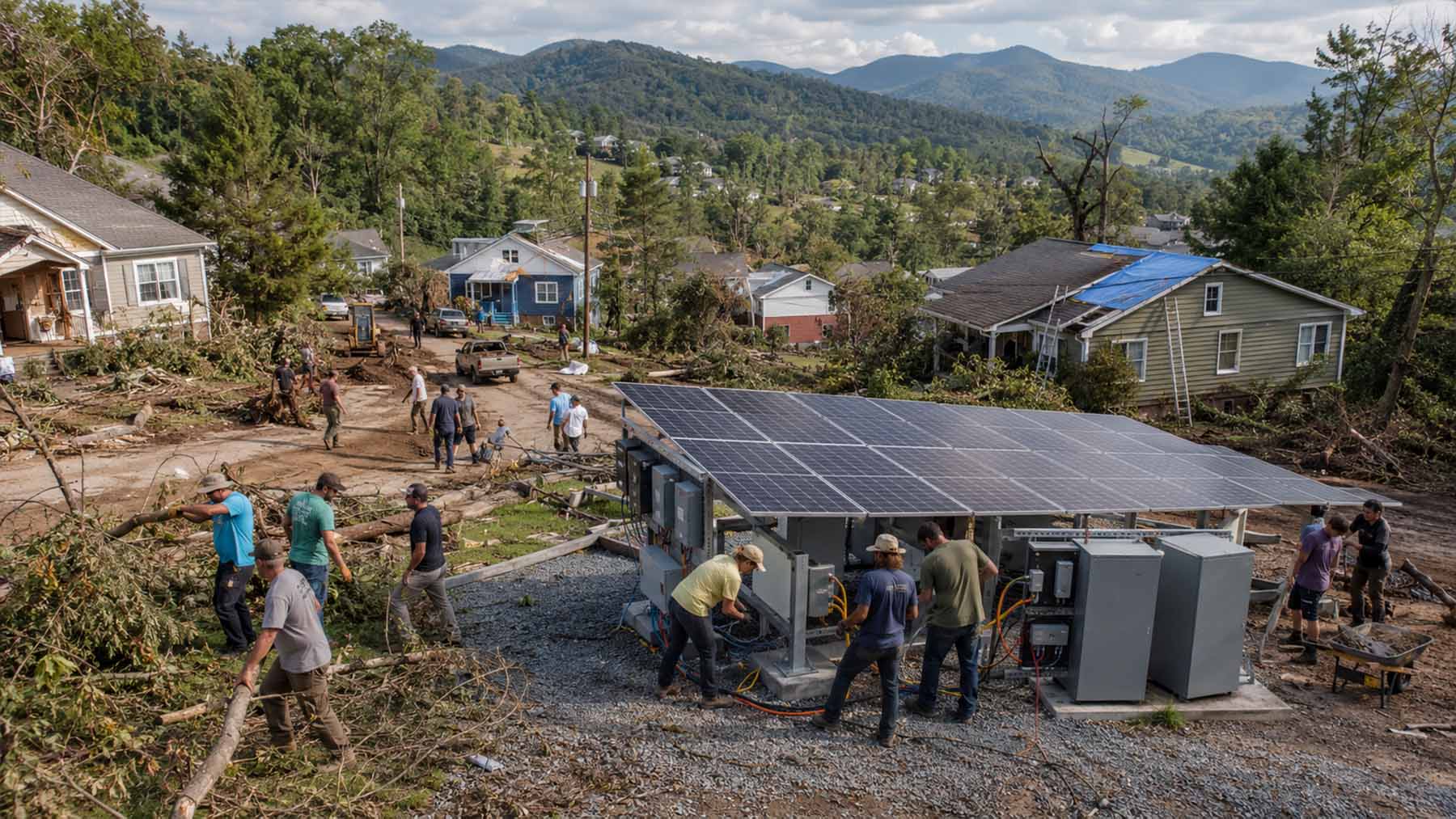 AI-made
On a rooftop in Emma, something big just happened.
Emma is a tight-knit neighborhood. It sits northwest of downtown Asheville. Most residents are immigrants. Most families live on lower incomes.
Earlier this month, neighbors and clean-energy workers gathered on top of a local building. They were there to celebrate a massive win.
The ultimate secret to surviving the next disaster was sitting right above their heads the whole time: the sun, captured on their own roofs.
Hurricane Helene hit western North Carolina hard. The storm tore through the area in late September 2024. Now, nearly two years later, this community is not just fixing broken things. They are rebuilding on their own terms.
They are changing what it means to be ready for disaster.
A storm that changed everything
Hurricane Helene did not just turn off the lights in Asheville. It stopped daily life completely.
The storm caused massive damage across the city. In Emma, things got bad fast.
The neighborhood lost power. But they also lost water. Helene destroyed a main city water pipe. Most of Asheville went without clean tap water for nearly two months.
That water crisis changed everything.
Disaster relief crews brought in mobile solar charging stations. Residents had never thought much about solar energy before. Now, they saw it in action.
The small solar stations kept cell phones charged. They kept information flowing during the chaos.
“Suddenly, there was an interest in solar where there hadn’t been before,” said Ingrid Johnson. She is a project manager at Poder Emma. “The reality is that solar can be for communities that are often left out.”
Poder Emma: Community first, solutions second
Poder Emma is a local alliance. In Spanish, poder means “power.”
For nearly two decades, the group has fought against displacement. They work hard to keep housing affordable.
A real estate co-op named La Esperanza sits at the center of their newest project. Neighbors formed the co-op in 2019.
La Esperanza owns the local community center. The building covers 20,000 square feet. Families use it for parties, classes, and big meetings.
This spring, workers installed over 100 solar panels on the roof. The panels form a 46-kilowatt system. It will pull less power from the grid. It will save the community money on electric bills for years to come.
Hardware is only part of the story. The people behind it matter more.
At Poder Emma, regular members lead the way. Leaders do not make decisions alone.
“Typically, a nonprofit is a group of people that sees a problem and goes into a community and says, ‘We’re going to solve all your problems,'” said Kelvin Bonilla. He joined Poder’s staff in early 2025.
“We listen to the community first before we do anything,” Bonilla added.
A network of partners—and a creative workaround
No single group could do this alone.
The Footprint Project jumped in to help. They are a sustainable disaster-relief nonprofit based in New Orleans, Louisiana. They arrived right after Helene and stayed to help.
Footprint donated the rooftop solar panels. Sugar Hollow Solar installed them.
Invest Appalachia provided money upfront. They are a regional development fund. Their bridge loan covered costs while federal rebates were processed.
The community needed a battery system to store energy. But full-sized batteries were too expensive. So, the team got creative.
They used a small solar trailer donated by Footprint. The trailer features 900 watts of panels and a modest battery.
It powers the basics. It runs the internet. It keeps food cool in fridges.
Most importantly, it powers a water pump. Poder drilled a water well on the property the winter after Helene ruined the city supply.
State leaders are watching closely. Footprint staff say this project could guide a $5 million state grant program. That program is funding 24 small power grids across western North Carolina.
Solar porches: A pilot for manufactured homes
Poder and Sugar Hollow wanted solar for individual homes, too.
Most homes in Emma are manufactured homes. These structures usually cannot hold heavy solar panels on their roofs. That problem has kept mobile home owners out of the clean energy market for decades.
The team found an easy solution. They build a custom porch attached to the mobile home. Then, they put solar panels right on the porch roof.
Earlier this year, Sugar Hollow and Poder built a test porch in Emma. They mounted 15 panels on top. They connected the panels to a Tesla Powerwall 3 battery.
The family paid nothing for the upgrade. Grants from Footprint and a 2025 Sugar Hollow program paid for the whole thing.
“This was a really great pilot project to understand how we can make solar available for mobile homes,” said Clary Franko. She is the chief operating officer at Sugar Hollow. “The structure is multipurpose—it is for solar but also a gathering place for the community.”
Resilience as a long-term strategy
This work is not just about surviving the last storm. It is about surviving the next one.
Weather events are getting worse. Power grids fail often. Community-owned energy gives families a safety net. Keeping a water pump running saves lives. Keeping a phone charged keeps families connected.
The solar trailer is already doing double duty. Poder runs a home repair crew. They started the crew to fix Helene’s damage. Soon, they will start doing energy upgrades, too.
The workers haul the solar trailer right to construction sites. They use it to run power tools on job sites miles away.
“The climate is going to get more extreme as years go by, unfortunately,” Bonilla said. “So, being able to power the pump from the solar trailer adds that extra layer of resiliency.”
Rooftop systems, portable power trailers, and solar porches solve big problems. They bring clean energy to places that usually get left behind.
Other neighborhoods want to try this model. The big question is simple. Will the funding and partners be there to help them do it?
After years of fighting for a voice, this neighborhood realized something simple. The ultimate secret to surviving the next disaster was sitting right above their heads the whole time: the sun, captured on their own roofs.
Kelly is an experienced writer with 15 years of experience exploring the big stories that shape our world, from tech breakthroughs and space exploration to climate, energy, and the fascinating quirks of science. She has a talent for turning complex ideas into sharp, memorable insights that stay with readers long after they’ve finished reading.
