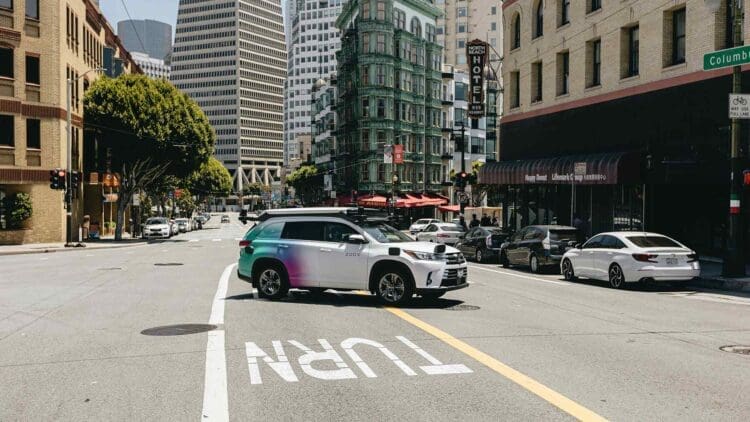

The future is autonomous, or so we thought. Never in a million years would people from a few centuries ago have believed that we would be driven around in self-driving vehicles. Transportation has rapidly evolved to integrate intelligent, adaptive systems, making autonomy easier than ever. However, for one particular company, the dream of complete autonomy is not quite in reach – yet. But how long will we have to wait until it is achieved?
Autonomous transportation: This is where it all started
The autonomy dream is still quite young in the transportation industry, with its foundation dating back to the 1920s. A radio-controlled car called the American Wonder graced the streets of New York City in 1925. In the 1950s, General Motors investigated cars (the Firebirds) that moved autonomously using cables incorporated into roads.
Years of research and development went into this dream, and thanks to significant advancements in smart technologies such as artificial intelligence (AI) and sensors, the dream took shape. By 2009, Google had dedicated efforts to autonomy by launching a self-driving project known as the “Google X moonshot” project. By 2016, this project developed into Waymo, a company owned by Alphabet (Google’s parent company).



In 2018, Waymo launched the first-of-its-kind commercial, autonomous robotaxi service in Phoenix, known as Waymo One, breaking barriers in the transportation industry. Experts believe that these cars are the future, but presently, they still face one problem.
The cars of the future still face one problem
The world is transitioning to clean energies and fuels. Therefore, it is a given that “the cars of the future” are electric. Add in AI that has been optimizing energy and industry worldwide, and you may have the perfect recipe for autonomous transportation. However, the Waymo One robotaxi service took it one step further by adding a touch of luxury, as a fleet of Jaguar I-PACE EVs is central to the autonomous transportation service.
While Waymo One may have launched in Phoenix, the robotaxi service quickly expanded to other cities, namely Los Angeles, San Francisco, Miami, Austin, and Atlanta. New York City may be up next to incorporate the robotaxi service, as pilot testing is presently underway. The benefits of this service are astounding and include, but are not limited to:
- 24/7 operations
- Increased safety experience
- Eco-friendly
- Improved mobility
However, Waymo’s robotaxis are experiencing a somewhat unique problem. The company may have come up with a temporary solution, but some argue that this makes the Waymo One service less smart.
The temporary solution: Is it still smart?
AI integration and smart grid software development have globally taken off. Yet, Waymo seems to have forgotten to integrate automatically closing doors into its cars. It goes without saying that completely autonomous cars equipped with the latest high-tech equipment are expected to be completely automatic. The company confirmed that robotaxis will be available with this feature, but did not disclose a particular timeline.
Nonetheless, Waymo has found a temporary solution, and some citizens may even make some extra cash. Atlanta is the first to be introduced to a pilot program, entailing Waymo paying DoorDash drivers to manually close the open doors of the robotaxis. The DoorDash driver receives a notification in his/her DoorDash app and earns $11.25 per gig.
Despite how it sounds, it is a golden opportunity for Atlanta-based DoorDash drivers to make easy money. Los Angeles is testing a similar project by using the roadside assistance app called Honk. Honk workers will earn even more, with gigs paying out up to $24. So, while we wait for Waymo to launch autonomous vehicles that are completely automatic, other forms of public transportation in Vilnius are at least set to go green with hydrogen.
Disclaimer: Our coverage of events affecting companies is purely informative and descriptive. Under no circumstances does it seek to promote an opinion or create a trend, nor can it be taken as investment advice or a recommendation of any kind.