
It was just an ordinary underground cave until researchers realized it could become a giant battery powered by Earth’s gravity
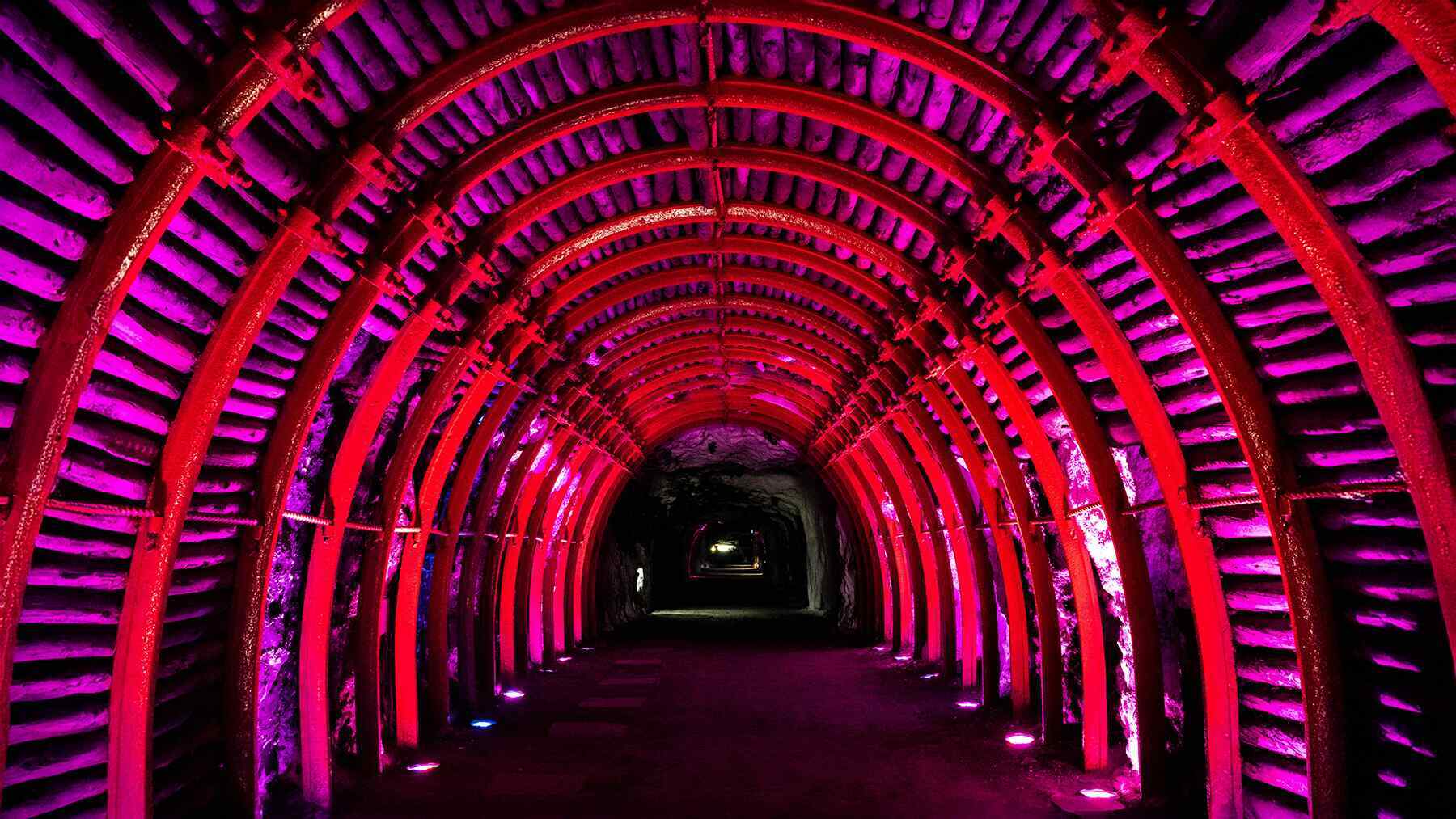 Credits: File, representative image, Energies Media Internal edition
Turning back the sands of time by repurposing underground caves and their forgotten communities.
Sometimes, taking a step back to reevaluate can be extremely fruitful and provide clarity on how to dig a little deeper for clean energy.
Fortunately, in this case, burning the midnight oil will require much less perspiration and a whole lot more innovation.
Massive battery energy storage systems paired with large-scale renewable projects seem like the revolution the industry has been waiting for.
Will redefining the way excess energy is stored finally help power grids worldwide become more sustainable?
How one solution led to another problem
The irony of the green energy transition cannot be ignored.
Yes, to transition away from burning fossil fuels for power, the world had to start producing renewable energy.
Eventually, experts realized that clean electricity generation was only part of the solution.
Using coal and gas plants enables on-demand power, whereas renewable sources are left to the mercy of the weather.
Due to this reliance on ideal weather conditions, intermittency has become the biggest hurdle for wind and solar power production.
Then there are days when the sun shines brightly, and the wind blows strongly, resulting in surplus clean electricity. When the local grid is satisfied, this excess renewable power is wasted.
The last time we checked, waste is not in sustainability’s vocabulary. Of course, ingenious minds have engineered massive battery storage systems to overcome this.
However, these systems have a significantly large environmental footprint, making the irony extremely bittersweet.
The bigger the battery, the bigger the bitter irony
Massive battery energy storage systems paired with large-scale renewable projects seem like the revolution the industry has been waiting for.
Yet, behind closed doors, the impact of these systems is far more complex and wasteful than anticipated.
The key ingredients for battery production, especially utility-scale lithium-ion systems, include:
- Nickel
- Cobalt
- Lithium
These are all critical minerals key to the energy transition. Unfortunately, the extraction of these minerals is highly water-intensive.
Production requires thousands of tons of these raw materials. In some areas, to extract 1 ton of lithium requires nearly 1.5 million liters of water.
Additionally, these battery systems are ticking time bombs.
Batteries degrade with each charge cycle, and by year 15, they become dangerous waste. There is a significant risk of toxic heavy metals leaching into the ground.
The concept does not support the “reuse, reduce, recycle” initiative.
Fortunately, the International Institute of Applied Systems Analysis (IIASA) has been exploring a more eco-friendly concept.
An underground battery powered by gravity
The latest “green trend” is repurposing old mines to support sustainable projects.
In the case of energy storage, IIASA has developed a new technique called Underground Gravity Energy Storage (UGES).
Globally, millions of decommissioned mines could be transformed. Old liabilities can become 70 TWh assets for the ongoing climate crisis.
The best part is that the key ingredient to a UGES system is sand.
The mechanical side of batteries to store clean energy
When ideal weather results in surplus electricity, giant sand containers are raised to a reservoir at the mine’s top. At night or in windless conditions, the sand is lowered.
The giant sand containers use gravitational pull to descend to the shaft’s bottom. The descent pulls a cable that powers a generator, sending electricity back to the grid.
A minimum depth of 984 feet is required, and the deeper the mine, the bigger the potential power.
The benefits of a mechanical system are significant. Capturing energy using regenerative braking enables storage for months without energy losses.
The once-forgotten mining communities also have a chance for a new, sustainable future.
Time, effort, and money are saved by exploiting existing grid infrastructure.
One day, the pull of the planet will light up the world. For now, we look forward to a future where the energy storage industry is more forward-thinking.
Anke Maree is a writer with a clear and engaging editorial style. Her work focuses on making complex topics accessible, informative, and relevant for readers across different areas of interest.
