
Beneath a Howard County oil site in Texas, 1,000 tons of “waste” brine are running through a machine that could reshape where America gets the metal inside every electric car battery
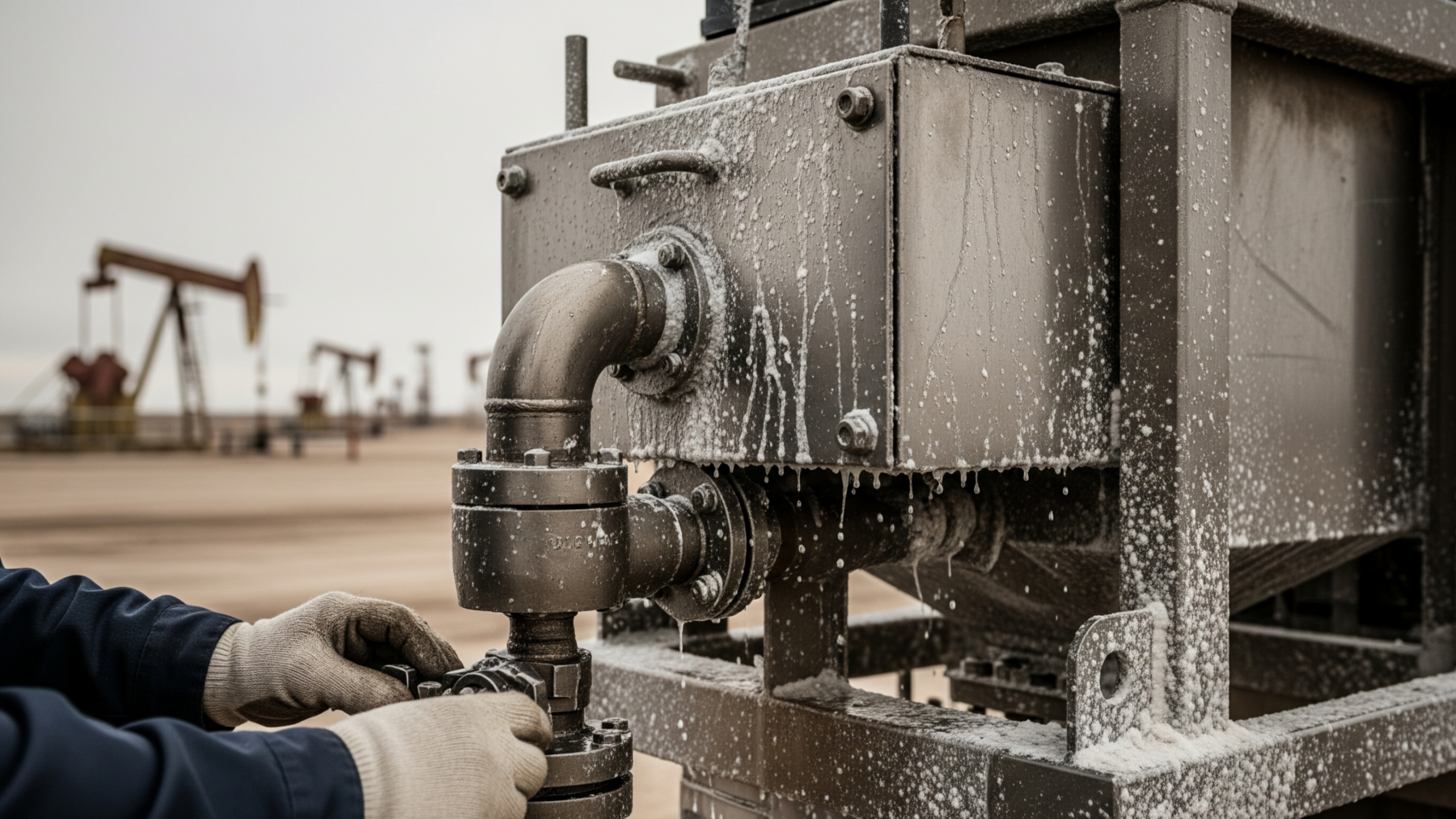
Every oil well has a secret companion.
When crude or natural gas rises to the surface, it almost always drags up something else: a torrent of ancient salty water that has sat underground for millions of years, soaking through rock rich with minerals.
In the Permian Basin alone, that water arrives in volumes that dwarf the oil itself.
Select will receive a royalty on lithium carbonate production, with Howard County serving as the anchor site for the companies’ broader Midland Basin rollout.
For most of the industry’s history, it was simply a costly nuisance to be trucked away, injected back underground, or evaporated under the fierce West Texas sun.
Then someone looked more carefully at what the brine actually contained.
A waste stream so large it has its own pipeline network
The Permian Basin stretches across a wide sweep of West Texas and southeastern New Mexico, and it is the most productive oil region in the United States.
For every barrel of oil that comes up from a Permian well, operators routinely manage several barrels of water alongside it.
That produced water carries dissolved salts, trace metals, and minerals leached from ancient sedimentary rock over geological time.
Handling it safely is one of the industry’s largest hidden costs, consuming infrastructure, trucks, and injection wells across the entire basin.
Select Water Solutions, a Dallas-based water management company listed on the New York Stock Exchange, built its business around treating and recycling exactly this kind of water at scale.
Its facility in Howard County, just north of Midland, processes brine from surrounding oilfield operations every single day.
Something dissolved in the darkness underground
Lithium does not look like a mineral worth chasing in a West Texas oilfield.
It arrives diluted, dissolved invisibly in brine alongside dozens of other elements, with no glint of metal and no obvious signal of its presence.
Traditional mining extracts lithium from hard rock or from shallow salt lakes in South America, where sun slowly evaporates water in open ponds over eighteen months or more.
Neither method is quick or clean, and both carry significant land and water costs of their own.
A newer approach, called direct lithium extraction, uses specialized materials to pull lithium ions selectively out of brine without evaporation, in hours rather than months.
Recovery rates from the best systems now approach 99 percent efficiency, meaning almost none of the lithium that enters the unit is wasted.
LibertyStream Infrastructure Partners, originally a Canadian company now repositioning toward a U.S. listing in Texas, spent eighteen months proving that technology could work at field scale inside the Permian Basin itself.
The machine that changed what a water site could be
The chemistry behind direct lithium extraction relies on sorbent materials that act almost like a molecular sieve.
Brine flows through the unit, lithium ions bind to the sorbent, everything else passes on, and a rinse cycle releases the lithium into a concentrate stream.
That concentrate feeds a refining unit that converts it into lithium carbonate, the white powder battery manufacturers use to make cathode material for electric vehicle cells.
LibertyStream’s automated refining unit in the Permian Basin began producing spec compliant lithium carbonate in late 2025.
The process fits inside existing oilfield infrastructure, and the water, after lithium is removed, continues through Select’s recycling system for reuse in drilling operations.
No tailings pit. No new land cleared from desert.
A 1,000-ton deal signed in Howard County
On February 9, 2026, Select Water Solutions and LibertyStream announced a definitive agreement to deploy commercial lithium carbonate production facilities at Select’s water treatment sites across the Midland Basin in Texas.
The first facility, at Select’s Howard County site, is designed to produce up to 1,000 tons of battery grade lithium carbonate per year, with commissioning targeted for December 2026.
Select will receive a royalty on lithium carbonate production, with Howard County serving as the anchor site for the companies’ broader Midland Basin rollout.
Select’s chief executive described the logic plainly: “this project leverages Select’s market leading infrastructure network while unlocking the resource value inherent in the large volumes of produced water” flowing through it each day.
The Permian Basin’s role in American energy keeps expanding in directions its original drillers never imagined.
Where the brine goes next
One thousand tons sounds modest against global lithium demand, which runs into the hundreds of thousands of tons each year.
But the Howard County facility is explicitly designed as a proof of scale, not a final answer.
Industry analysts project the lithium sector will return to a market deficit by 2028, with oilfield brine sources ramping up on that same timeframe.
Each modular unit can produce roughly 1,000 tons per year, and thousands of wells across the Permian and Bakken formations could host similar units without massive new capital outlays.
Battery supply chains that today depend almost entirely on imports from South America and Australia could gain a domestic alternative rooted in infrastructure that already exists, managed by workers already on site.
For West Texas communities built around the oilfield economy, that is a practical opportunity, not an abstract promise.
The water will keep flowing regardless, and the question now is simply how much of its hidden value comes back to the surface alongside it.
Hugo is an engineer with strong technical expertise. Multilingual from an early age, his writing combines technical clarity with a strong interest in science and energy.
