
Birds visiting an Orlando floating solar farm favored the vegetated shoreline over the panels, federal observers found
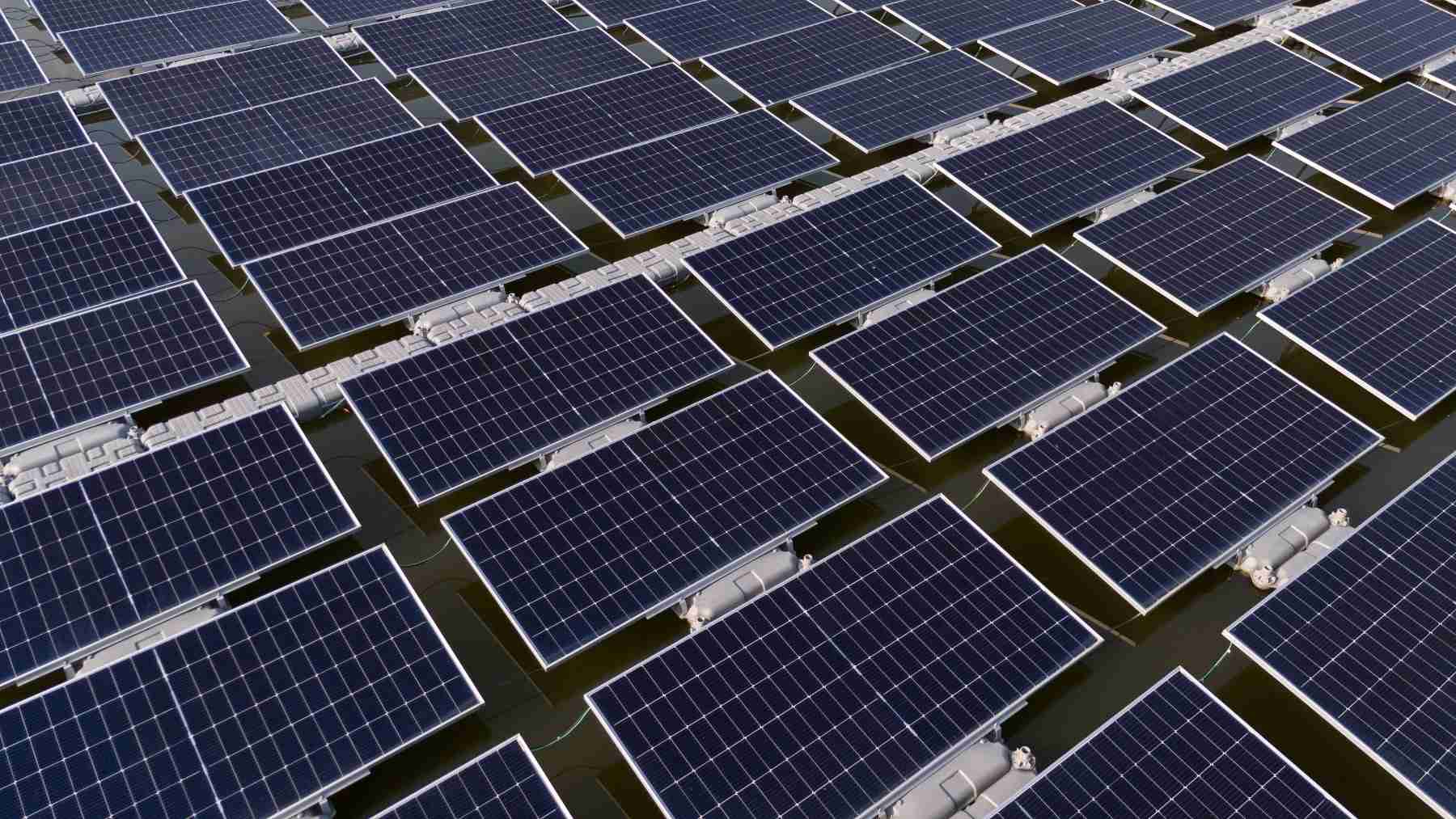
Floating solar power is expanding across federal and municipal water bodies.
The United States is under pressure to simultaneously meet rapidly rising energy demand and ambitious climate mandates.
Photovoltaics lead the nation’s installed green energy capacity, but land constraints are driving developers toward alternative approaches.
Orlando’s floating photovoltaic facility is located on a municipal water reservoir managed by the Orlando Utilities Commission in central Florida.
To win over public acceptance and regulatory approval, potential effects on local wildlife must be understood.
Can the U.S. scale up floating photovoltaics on reservoirs while conserving native species?
How the U.S. has been caught between a rock and a hard place
The United States is under mounting pressure to satisfy rising electricity demand while meeting federal climate mandates.
Electric vehicle fleets, high-tech manufacturing, domestic heat pump adoption, and AI data centers are driving historically high grid demand.
Data center energy usage is projected to increase by about 15% each year through 2030.
This will consume up to 17% of the nation’s total power generation.
Natural gas and coal still produce over half of U.S. large-scale electricity.
Meeting this rising load with fossil fuels will significantly spike greenhouse gas emissions.
Surging emissions conflict with climate targets aiming for a 50% to 52% net reduction in greenhouse gases below 2005 levels.
Consequently, continuous reliance on fossil-fired plants to absorb new load will undermine statutory decarbonization progress.
To prevent this and meet these mandatory milestones, large-scale renewable energy deployment must rapidly accelerate.
But the nation’s leading installed capacity, solar energy, is facing challenges in this strategy.
The barriers faced by the nation’s top domestic clean power technology
Solar energy represents the fastest-deployable and most affordable green technology for sustainably absorbing growing electricity demand.
However, ground-mounted solar deployment will require more than 3.5 million acres of land to meet annual demand projections.
Scaling the technology at this volume creates immense spatial conflicts across land-constrained regional markets.
Utility-scale projects compete with wildlife conservation groups, municipal expansions, commercial real estate, and agriculture.
Agricultural organizations oppose these developments, arguing that solar panels are devouring vital farmland.
Furthermore, conservationists are voicing strong concerns about habitat fragmentation.
As a result, land acquisition costs become dramatically inflated, and local permitting delays are prolonged.
To overcome these land-scarcity bottlenecks, the U.S. Department of Energy has turned to alternative deployment strategies.
Floating solar panels are being sited across federal and municipal water bodies to unlock underused surface real estate.
However, this approach has raised unique ecological concerns about water quality, local wildlife behavior, and ecosystem health.
Orlando’s floating photovoltaic facility exemplifies these concerns.
Monitoring avian interactions at Orlando’s floating solar farm
Covering reservoirs across the U.S. can produce unexpected results, making careful monitoring essential.
Orlando’s floating photovoltaic facility is located on a municipal water reservoir managed by the Orlando Utilities Commission in central Florida.
It features a 31.5-kW floating solar array mounted on high-density polyethylene pontoons, which are anchored to the reservoir bed.
Specific concerns focused on potential ecosystem disruption.
These included surface shading, waterbird collision risks, artificial perching attraction, and loss of native aquatic foraging grounds.
Evaluating potential impacts using structured avian monitoring
The floating solar platform and surrounding natural lake micro-habitats were monitored.
It was found that wild birds favored the natural vegetated shorelines for nesting, resting, and foraging over the floating panels.
There was minimal bird interaction with the solar infrastructure itself.
Zero direct avian collisions or mortalities associated with the array were recorded.
These findings alleviate significant ecological concerns about floating solar installations on municipal water bodies.
The plant proves that solar arrays can coexist with native wildlife without disrupting species or causing mortalities.
Future reservoir projects should incorporate vegetated shoreline buffers and routine wildlife monitoring to accelerate deployment.
Ultimately, floating solar panels on existing reservoirs are key to boosting America’s green energy capacity.

Anke Maree is a writer with a clear and engaging editorial style. Her work focuses on making complex topics accessible, informative, and relevant for readers across different areas of interest.
