
Singapore’s proposed floating solar project would cover 36% of Lower Seletar Reservoir, where surveys identified 111 bird species
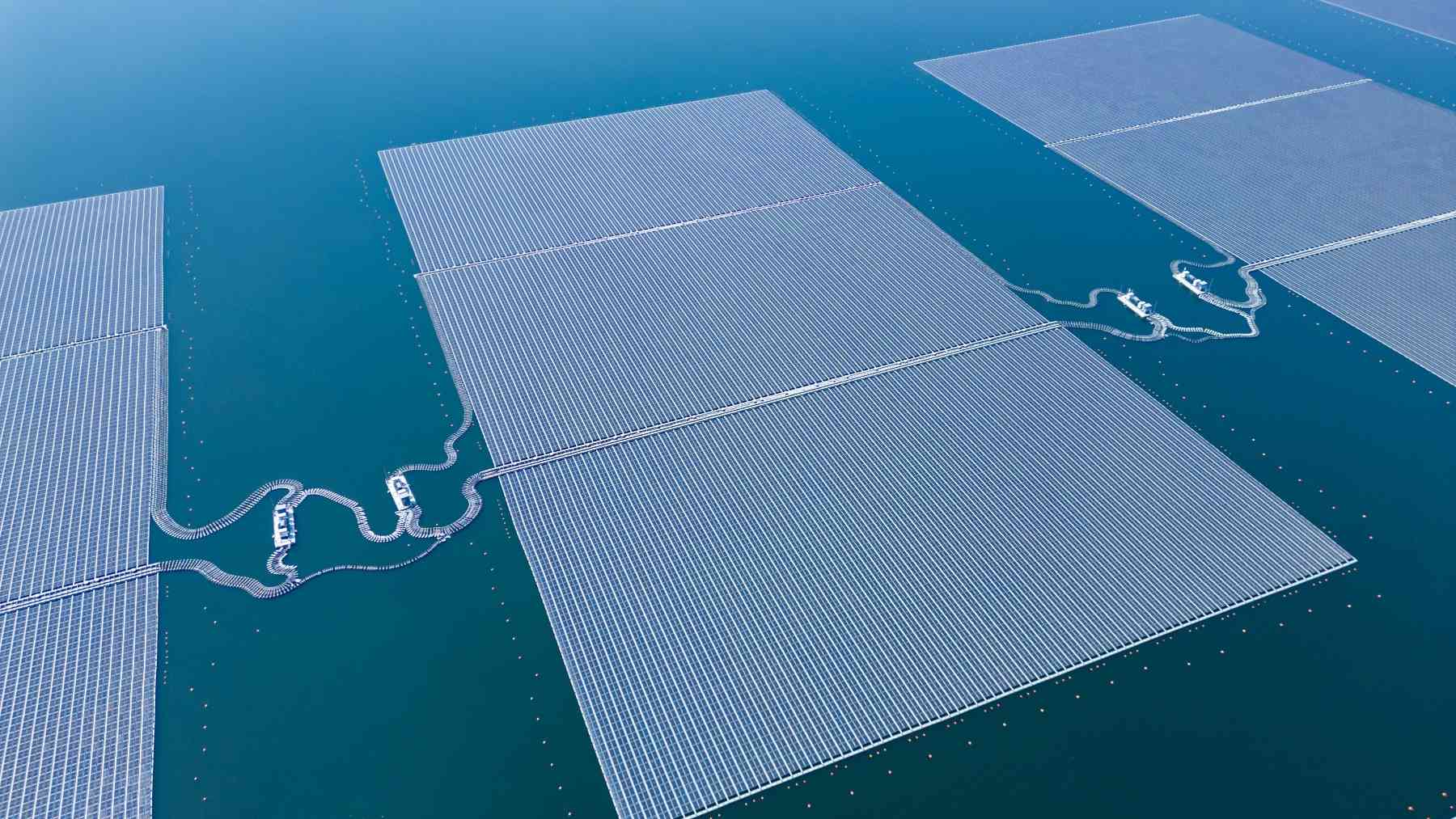
A proposed floating solar project in Singapore will prioritize local wildlife conservation through mitigation efforts.
The island nation is rushing to meet ambitious national climate targets and is rapidly accelerating renewable energy deployment.
However, the island nation faces significant land constraints, complicating photovoltaic deployment.
Ultimately, floating solar power across inland water bodies with carefully planned mitigation efforts is key to achieving clean energy independence.
To overcome this, the national water agency PUB proposed an innovative solution, targeting the Lower Seletar Reservoir.
Can Singapore meet its clean energy goals while balancing ecosystem preservation?
How Singapore’s climate imperative is adding pressure
Singapore faces significant expectations to meet national climate targets and reduce its carbon footprint.
Under the Singapore Green Plan 2030, emissions must be limited to approximately 60 million tons of carbon dioxide equivalent.
This interim target paves the way for net-zero emissions by 2050.
Scaling domestic solar energy is vital to the island nation’s decarbonization strategy.
By the end of the decade, photovoltaic deployment must be at least 2 gigawatts-peak (GWp).
This expansion is projected to cover about 3% of Singapore’s electricity demand and power more than 350,000 homes annually.
Achieving these green milestones will be crucial to addressing Singapore’s historical reliance on imported fossil fuels.
Thermal combustion has long driven the national power grid.
Natural gas-fired power generation is still responsible for almost 40% of Singapore’s carbon emissions.
To address this, while also meeting steadily rising energy demand, clean energy deployment must accelerate.
However, land limitations continue to challenge this transition.
Overcoming spatial barriers with floating innovation
Singapore is actively diversifying its energy portfolio with unique projects in the pipeline.
Yet a compact geographic footprint of approximately 283 square miles creates extreme land limitations.
This limited space is highly competed for by industrial zones, conservation areas, urban infrastructure, and high population density.
Meanwhile, large-scale solar farm installations require massive contiguous land areas.
As a result, conventional ground-mounted deployment becomes virtually impossible.
Rooftop solar power helps address this issue, but cannot fulfill Singapore’s national target of 2 GWp alone.
Despite these challenges, photovoltaic energy remains the island nation’s most viable and abundant domestic clean resource.
Singapore enjoys substantial solar irradiance year-round, which will not only lower greenhouse gas emissions but also enhance energy security.
That is why developers are turning to unique energy concepts and solutions.
Among these approaches are floating solar systems, which help overcome land scarcity while raising green power generation.
PUB Singapore proposed such a project, targeting the Lower Seletar Reservoir.
Singapore’s proposed floating solar project
Floating solar panels on reservoirs can overlap with local wildlife habitats, requiring careful monitoring and mitigation.

The proposed project in northern Singapore’s Lower Seletar Reservoir exemplifies this.
Solar arrays will cover roughly 284 acres, which is 36% of the total reservoir surface.
Environmental baseline surveys were conducted from August 2023 to March 2024.
During this period, 218 fauna species were recorded across the reservoir.
Of the 111 bird species identified, 22 were of local conservation significance.
Critically endangered species include the Cotton Pygmy Goose and the Little Grebe.
Strict spatial buffer and physical setback designs as mitigation
Solar arrays will be located at least 77 yards from the shoreline. This reduces erosion and minimizes fauna disruption.
Between the panel islands, there will be 33-yard corridors. This enables vessels to pass through while avoiding active recreational waters.
The Environmental Impact Assessment study phase has been finalized, and construction can begin.
Construction commences in 2026, with full operational completion targeted for 2029.
The Lower Seletar project will mark a crucial milestone for Singapore’s solar capacity.
Its success will prove that large-scale solar arrays can coexist with sensitive reservoir ecosystems.
This will open new pathways for scaled dual-use infrastructure, spurring similar developments across remaining inland reservoirs.
Ultimately, floating solar power across inland water bodies with carefully planned mitigation efforts is key to achieving clean energy independence.

Anke Maree is a writer with a clear and engaging editorial style. Her work focuses on making complex topics accessible, informative, and relevant for readers across different areas of interest.
