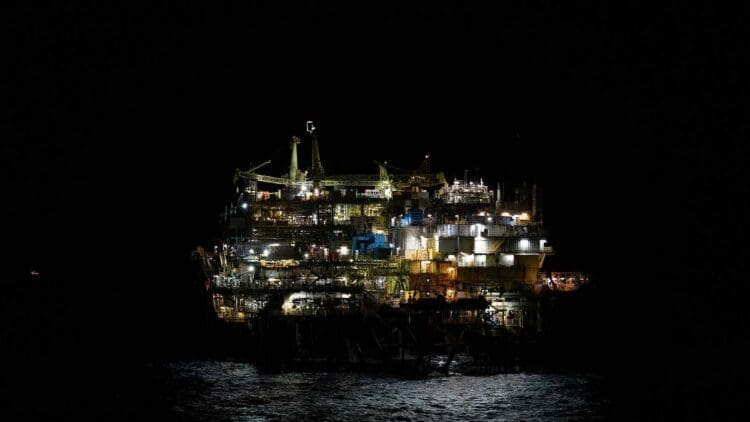

Most offshore leasing announcements do not generate much excitement or urgency, but the most recent announcement from BOEM has generated more interest in the Gulf region. BOEM is preparing for a large sale this summer, one that initially seems normal in nature; however, the sale quietly implies that the federal government may be developing a larger shift in its offshore policy.
A seemingly ordinary sale of the same size — until you consider the amount of land involved
BOEM recently issued a Proposed Notice of Sale for the next offshore oil and gas lease auction, called Big Beautiful Gulf 3 (BBG3), which is set for Aug. 12, 2026. It is the third sale required by the One Big Beautiful Bill Act, and represents the third in a larger series of thirty sales that have been scheduled to occur by 2040. A closer examination of the details provides additional insight into the implications of the proposed sale for the United States’ energy strategy.
It is possible to view the action as simply meeting the Department of the Interior’s requirements for a predictable offshore leasing schedule. However, the size of the proposed offering gives the action a significant amount of heft: BOEM is considering selling 15,066 unleased blocks of approximately 80.4 million acres in the U.S. Outer Continental Shelf located in the Gulf of America. The blocks are located from 3 to 231 miles offshore, and in water ranging from over 1,100 meters deep to more than 11,000 feet deep.
This size and scope of the offering, therefore, does not merely represent an administrative action, but also a deliberate message regarding long-term federal energy priorities.
Additional insight into the implications of the proposed sale for the United States’ energy strategy
The size of the area available for leasing is notable, especially in light of recent judicial review of BOEM’s actions related to offshore leasing and a growing national trend away from oil and gas development. Nonetheless, they describe BBG3 as part of a renewed commitment to predictability, after years of uncertainty caused by litigation and changing policies.
BOEM states that maintaining a predictable schedule is essential to achieving national energy objectives
Acting Director of BOEM, Matt Giacona, stated that BBG3 “marks another major milestone” and that the offer of leases with a 12.5 percent royalty rate indicates a new era of regulatory certainty. Giacona’s statement also referenced “momentum” from the previous two leasing rounds and indicated a federal strategy to expand U.S. offshore production capability, while minimizing uncertainty for operators.
The Gulf of America’s outer continental shelf is believed to hold approximately 29.59 billion barrels of technically recoverable oil that have yet to be discovered, as well as 54.84 trillion cubic feet of natural gas. Because of these massive quantities of reserves, an event of this nature will obviously lead to questions regarding the evolution of federal priorities in supplying the U.S. for the future.
Where the sale proceeds — and what ultimately needs to be determined
Not all of the total available land area will be rented out as leaseholds. In excluding areas that were taken off the table through presidential proclamation on September 8, 2020, zones near the Eastern Gap, and blocks inside the Flower Garden Banks National Marine Sanctuary, BOEM is clearly showing that environmental protection continues to occur alongside energy production in BOEM’s decision-making processes.
After being published in the Federal Register, the Proposed Notice of Sale will trigger a 60-day public comment period for the affected Governors and other interested parties.
Following the close of the public comment period, BOEM will publish a Final Notice of Sale at least 30 days before the August 2026 auction date. In addition to representing a typical offshore auction, the proposed BBG3 sale represents a federal approach to energy development that is becoming increasingly influenced by long-term energy planning and predictable leasing cycles.