
California updates public archive of bird and bat deaths at wind farms, making fatality reports easier to compare
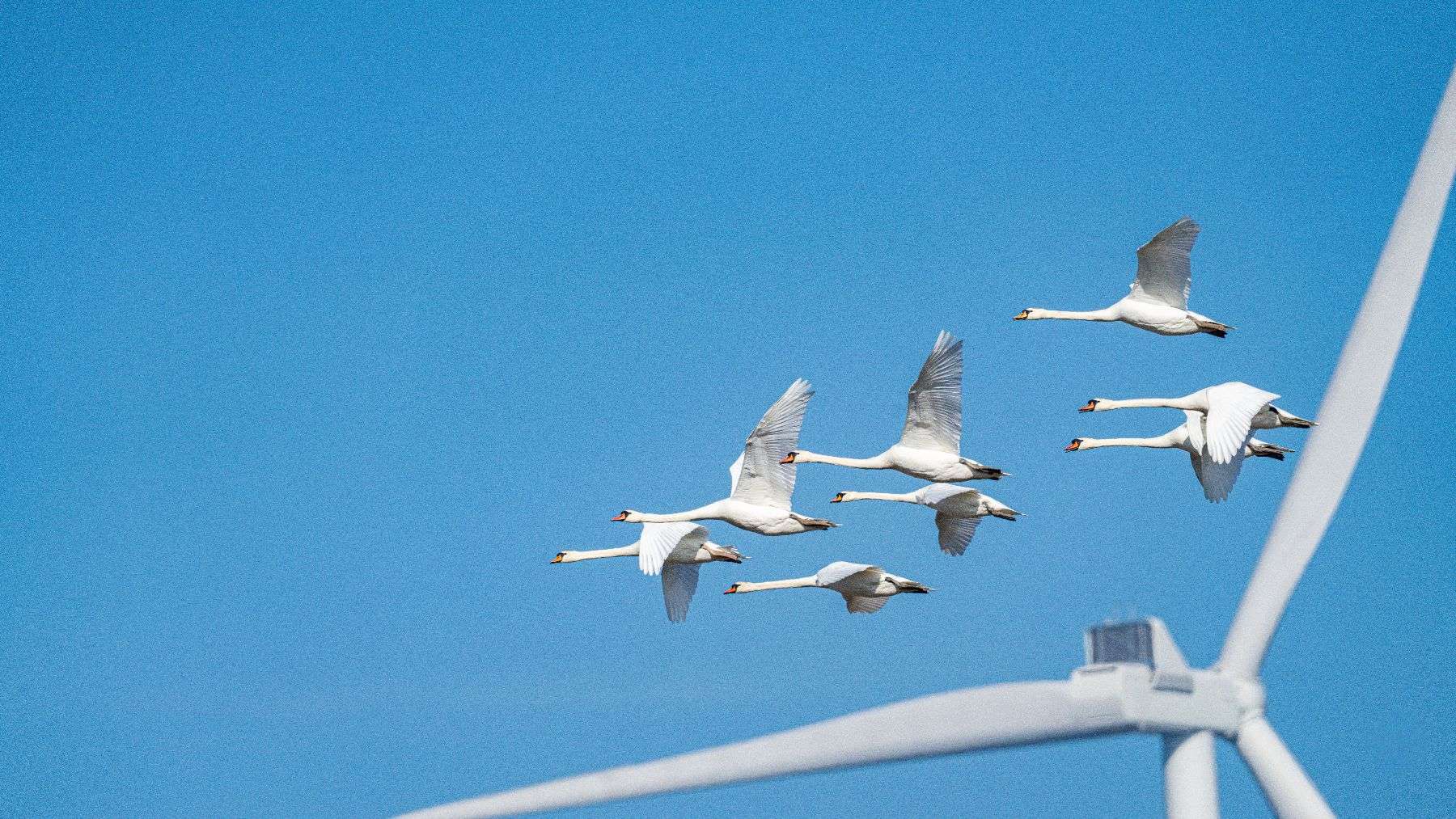 File image
Wind turbines rise along California’s ridgelines in quiet rows, turning steadily through the same sky that hawks, owls, and bats have navigated for centuries. For just as long, wind farms have been required to track the birds and bats killed by their blades — and for just as long, those reports have largely disappeared into county filing cabinets and agency archives, rarely reaching the researchers or conservationists who needed them most.
California’s clean-energy ambitions have always carried an ecological footnote. Now, the state is making it easier to read it.
A collision between clean energy and wildlife
Wind energy’s expansion across California has been rapid and deliberate. The state’s climate targets demand it. But every turbine erected along a migration corridor or raptor hunting ground introduces a new hazard into an ancient landscape.
The source material notes that fatality data can occasionally guide turbine placement, construction choices, and operational adjustments aimed at reducing deaths.
Post-construction fatality monitoring exists precisely to measure that hazard. At wind farms around the world, consultants walk survey transects — often at dawn — searching for carcasses beneath turbine towers. They record species, count bodies, and apply statistical models to estimate total mortality. The resulting reports document what a facility actually does to the wildlife around it, not just what environmental reviews predicted it might do.
The stakes are real. Migratory songbirds, golden eagles, red-tailed hawks, and several bat species share airspace with spinning blades — and some of those species are already under pressure from habitat loss and climate shifts. A wind farm positioned along the wrong ridgeline can compound existing threats in ways that aren’t immediately visible, unless someone is counting.
Reports that existed but couldn’t be compared
In California, fatality monitoring is frequently required as part of a project’s compliance with the California Environmental Quality Act. Reports have been produced for years, sometimes decades, across dozens of facilities statewide.
Those reports are submitted to a project’s Lead Agency — typically the county where the facility operates — and sometimes also to the California Department of Fish and Wildlife. Both entities retain the documents. Retention, though, isn’t the same as accessibility.
In practice, these reports rarely circulated beyond the agencies that received them. A researcher wanting to compare mortality rates at a coastal wind farm with those at a desert installation had no centralized source to consult. Data sat in silos, organized by project and jurisdiction rather than by species, region, or turbine type. Statewide analysis was theoretically possible, but in practice it meant tracking down individual reports from individual counties — a process that could take months and still produce incomplete results.
What California’s updated archive changes
CDFW’s updated dataset, catalogued as ds3394 on Data.CA.gov, addresses that fragmentation directly. The archive collects relevant fatality monitoring reports in a single public location, standardizes the information recorded about each one, and makes the collection available to researchers and the general public.
Eight resources are currently listed in the dataset. Update timestamps show activity as recent as October 2026, suggesting an actively maintained archive rather than a one-time upload — and that continuity matters. A dataset that grows stale quickly loses its comparative value.
Not every report can be posted publicly. Some remain confidential due to legal or procedural constraints, but CDFW has preserved access by making those reports available upon request through [email protected]. The channel exists; the data doesn’t simply disappear.
How the data could reshape wind farm planning
Aggregated, standardized data opens analytical doors that scattered reports kept closed. Researchers can now begin identifying patterns — which facilities report higher mortality rates, which regions concentrate fatalities, which turbine configurations appear repeatedly at high-impact sites.
That kind of comparative analysis can inform future decisions. The source material notes that fatality data can occasionally guide turbine placement, construction choices, and operational adjustments aimed at reducing deaths. “Occasionally” is honest language. The connection between monitoring data and operational change isn’t automatic, but it becomes far more plausible when the data is both accessible and comparable.
The groundwork was laid earlier. The 2007 California Guidelines for Reducing Impacts to Birds and Bats from Wind Energy Development recommended fatality monitoring and reporting as standard practice. A companion dataset — the California Wind Energy Biological Dataset, ds667 — holds data collected specifically under those guidelines, extending the archive’s reach further back in time.
Transparency as a tool for conservation
Making this data public — not just available to regulators — represents a meaningful shift in how environmental accountability can work. Community groups, journalists, and independent scientists can now examine wind farm impacts in ways that were previously difficult or impossible.
That matters more as California accelerates its renewable energy buildout. The state can’t honestly pursue both climate goals and biodiversity protection without acknowledging the tensions between them. Accessible mortality data doesn’t resolve those tensions. It makes them legible.
Behind every report in that archive is a person who walked a transect at dawn, scanned the ground beneath a turbine, and recorded what they found. The work is unglamorous and often uncomfortable. The updated archive doesn’t change what the turbines do — but it ensures the counting doesn’t disappear.

Kelly is an experienced writer with 15 years of experience exploring the big stories that shape our world, from tech breakthroughs and space exploration to climate, energy, and the fascinating quirks of science. She has a talent for turning complex ideas into sharp, memorable insights that stay with readers long after they’ve finished reading.
