
Inside offshore wind farms, scientists tracked animals and discovered something invisible quietly shaping them
 Credits: Energies Media Internal Edition
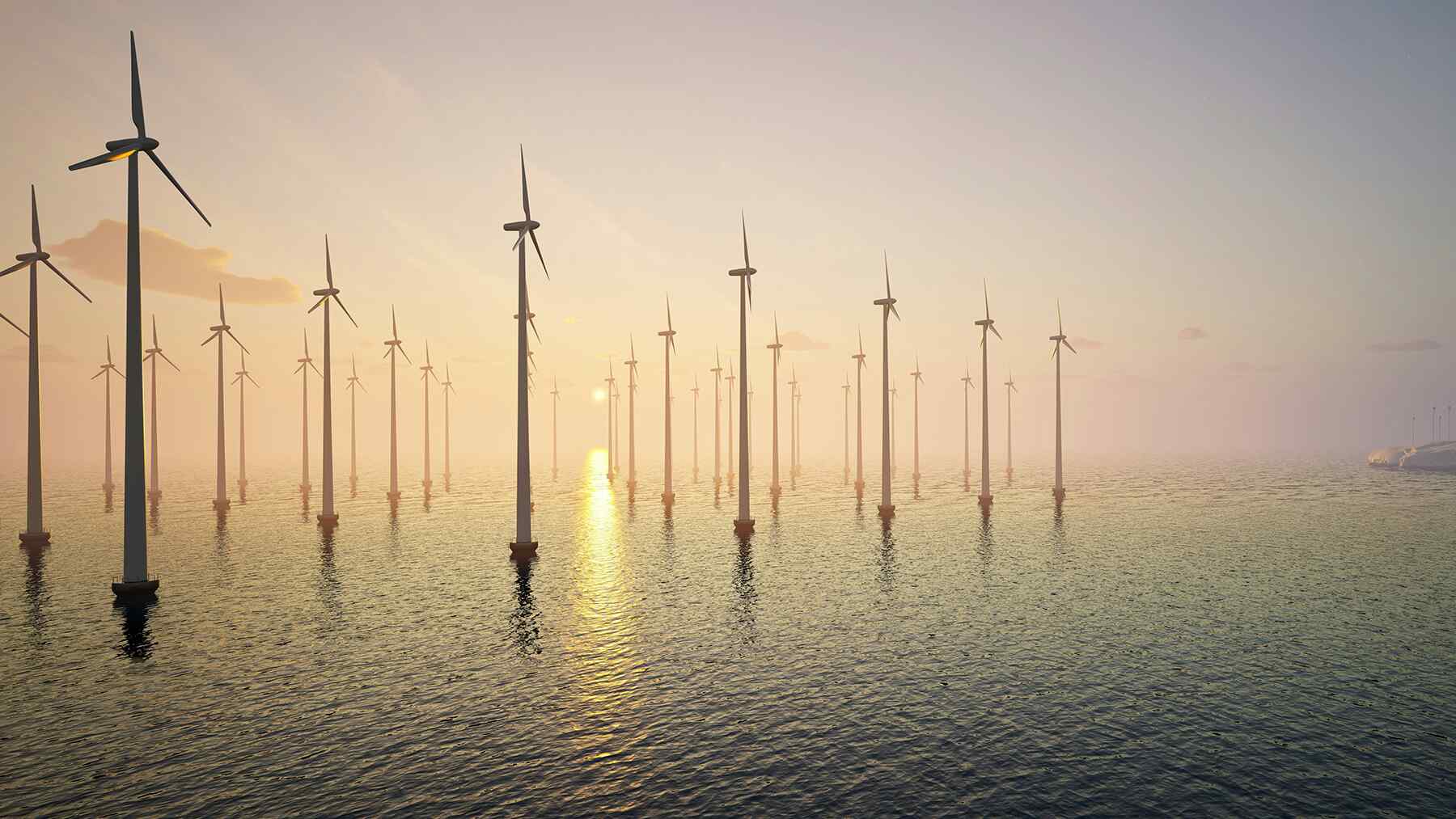
Offshore wind capacity has taken off, but researchers are concerned about the impact on wildlife, especially on the aerial ones.
The potential risks these installations could pose have been under debate, but the truth is only coming to light now.
A study out in the salt-sprayed expanse of the North Atlantic Shelf exposed an invisible barrier dictating animals’ every move.
The study “Wind as Driver of Bird and Bat Abundance, Flight Direction, Altitude, and Speed on the North Atlantic Shelf” was published in arXiv.
Will these insights advocate change to benefit the surrounding lifeforms, or is it all moot?
How the ocean is shaping to become the renewable frontier
The global race to meet climate goals is in full swing, with some of the deadlines nearly in sight.
Nonetheless, several nations have more than a few carbon emissions to cut, and their options are becoming limited.
For this reason, many have been looking to the horizon for answers.
Offshore wind energy has become a key part of global industrial transformation.
The primary reason this power source took off is the ocean’s absolute physical advantage.
Wind speeds offshore are much higher and more consistent compared to their land counterparts. This ensures a significant increase in the predictability of electricity production.
Onshore navigation of giant blades through narrow roadways and under bridges makes logistics more challenging. At sea, the rise of the “next generation” turbines is simpler and more cost-effective.
Furthermore, offshore wind is vital to supplying high-capacity power right where it is needed most: highly populated coastal regions.
But with so many reasons to expand, the grounds not to are often overlooked.
The offshore impact on the marine environment
Making the world’s industrial transformation “greener” is necessary to drive economic growth while reaching climate goals.
That is why renewable energy capacity expansion is now the backbone of the modern era.
As of 2026, wind energy meets nearly 12% of global electricity demand, and installed capacity now surpasses 1.3 TW.
However, just because the horizon seems to have all the answers, the changes beneath it should not be ignored.
Offshore construction may be a breeze for humans, but for marine mammals such as porpoises and whales, it is discordant. The resulting high-intensity sound waves are disorienting to communication and mass movements.
These installations also alter the “benthic” environment by displacing some species and disturbing the sediment. The effects on the seafloor are cataclysmic.
However, environmental impact is not limited to the subsurface, as those in the sky are also affected.
Aerial beings are facing invisible shields offshore
The risks that onshore turbines present to birds and bats are clear, but the offshore threats have been more elusive.
To address this, researchers conducted a targeted study aboard a research barge off the Northeastern United States.
The study “Wind as Driver of Bird and Bat Abundance, Flight Direction, Altitude, and Speed on the North Atlantic Shelf” was published in arXiv.
In 2024, they monitored the autumn migration, which is known for skies thick with life moving to warmer regions.
Tracking animals and the air in real-time
The team utilized S-band radar and lidar technology in conjunction.
S-band radar allowed them to track the “echoes” of thousands of birds and bats. This helped to map flight paths, speed, and altitudes.
The laser-based detection simultaneously mapped wind speed and direction at varying altitudes. It unveiled complex, layered “shields” that these aerial creatures had to bypass.
The study’s findings confirm that the wind dictates the flight paths with invisible precision.
Determining how varying wind conditions move vulnerable species into offshore turbine zones can help experts manage operational times accordingly.
This opens the door for “smart curtailment” in the future, hopefully helping these animals to survive the offshore skies. However, it all depends on whether the industry will be willing to use this informative data to adapt.
Anke Maree is a writer with a clear and engaging editorial style. Her work focuses on making complex topics accessible, informative, and relevant for readers across different areas of interest.
