
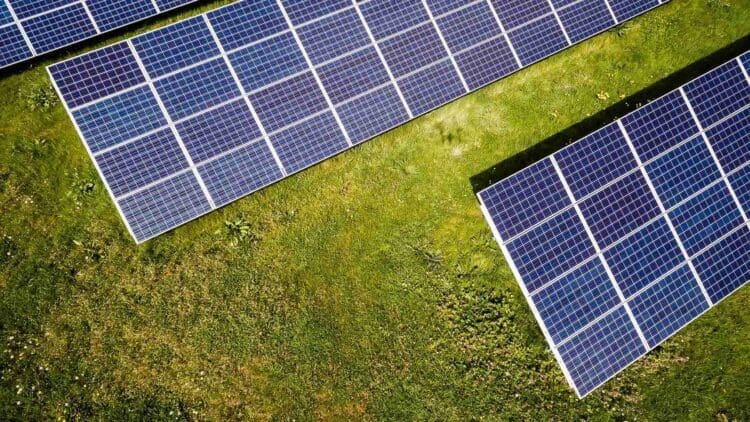

It is amazing to witness that solar energy facilities have faced tremendous criticism throughout the years for being too rigid and unreliable in the long run. Still, all it took for that criticism to cease was the integration of technology into the energy industry. The energy industry is all about collaborations and following established blueprints rather than competition, necessarily, and this explains why there are many countries following similar strategies of energy generation. In this instance, it is Canadian Solar’s e-STORAGE that has contributed to the major U.S. grid-connected solar infrastructure buildout.
A brief overview of the interconnection between the U.S. and Canadian energy landscape
There has been great chemistry between the United States and Canada in relation to the initiatives that both nations pursue, and the companies, as well as the resources that they depend upon. The main reason for their association is that they are close in proximity and have established a good relationship with each other over the years.
For the most part, it is Canada that benefits the most from the relationship because the United States is a powerhouse in energy generation, specifically within the solar and wind energy sectors. However, in this instance, it is Canadian Solar’s energy storage division, e-STORAGE, that is expected to play a crucial role in strengthening the United States’ renewable energy infrastructure.


What this development proves is the growing importance of storage in supporting solar deployment. As electricity demand surges, particularly from data centers, grid-connected storage systems are becoming more important. This latest initiative displays how integrated solar and storage solutions are transforming the U.S. energy landscape.
e-STORAGE establishes its presence in the U.S. after securing a monumental deal
Canadian Solar’s e-STORAGE division has signed a major agreement with a U.S. utility to deliver a battery energy storage system (BESS) totaling roughly 2.5 GWh. The project, with a capacity of approximately 500 MW / 2,493 MWh, is built specifically to support grid reliability while meeting the ever-increasing electricity demand.
The system will use about 500 SolBank 3.0 battery containers, a proprietary solution developed and manufactured through Canadian Solar’s global network. Shipments for the project are expected to commence in March 2027 and conclude by July 2027. This is a relatively quick turnaround time, especially for an infrastructure of this size.
The agreement has received a tremendous amount of attention because it is one of the largest recent battery storage commitments tied to U.S. grid-connected renewable energy expansion. With initiatives of this manner, the U.S. will be able to address the intermittency issues that it has been facing.
Assessing the importance of Canadian Solar’s e-STORAGE buildout
The United States is in a position where it is chasing impactful initiatives rather than just having the most facilities possible. One of the main reasons behind this particular initiative is the unexpected increase in electricity demand from artificial intelligence and hyperscale data centers.
These technology-centered facilities require continuous, stable power, placing pressure on existing grid infrastructure. Battery storage systems like the ones provided by e-STORAGE help solve this challenge by storing excess renewable energy and releasing it when demand peaks.
The growing relevance of this approach to solar developments is that it stabilizes the grid and reduces dependence on fossil fuel-based backup generation.
Looking ahead: How the Canadian entity seeks to transform solar generation
As the U.S. shows full commitment to expanding its renewable energy capacity, the integration of large-scale storage solutions is becoming imperative to balancing intermittent solar and wind generation with consistent demand.
Canadian Solar has enhanced its position as a global leader in both solar and battery storage. e-STORAGE has permitted the company to ship more than 16 GWh of battery energy storage solutions worldwide as of late 2025.
There is great activity within the Canadian clean energy landscape as companies seek to take full advantage of their affiliation with the U.S. For the U.S., the relationship between the two nations must be reciprocal.



