
Researchers studying birds found solar panels catch their attention and can support up to three times more species than crops
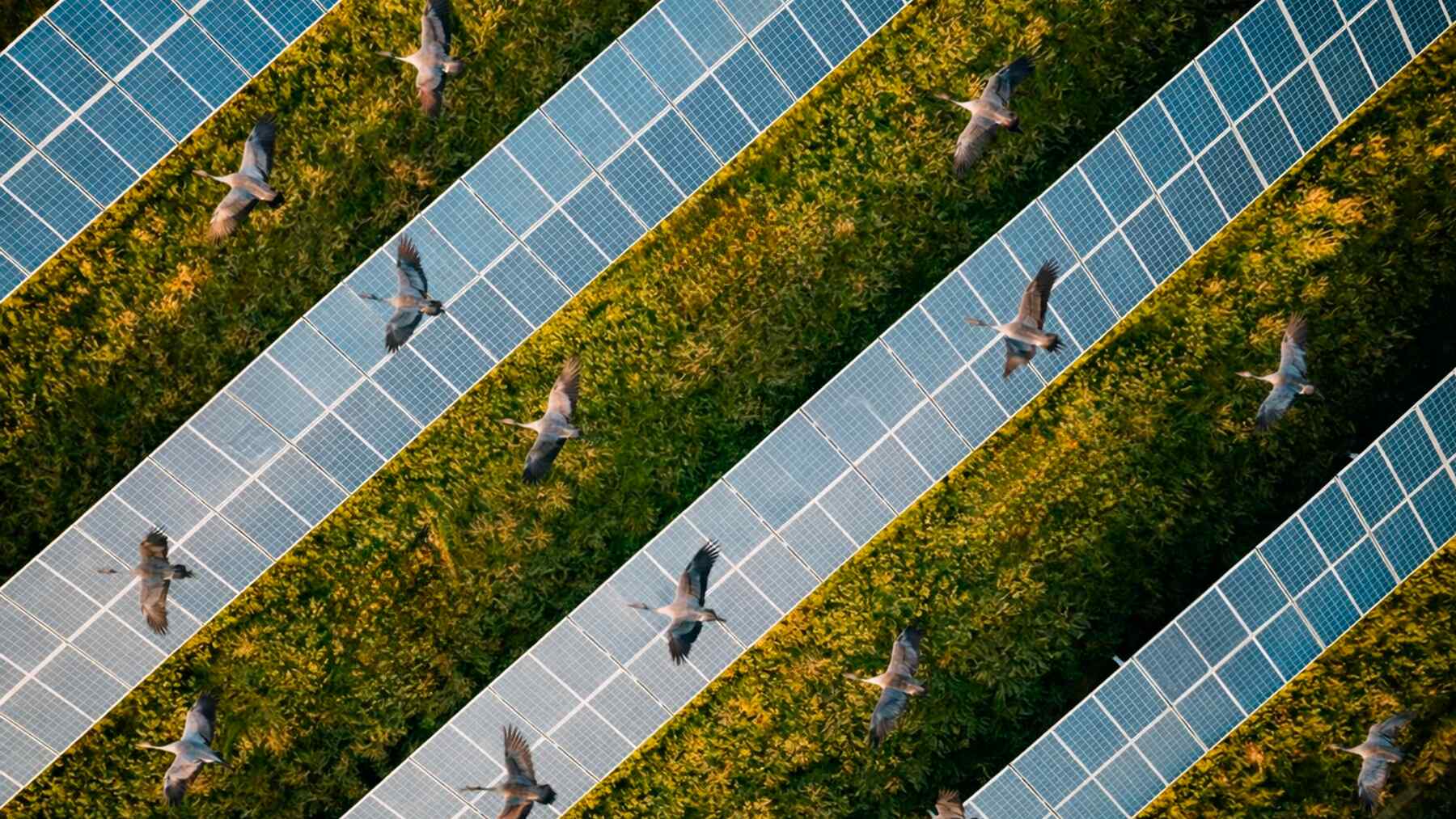 Credits: Benoit Deschasaux, Energies Media internal edition
Early birds may catch the worm, but solar panel farms are “catching” the birds.
Renewable energy sources are the key to saving the planet by lowering carbon emissions, but not all heroes are perfect.
Solar power has become its own greatest vulnerability by impacting the environment it is supposed to save.
A “true” sustainable future is achieved by creating and maintaining a symbiotic relationship between nature and renewable energy.
However, the latest research tells a different story, so could solar’s flaw end up being one of its strengths?
How solar has risen against climate change
For too long, fossil fuels have darkened Earth’s atmosphere.
Then, researchers discovered one of the best ways to break the darkness is by harnessing sunlight itself.
Expanding solar capacity has become the cornerstone of the global green energy transition.
The conversion of solar energy into clean, scalable power positions solar farms as fundamental to the global grid.
The farms’ photovoltaic (PV) systems not only help stabilize rising temperatures but also help meet international climate targets.
Unfortunately, these giant glass panels have always sparked quite a debate over their use of land.
For some, sacrificing thousands of acres to these installations at the expense of food production and natural habitats is not worth it.
This led the world to weigh decarbonizing the economy against preserving biodiversity, which defeats the point.
The footprint of progress under global scrutiny
Maintaining true sustainability has become increasingly difficult as the energy sector tries to keep up with data centers’ demands.
The rapid expansion of smart technology and AI necessitates the quick expansion of complementary clean power sources.
This rush, along with the pressure to meet climate target deadlines, has led to a significant footprint on the landscape. As a result, the physical presence of solar panels is now under immense scrutiny.
The greatest global concern is habitat fragmentation. Fencing off these solar farms disrupts wildlife migration behavior and changes local microclimates.
In some cases, when environmental impact studies are rushed, the presence of rare native plant species could be overlooked. When these installations then block the required direct sunlight, these species are affected and begin to decline.
However, recent research indicates that some species actually prefer solar farms.
Birds of a feather flock together thanks to solar panels
Solar installations at airports may be affecting pilots, but when it comes to birds, attraction is bigger than deterrence.
Dr. Copping from the Royal Society for the Protection of Birds (RSPB) provided insights into avian behavior at solar farms. The research was conducted in collaboration with Dr. Waite from the University of Cambridge’s Centre for Landscape Regeneration.
The researchers found that management style was key to driving biodiversity at the sites.
The ideal solar farm conditions in which bird species thrive
Findings report that “mixed habitats” are the secret attraction. High-performing solar farms prioritize:
- Native wildflowers and long grasses to increase bird food sources. These conditions are vital to Red List species like the Corn Bunting and Linnet, typically displaced by industrial crop fields
- Structural complexity, as solar panels serve as elevated song posts and vantage points. They also offer safety from predators and harsh weather underneath to species such as Yellowhammers
- Deep-rooted vegetation increases soil stability to prevent nutrient runoff and establish permanent, stable ecosystems
- Maintained hedgerows and wide margins around arrays to serve as wildlife corridors for species such as the Skylark
The collaborative research proves that solar power’s footprint on the land can be an ecological asset. The key to success is prioritizing the ideal conditions of the “mixed habitats” over the shorter, grazed grass. Only then can the dire effects of climate change be mitigated while boosting biodiversity. A “true” sustainable future is achieved by creating and maintaining a symbiotic relationship between nature and renewable energy.
Anke Maree is a writer with a clear and engaging editorial style. Her work focuses on making complex topics accessible, informative, and relevant for readers across different areas of interest.
