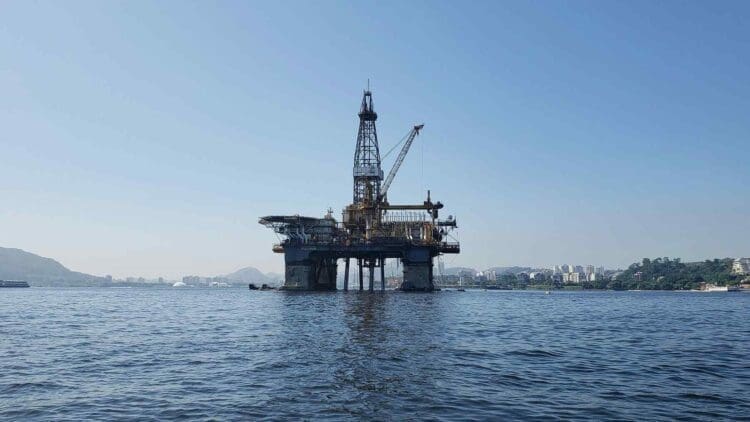

For years now, there hasn’t really been a matter of if we could reach the oil and natural gas in the deepest parts of the Earth – it’s a matter of having the ability to do so. With each additional foot drilled downward to the seafloor, pressure has increasingly unpredictable characteristics. Chevron’s most recent technological initiative shows that the biggest problem facing developers of ultra-deep reservoirs today isn’t how deep we go – it is how confident we can be that we understand and can effectively manage what exists beneath us.
As long as depth is our primary concern, it will continue to present the greatest challenges
Ultra-deep reservoirs exist within an environment of high temperature and high pressure. There are areas in this environment where existing subsurface control system designs have reached their physical limitations. Thus, both risk and cost increase in proportion to the distance below the surface.
Chevron has invested considerable time and resources in using technology to provide safe means to develop these resources, especially in the ultra-deep water basins such as the U.S. Gulf of Mexico. Through Chevron’s “Energy in Progress” technology platform, Chevron provides examples of how advancements in sub-surface engineering and pressure management are changing the way deep-water reservoirs are developed.



Instead of always adding thickness (i.e., more material) or weight (i.e., larger and/or heavier equipment), engineers are looking at alternative ways to anticipate, balance, and control pressure throughout the entire life cycle of a well.
It represents a wider understanding: the farther away from normal operating conditions reservoirs get, the incremental improvement won’t suffice.
The risk associated with pressure control
There’s little doubt about the importance of controlling pressure. Chevron has recently completed several deep-water reservoir projects that are expected to produce from zones approaching 20,000 pounds per square inch. The vast majority of older generation systems were never designed to withstand pressures at that level. Even slight miscalculations at that pressure level can stop drilling or jeopardize safety.
Chevron uses integrated sub-surface pressure control systems, which include improved hardware, along with advanced modeling and monitoring capabilities to provide pressure control during the drilling process as drilling passes through complex geologic formations. These systems will allow operators to react faster to fluctuating pressure in their wells instead of waiting until problems occur.
Chevron has demonstrated, via its Anchor Project, how next-generation pressure-rated equipment can make it possible to produce hydrocarbons from zones previously thought un-drillable by other companies and thereby set the bar for future ultra-deep reservoir developments.
Next-generation systems vs. previous-generation systems
While Chevron’s next-generation sub-surface pressure control is certainly capable of managing significantly higher pressures than previous generations, that is not the defining characteristic of Chevron’s technology. What defines Chevron’s next-generation sub-surface pressure control is the ability to tie together pressure management as part of overall project planning and design — from initial sub-surface imaging to real-time operation.
With better sub-surface imaging and clearer visualizations, Chevron decreases uncertainty prior to commencing drilling
Once drilling commences, digital controls and monitoring systems provide the capability to manage pressure proactively as opposed to treating it as a constant threat. This integration enables safer drilling in deeper waters while providing increased efficiency and lower rates of unplanned downtime.
Ultimately, Chevron’s next-generation sub-surface pressure control converts extreme pressure into a design condition that can be managed.
Chevron’s sub-surface pressure control advancements indicate that ultra-deep reservoir development has entered into a new era where confidence replaces caution as the dominant constraint. The transition of pressure management from reactive to proactive allows for access to resources previously inaccessible. This logic is currently influencing deepwater strategies in a similar fashion as Chevron applies digital technologies to all aspects of energy production — a theme reflected across its broader innovation portfolio.