
Clariant and Lummus Technology secure catalyst supply contract for world’s largest PDH unit
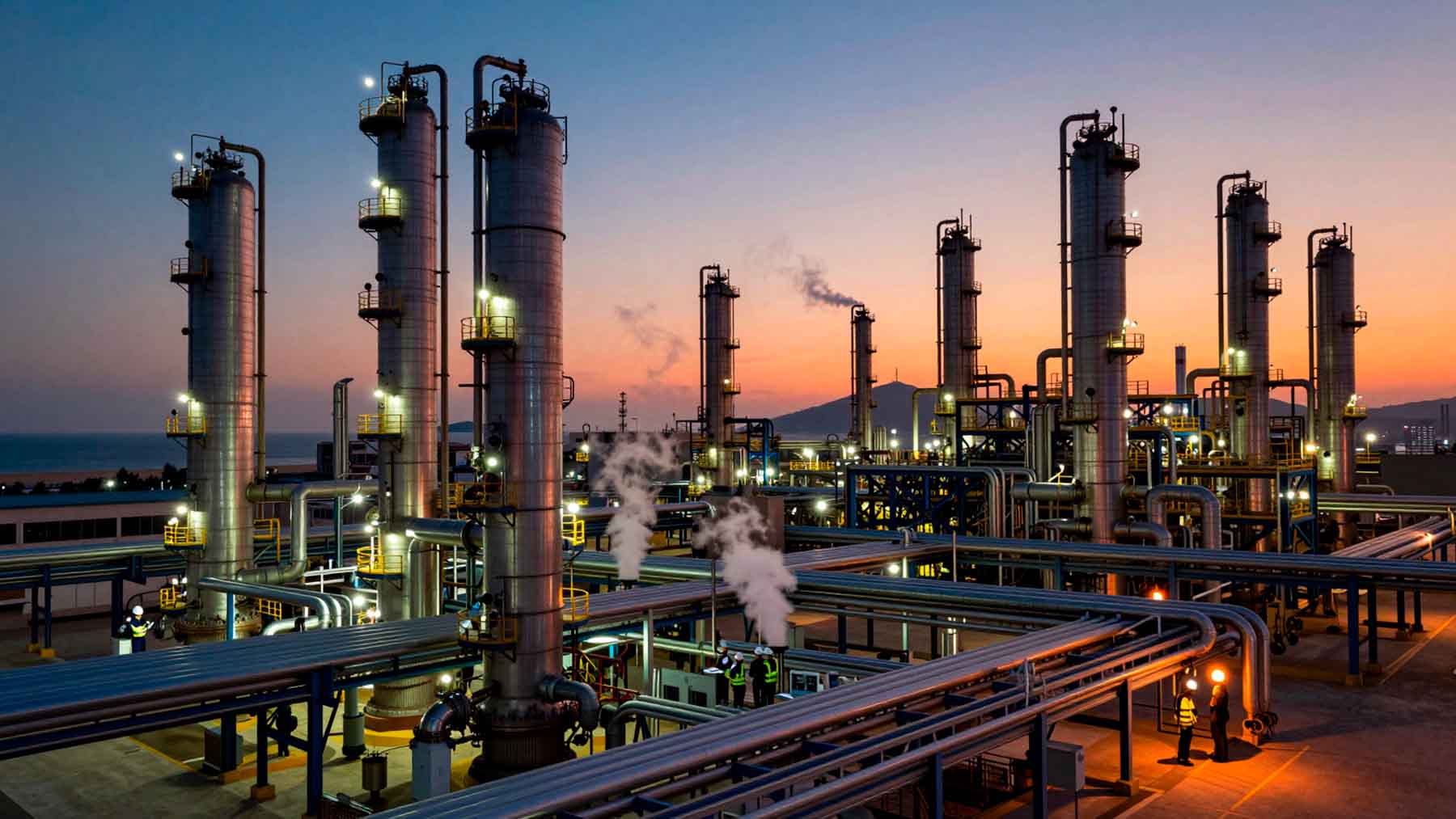 Image generated with artificial intelligence
Clariant Catalysts and Lummus Technology just landed a catalyst supply contract for the world’s largest propane dehydrogenation (PDH) unit — a project commissioned by Zhejiang Petrochemical Corporation (ZPC). The contract centers on CATOFIN technology and sets a new scale benchmark for PDH development globally.
Contract awarded for record-scale PDH unit
The news came through Hydrocarbon Engineering, the trade publication covering refining and petrochemical developments worldwide. Clariant and Lummus were jointly awarded the contract by ZPC, one of China’s most ambitious downstream operators. They’ll supply the catalyst and process technology for a PDH unit that breaks industry records on size.
The contract pairs Clariant’s CATOFIN catalyst with Lummus’s proprietary process design — one handling the chemistry, the other the engineering. ZPC’s decision to go with this combined offering signals confidence in both sides of that equation.
Both companies are clearly positioning themselves as the go-to partnership for large-scale PDH development, and this contract strengthens that position considerably.
PDH units convert propane into propylene, a critical feedstock for plastics, packaging, and a wide range of petrochemical products. Building the largest one ever constructed is no small commitment. It reflects the scale at which ZPC operates and the level of trust they’re placing in CATOFIN to deliver.
Why ZPC selected CATOFIN technology
ZPC didn’t make this call lightly. According to statements from both companies, performance and reliability drove the selection. CATOFIN has a long track record at commercial scale, and that history appears to have been central to ZPC’s confidence.
The technology has been in continuous development for over 60 years — not a marketing figure, but a reflection of iterative improvement, real-world operating data, and refinements across dozens of commercial installations. In an industry where downtime is expensive and margins are tight, that kind of history carries real weight.
Since 2017 alone, CATOFIN has been selected for more than 40 PDH projects globally. That adoption rate suggests the technology has built a strong reputation among operators evaluating large-scale propylene production options.
The Clariant–Lummus partnership adds another layer of appeal. Instead of sourcing process design and catalyst supply from separate vendors, ZPC gets a single integrated solution — simplifying coordination and putting accountability in one place, something large-scale operators tend to value highly.
Propylene output and downstream use
The propylene this unit produces won’t sit idle. It feeds directly into manufacturing high-value petrochemical derivatives — materials that end up in everyday products across multiple industries. ZPC has clearly thought through the downstream use carefully.
Propane feedstock will come in part from ZPC’s ongoing upstream refinery expansions. That vertical integration matters because it means ZPC isn’t fully dependent on external feedstock markets, which can be volatile. Tying supply to their own refinery operations gives the project more stability over its operating life.
Global propylene demand keeps growing, driven by rising consumption of polypropylene and other derivatives across Asia and beyond. That pressure is pushing producers toward larger, more efficient PDH capacity. ZPC’s project is the clearest example yet of where that trend is heading.
CATOFIN’s track record of meeting or exceeding design capacity at commercial scale is directly relevant here. When you’re building the world’s largest PDH unit, you need confidence the technology will perform at that scale — not just in theory, but in practice.
CATOFIN technology and the Clariant–Lummus partnership
At its core, CATOFIN combines Clariant’s catalyst innovation with Lummus’s process engineering into a system designed for high selectivity — meaning more of the propane feedstock gets converted into propylene, with less waste and fewer byproducts. That efficiency matters at any scale, but it’s especially critical when operating at record capacity.
Jace Wang, Vice President and Head of Propylene at Clariant‘s Business Unit Catalysts, described the award as “a defining moment.” He pointed to ZPC’s selection as a reflection of the performance and reliability CATOFIN has demonstrated across the industry — a measured statement that nonetheless underscores how significant this contract is for Clariant’s positioning in the PDH market.
Romain Lemoine, Chief Business Officer at Lummus Technology, echoed that view. He noted that ZPC’s decision “speaks to the proven performance of CATOFIN technology and the depth of our partnership,” and highlighted that as customers pursue increasingly large-scale projects, CATOFIN’s ability to meet or exceed design capacity reinforces its standing as a trusted solution for PDH operators worldwide. Both companies are clearly positioning themselves as the go-to partnership for large-scale PDH development, and this contract strengthens that position considerably.
It’s built around CATOFIN
Here’s what this announcement actually means: Clariant Catalysts and Lummus Technology have secured a landmark contract from ZPC to supply catalyst and process technology for the largest PDH unit ever built. It’s built around CATOFIN — a technology with more than 60 years of development history and over 40 project selections since 2017 alone.
ZPC chose the technology based on demonstrated performance and reliability. Propylene output will support downstream petrochemical production, backed by ZPC’s own refinery feedstock supply. The Clariant–Lummus partnership, meanwhile, keeps expanding its footprint as a leading integrated solution for global PDH operators.
Kelly is an experienced writer with 15 years of experience exploring the big stories that shape our world, from tech breakthroughs and space exploration to climate, energy, and the fascinating quirks of science. She has a talent for turning complex ideas into sharp, memorable insights that stay with readers long after they’ve finished reading.
