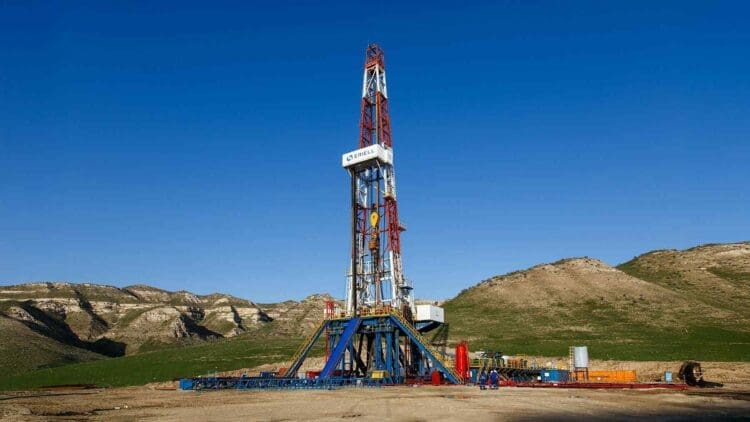

Although the U.S. Lower 48 is typically viewed as a mature shale region, with many of the big performance enhancements being made incrementally at best, ConocoPhillips presents a somewhat different scenario. Rather than relying on explosive increases in size or scope (like adding more rigs), the company focuses on making smaller-scale, long-term gains – which it calls “compound improvement” and refers to as “quieter.”
Long-term operational benefits that build upon themselves
ConocoPhillips’ Lower 48 portfolio is comprised of several major shale plays in the United States:
- The Permian’s Delaware and Midland Basins
- South Texas
- Eagle Ford
- North Dakota
- Montana’s Bakken
Although each of these regions presents unique geologic characteristics and individual stages of maturation, when combined, they provide a massive testing ground for consistent, scalable drilling operations.



Whereas other companies focus on aggressively increasing their number of rigs (in an attempt to chase growth), ConocoPhillips has instead chosen to increase the scale of its operations in terms of multi-well pads and standardized design templates. Additionally, the company’s drilling and completion teams have developed a much closer working relationship, which has led to reduced costs, improved efficiency, and increased reliability in the overall drilling process.
Strategic development while keeping capital spending under control
By focusing on standardization and scalability throughout 2024 — operating both multiple rigs and multiple frac crews in all areas of its Lower 48 portfolio — ConocoPhillips was able to develop numerous wells while keeping its capital spending under control. While ConocoPhillips did experience some minor increases in the amount of production coming out of its Lower 48 properties during 2024, the greatest increases were seen in terms of efficiency.
Specifically, ConocoPhillips saw faster well delivery times, fewer lost days due to equipment failures or other forms of downtime, and improved consistency in the placement of wells relative to the desired reservoir zone.
These types of gains are important to ConocoPhillips, not simply because they represent short-term improvements in production rates, but also because they contribute significantly to the company’s ability to produce volumes of oil and natural gas liquids at very competitive price points. In addition, these kinds of improvements help create a strong foundation for ConocoPhillips’ future success in terms of generating free cash flow — which will allow the company to generate substantial returns for investors regardless of what happens to commodity prices going forward.
Analytic systems plays a supporting role in operational gains
While technology such as advanced drilling tools and sophisticated data analytic systems does play a supporting role in helping to drive these operational gains, they do so primarily as enablers. For example, real-time monitoring allows the company’s drilling crews to make adjustments to drilling parameters immediately after data is collected. Similarly, using historical data from past drilling campaigns, refined well designs are created based on the lessons learned from those past experiences. This type of approach — which prioritizes predictable performance in proven zones — is not experimental or exploratory in nature, but rather is designed to ensure that wells are drilled as efficiently and effectively as possible.
Ultimately, ConocoPhillips’ approach to developing shale resources in the Lower 48 reflects the company’s broader strategy for extracting maximum economic value from its current inventory of shale resources — rather than pursuing new resource opportunities that would require additional investments of money. Furthermore, analysts who follow ConocoPhillips closely have pointed out that the use of advanced drilling technologies has enabled the company to shorten well delivery times and boost productivity levels — thereby enhancing its competitive advantage in terms of its unit cost structure.
The implications of how shale operators continue to pursue operational improvements suggest that shale-based production operations are becoming increasingly similar to traditional industries like manufacturing. Instead of viewing shale as a continuous engine for accelerating production growth, it seems that ConocoPhillips views shale as an industrial system that rewards precise execution over an accelerated pace.