2025 will be remembered as the year global installed renewable capacity increased significantly, especially solar capacity, which reached new heights compared to 2024. This can be attributed to innovative solar designs. For example, UCLA created ‘dark photovoltaics’ with a rare natural phenomenon. UCLA based its unique design on a forgotten idea dating back to 1821. Discover how innovative dark photovoltaics can transform the solar industry and potentially boost the global capacity even further!
UCLA revives a forgotten idea dating back to 1821
Now, dark photovoltaics may sound like an unfamiliar concept, but it is certainly far from it! In 1821, Thomas Seebeck created a pioneering device called the thermocouple. This device was quite the showstopper back in its day, and it measured temperatures through a concept which is known today as the Seebeck Effect.
In short, two different metal wire types are joined at their ends. These two wires then experience different temperatures, resulting in heat being converted into power. A device reads this generated voltage by using calibration data and changes it into a temperature reading.


Researchers from UCLA and Stanford University were inspired by the Seebeck Effect and thereby created their dark photovoltaics by using a rare natural phenomenon. The research team was led by UCLA’s Aaswath Raman, a materials science and engineering assistant professor. Their study was published in the scientific journal Joule in 2019. Additional study authors include Stanford’s Wei Li (post-doctoral scholar) and Shanhui Fan (electrical engineering professor).
Creating “dark photovoltaics” with a rare natural phenomenon
There have been significant breakthroughs in photovoltaics, such as the blackest-ever solar cell that produces record energy. Now, we could soon be generating solar energy even at night thanks to the researchers’ dark photovoltaics, which is driven by the rare natural phenomenon called radiative sky cooling.
According to Raman:
“This effect occurs naturally all the time, especially on clear nights. The result is that the object ejecting the heat, whether it’s a car, the ground, or a building, will be slightly cooler than the ambient temperature.”
Together, they engineered a straightforward device. The device was significantly cost-effective, as it reportedly cost the team under $30 to create it. What’s more, the device can potentially transform the solar technology industry.
This is how the prototype device works
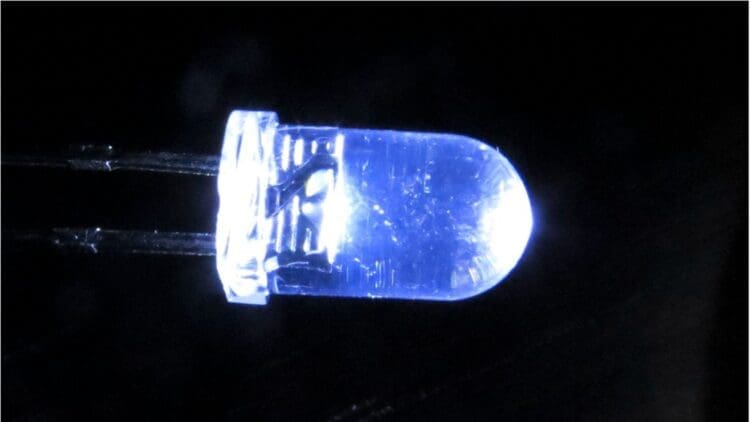
The team painted an aluminum disk black on one side and placed the black side facing the sky. This disk radiates the surrounding air’s heat, which a thermoelectric generator converts into electricity thanks to the difference in temperature. According to their results, the prototype produced up to 25 milliwatts per square meter, which can power one LED light bulb.
Raman added that their device can be used produce electricity during the day and night, especially when integrated with existing solar technology installations. According to the International Energy Agency, over 1 billion people globally do not have reliable access to electricity. This would be a great stepping stone for people living and/or working in severely remote areas, as well as those without access to batteries.
Raman also believes their technology’s output could be enhanced as much as 20 times more than the current prototype by using advanced components. Their technology’s output will also be significantly higher in dry, hot climates that experience high levels of radiative sky cooling.
The team’s research proves that clean power production could soon become commercially feasible even during the dark hours. As they continue their research and development phase, one cannot help but become excited about the possibility of advancing renewable technologies even further and being one step closer to achieving zero carbon emissions. Other pioneering solar technology breakthroughs include the Apollo Panda solar panels that wrap around objects like Christmas wrapping paper.
Disclaimer: Our coverage of events affecting companies is purely informative and descriptive. Under no circumstances does it seek to promote an opinion or create a trend, nor can it be taken as investment advice or a recommendation of any kind.