

Hydrogen continues to be one of the fastest-growing clean energy sources in the United States, as companies are more willing than ever before to invest significant amounts of money into it. What has been interesting to note is just how much the U.S. Energy Department has been on board with all the initiatives without giving developers unnecessary obstacles to overcome. Lately, the Department of Energy has accelerated the buildout of regional clean hydrogen hubs across the United States.
The United States seeks to strengthen its hydrogen energy portfolio
Hydrogen has long been appreciated for its versatility as an energy source, but what added even more fascination to it is the feedback provided by scientific experts after conducting research and the implementation of technology into hydrogen initiatives.
All the barriers that were preventing developments from materializing have been eliminated, and developers are able to execute the most ambitious initiatives.


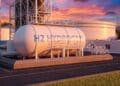
In a similar vein to most countries in the world, the United States is rapidly scaling up clean hydrogen production as part of its broader energy transition. The U.S. Department of Energy (DOE) is advancing the construction and planning of regional clean hydrogen hubs designed to create a nationwide hydrogen ecosystem.
The hubs intend to unite hydrogen producers, consumers, and infrastructure to accelerate the commercialization of the increasingly relevant energy source. The department has created an environment that encourages developers to pursue large-scale initiatives. For instance, federal funding is starting to increase, showing the government’s intent to support initiatives.
Delving deeper into the United States’ investment in hydrogen energy
It is undeniable that the U.S. is committed to building a national network of hydrogen production. The Regional Clean Hydrogen Hubs program, usually referred to as H2Hubs, was formed to support the development of large-scale hydrogen infrastructure across the United States.
It is financially backed by an estimated $8 billion in federal funding. The overall objective of the initiative is to establish several regional networks that integrate hydrogen production, transportation, storage, and end-use applications.
According to reports, each hub will function as a localized ecosystem where hydrogen can be produced and delivered to nearby industries. This will be highly effective in reducing transportation costs and accelerating the adoption of the energy source. The hubs are expected to benefit sectors that are difficult to decarbonize, such as the heavy industry, shipping, and long-haul transportation.
The United States has stuck to the plan of eliminating greenhouse gases throughout all states. For instance, connecting supply and demand in the same region allows the DOE to make clean hydrogen as economically viable as conventional fossil fuels.
Unpacking the 7 regional hubs selected by the Department of Energy
One of the unique features of the Regional Clean Hydrogen Hubs program is that it focuses on technological diversity. For instance, hydrogen production methods across the hubs include renewable-powered electrolysis, natural gas with carbon capture, and nuclear-powered hydrogen generation.
In 2023, the DOE chose seven hydrogen hubs across the country to receive federal funding and begin development. Importantly, the projects are in different states. Among them are hubs located in the Appalachian region, California, the Gulf Coast, the Midwest, the Pacific Northwest, the Mid-Atlantic, and the Heartland.
The seven hubs combined are expected to produce millions of metric tons of clean hydrogen per year once fully operational. The energy industry analysts believe that the amount generated could be sufficient to contribute a significant portion of the hydrogen needed to meet the United States’ decarbonization targets by 2030.
Reviewing the economic and environmental impact of the hydrogen hubs
The hydrogen hub initiative is expected to boost regional economic growth massively. The DOE projects that the projects will create thousands of jobs in construction, engineering, manufacturing, and long-term operations. Additionally, there will be local workforce development programs and training initiatives.
Although China continues to lead hydrogen production by a sizable margin, the U.S. continues to amplify its own hydrogen sector. In 2026 alone, the powerhouse nation has significantly pushed the boundaries.