

Copenhagen Infrastructure Partners has agreed to sell minority equity stakes in the Devilla battery energy storage project — a 500MW facility under construction in Kincardine, Scotland — to two new investors: the Scottish National Investment Bank and the Nuclear Liabilities Fund. CIP retains the majority stake and continues to lead construction.
Expected to commission in 2028, Devilla is on track to become one of Europe’s largest operational battery storage projects.
CIP Divests Minority Stakes in Devilla BESS to Two New Investors
Copenhagen Infrastructure Partners is acting through its Copenhagen Infrastructure IV fund in this transaction. The two incoming investors bring distinct institutional profiles: the Scottish National Investment Bank is a public development bank focused on mission-led investment in Scotland, while the Nuclear Liabilities Fund is a government vehicle responsible for managing assets against the UK’s historic nuclear liabilities. Their combined entry into Devilla is an unusual pairing — public finance and sovereign-adjacent capital meeting inside a single construction-stage energy project.
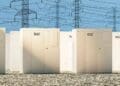
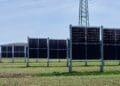


CIP retains the majority stake and will continue to lead project delivery through construction. That arrangement keeps operational control firmly with the developer while giving institutional co-investors exposure to the project’s long-term revenue profile. For both incoming partners, the investment aligns with stated objectives around energy security and economic growth in the UK.
Why CIP Is Bringing in New Equity Partners at Construction Stage
Devilla is currently under construction, with commissioning scheduled for 2028. Bringing in equity partners at this stage is a well-established infrastructure mechanism — one that lets a lead developer recycle capital into new projects without waiting for an asset to reach full operational maturity.
That capital recycling matters here because CIP is simultaneously developing a further 4.5GW of battery storage projects across Scotland and England. A pipeline of that scale creates sustained demand for fresh equity. Partially divesting Devilla frees up resources for earlier-stage assets and spreads construction-phase risk among institutional co-investors built to hold long-duration infrastructure positions.
Revenue Framework and Contracted Income Underpin the Investment
A key draw for incoming investors is Devilla’s contracted revenue structure. The project holds a 10-year optimisation agreement with SSE plc, a major generator of renewables and flexible power across Great Britain and Ireland, providing a defined income stream tied to the project’s participation in electricity markets.
Devilla has also secured a 15-year capacity market agreement. These contracts, awarded through a government-run auction process, pay generators and storage operators for remaining available to deliver power during periods of system stress. Together, the two agreements give the project substantial revenue visibility over the medium and long term — without locking investors into a purely fixed return. If wholesale and ancillary market conditions prove favorable during the project’s operational life, there is room to benefit.
Scale of Devilla and Its Role in UK Grid and Energy Security
Devilla is a 500MW, 2-hour-duration lithium-ion battery energy storage system located in Kincardine, Scotland. At that scale, it is expected to rank among the largest operational battery storage facilities in Europe once commissioned in 2028 — a distinction reflecting both the project’s physical size and the relatively early stage of large-scale battery deployment across the continent.
The project is one of three transmission-connected BESS assets that CIP co-developed with Alcemi and is now constructing in Scotland. The other two are Coalburn 1 and Coalburn 2. Across all three sites, combined power capacity reaches 1.5GW with total storage of 3GWh — enough to supply over 4.5 million households for two hours.
Projects at this scale serve several functions on the grid. They absorb surplus renewable generation when supply exceeds demand, then discharge stored energy when it is needed most. That capability supports grid stability, cuts curtailment of wind and solar output, and can lower costs for consumers by improving system flexibility and broadening access to lower-cost renewables.
CIP Retains Its Majority Control
The Devilla transaction brings together a private infrastructure fund, a public development bank, and a government-managed fund within a single construction-stage asset. CIP retains majority control and leads delivery. The project’s contracted revenue structure — spanning 10 and 15 years respectively — gives all parties long-term income visibility. Upon commissioning in 2028, Devilla will anchor a 1.5GW Scottish BESS portfolio that CIP is building, sitting within a broader 4.5GW UK pipeline still in development.