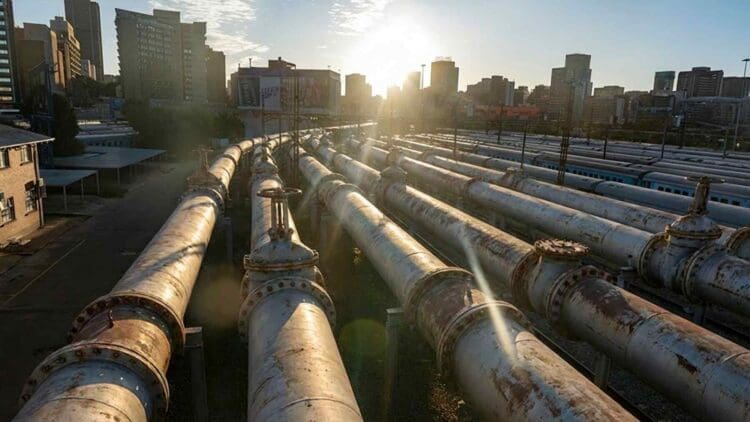

When natural gas infrastructure operates properly, it usually goes unnoticed. However, when it expands — sometimes quietly — it can greatly influence how reliable an area’s supply of natural gas is. DT Midstream’s recent progress regarding the Guardian Pipeline presents an example of measured investment in response to continually increasing demand across the U.S. Midwest.
The Guardian Pipeline serves as a critical link between mainline transmission systems
At approximately 260 miles in length, the interstate pipeline transports natural gas from production/hub interconnection points into high-demand areas where winter heating demands rise rapidly due to extremely cold temperatures.
On October 25, 2025, DT Midstream reported that it completed a successful binding open season for the Guardian Pipeline and assigned newly constructed expansion capacity to five shippers. As a result, DT Midstream received a clear indication from the marketplace that: Utilities and marketers throughout the Midwest have been seeking additional firm, long-term natural gas transportation capacity.

Although announcements of open seasons and/or assignments of expansion capacity typically appear to be mere procedural events, the level of interest generated in relation to the most recent open season at DT Midstream suggests that there exists greater underlying regional energy requirements.
What does the expansion add to the system?
During the recently concluded open season process, DT Midstream assigned 328,103 Dekatherms/Day (Dth/D) of new expansion capacity to five different shippers with a projected completion date of November 1, 2028. When combined with the expansion capacity previously assigned by DT Midstream during the July 20, 2025, Open Season process — which had a target completion date of January 2, 2030 — the total new expansion capacity available through the Guardian Pipeline totals 536,903 Dth/D.
This amount of added capacity represents a nearly 40% addition to the original capacity of approximately 1.3 billion cubic feet/day of the Guardian Pipeline. This represents significantly increased volumes of natural gas able to flow into Wisconsin and adjacent Upper Midwest markets during those times when maximum or “peak” demand occurs.
Of particular note is that all assigned capacities were secured via long-term contractual agreements with each of the five individual shippers, thereby providing a solid foundation for the project and minimizing the risk associated with speculative demand.
The creation of reliability through growth
The utility of Guardian is derived from its ability to facilitate the movement of large quantities of natural gas within the region. Specifically, the pipeline is interconnected with DT Midstream’s Midwestern Gas Transmission system and the Vector Pipeline, creating a multi-pipeline system that enables efficient delivery of natural gas throughout the region.
As increasingly large numbers of power generators, utilities, and industrial customers turn to natural gas for both price stability and reliability, incremental additions to the system like this one enable reduced risks associated with congestion and improved overall flexibility of the system. Additionally, since severe weather conditions can cause rapid stress on infrastructure throughout the Midwest region, additional firm transportation capacity also serves as a means of insurance against these types of occurrences.
According to DT Midstream’s senior management personnel, they considered the strong response from interested shippers an unmistakable sign that natural gas consumption continues to grow at a steady rate within both Wisconsin and the Upper Midwest, and that this trend appears destined to continue over the next ten years.
A measured approach to long-term strategy
The planned expansion to the Guardian Pipeline represents a prime example of DT Midstream’s overall approach — that being, deliberate and shipper-backed growth as opposed to aggressive speculative development. Given the fact that construction is not scheduled to begin until late 2026 (and in service by mid-November 2028), this project exemplifies typical long-range planning horizons inherent in regulatory-governed natural gas infrastructure development.