Wind turbines have been struggling to find their place in the world until now.
Just like Goldilocks tested different porridges to find the right one, the energy industry did some testing of its own.
After searching high and low, the technology may have finally hit the sweet spot by diving deeper.


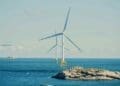
Years have passed by with promising results, but will it change the way turbines are used for good?
How the wind fairytale turned into a horror story
Once upon a time, the world was cast under a fossil fuel spell.
At first, all seemed well, and mankind continued down the line of the industrial revolution. But then, things started to take a turn for the worse.
Temperatures rose to extremes, glaciers began to melt, and ocean levels began to rise. Ecosystems became increasingly vulnerable, weather patterns were unpredictable, and humanity was feeling the punch.
The only thing that could break this curse in disguise was renewable energy sources.
Soon, wind power became one of the knights in shining armor to save the world from fossil fuels.
Unfortunately, this hero’s triumph was short-lived.
What began as a promise of a green, happily ever after soon turned into a nightmare.
Wind turbines had to grow into “large monsters” to keep up with the world’s demands.
Then, local “villagers” came to fear wind turbines and their giant footprints.
The green hero is trying to find its place in the world
Suddenly feeling rejected by the world it was meant to save, the industry realized that it needed a new strategy.
At first, it searched high in the sky for an answer. The Chinese solution was to give green power “wings,” transforming turbines into flying saviors.
However, just like Goldilocks’ first bowl, this was not right just yet. Air traffic safety, long-term durability, and maintenance are still major concerns.
So, the industry turned its attention to the vast ocean. Offshore tidal installations seemed like the next likely heroes, but they also met their kryptonite.
The low-frequency hum of these turbines disturbs the mass movement of some whale species.
The land, the sky, and the ocean surface have been tried and tested. Now that they have failed, what else could there be for wind turbines?
Scotland may have found just the right spot for these unsung heroes.
A new deeply sunken ever-after for turbines
In Scotland’s Pentland Firth, the wind industry decided to duck and dive from the drama – literally. It turns out, the place for turbines that is “just right” was underwater all along.
Turbine technology was sunk 100 feet deep at the MeyGen site, and it is still thriving seven years later.
The green hero that found its ever-after in the ocean depths
The AR1500 turbine became the first one to call the deep ocean home. Thanks to its SKF bearing and seals, this design is nearly immune to corrosive salt and pressure.
In the first quarter of 2025, this turbine was found to have a 95% availability rate after years of operation.
It also achieved a new personal best in March 2025. It exported 372 MWh of power, the highest monthly output since 2017.
Now, the industry is ready for the next step. This year, 30 units of the scaled-up AR3000 turbine will be deployed in France, Scotland, and Japan.
This means tidal turbines could soon take over as the new “heavyweight” champions globally.
The AR3000 is a 3-MW design that has the potential to provide clean power to 3,000 households.
But transformation under the sea takes years, which means the seven years of reliability are just the first chapter. As these turbines secure spots on the deep-sea maps worldwide, when will they finally be accepted once and for all?