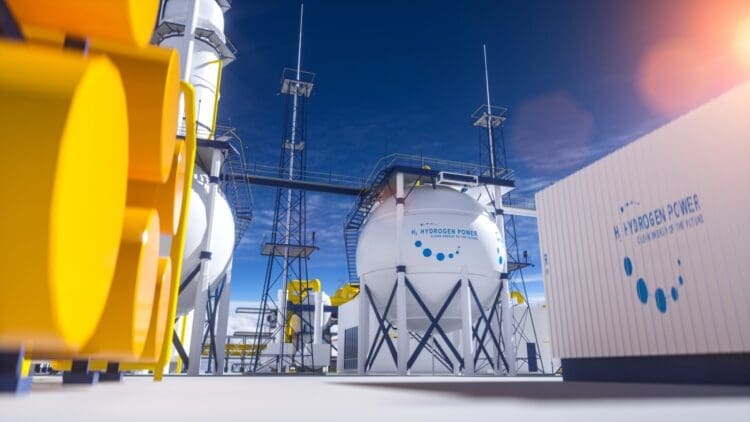

Several energy industry groups have warned that the European Union needs to reset its hydrogen policies, as the continent is way off its 2030 clean energy targets. Hydrogen has long been overlooked by the international energy community due to several mitigating factors. However, as technology progresses beyond what was previously expected, the renewable energy sector has experienced significant growth over the past decade. But Europe’s hydrogen framework is not ideal for fostering investment in large-scale hydrogen projects, at least not what is needed to fully embrace the sector.
Europe’s domestic hydrogen production is far less than what is needed, pointing to imports to fill the gap
As the world embraces the renewable energy sector, some regions have stagnated in their adoption of the industry, citing investment and infrastructure challenges as the major speed bump in the full-scale practical implementation of the sector. Industry organizations are pointing the proverbial finger at Europe, calling for a restructure of the region’s hydrogen framework.
Hydrogen Europe, an industry specialist, has noted that at current levels, Europe is far off track to meet its self-imposed clean energy targets by the end of the decade. To try, at the very least, to meet those ambitions, Europe will be forced to rely on imports to meet hydrogen demand, as domestic production lags behind expectations.


European nations have been hesitant to place mandates on energy companies, leading to slow adoption of the hydrogen sector
Hydrogen is undoubtedly the most abundant element in the universe and a precursor for life on the molecular level; however, Europe has not developed a sufficient framework to adopt the sector on a large scale. Several European nations have been hesitant to place certain hydrogen capacity obligations on companies, leading to the market stagnation that has become evident as of late.
Germany has reported some worrying statistics over its hydrogen dream
Germany can be taken as an example of the current hydrogen climate unfolding in Europe. The nation’s Federal Audit Office (BWV) has concluded that the European energy giant is falling behind in building its hydrogen sector, much like its European counterparts. The BMV has noted that green hydrogen supply and demand have faltered beneath expectations, and the nation risks not meeting its clean energy goals by 2030.
Steel-making was a promising customer of the hydrogen sector, but even that dream has fallen apart, with companies reporting less-than-forecasted demand in recent months. Reports from energy industry insiders have noted that the EU is aprpoximately 90% off its hydrogen production targets. The EU’s hope for reaching 10 million tonnes of renewable H2 annually by 2030 is far off the mark at current numbers.
Not all is lost for the European hydrogen dream, with some investments in huge projects surfacing
Europe’s slow embrace of the hydrogen sector is concerning, especially considering the international consequences if it were not to meet its clean energy goals by 2030. Having said that, there is a light at the end of the hydrogen tunnel, with EU financing backing a substantial Baltic Sea Hydrogen project, so not all hope is lost for the hydrogen sector in Europe.
Some steps have been taken in the European hydrogen industry to increase production
The slow implementation of hydrogen frameworks in Europe is concerning, but there is some hope for progress in the sector with the European Parliament recently approving a framework for low-carbon hydrogen certification. As making changes to energy infrastructure is exceedingly expensive, developing a new domestic hydrogen production supply line might take a long time, too long, according to some in the energy industry. Europe will need to do more contemplation and framework restructuring to reach its self-imposed domestic clean energy production goals.