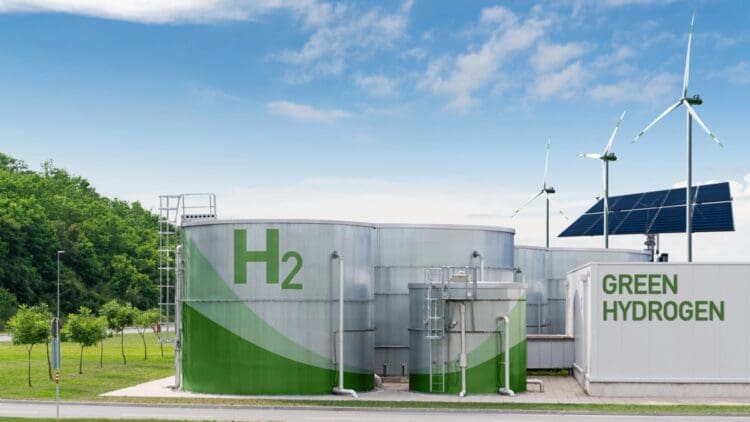

The European Parliament plays an integral role in approving new regulations for the continent. Europe has been working exceedingly hard to diversify its energy sector and integrate the renewable industry as it aims to meet its self-imposed decarbonization goals by the end of the decade. The European Parliament recently voted to approve a new framework for low-carbon hydrogen certification through several key measures. Hydrogen has long been overlooked by the international community as a driver for change in the energy sector.
The European continent is set to become the home of hydrogen through a new framework
On October 23, the European Parliament formally voted and approved the EU’s Low-Carbon Hydrogen Delegated Act, after two attempts to reject the bill were voted down. The act has already passed the EU’s muster in July, and now all that is needed is for the EU’s energy ministers to approve it at the EU Council meeting in November.
The act serves as a supplementary document for the Directive (EU) 2024/1788 of the European Parliament, which aims to establish a Greenhouse Gas Emission Reduction Assessment System for Low-Carbon Fuels, in particular hydrogen. The regulatory focus of the act is on several measures that are essential for the hydrogen sector, including but not limited to:



- The clarification of hydrogen entities: The act provides clear guidance for hydrogen producers across the continent, as the EU does not consider some types of hydrogen as part of the “Renewable Fuels of Non-Biological Origin”.
- Detailed emissions reporting: The act also requires hydrogen producers to account for default values of emissions from their operations.
EU’s energy minister has provided a “grandfathering clause” for operators
The EU’s enigmatic energy minister, Dan Jorgensen, has provided written guarantees for a “grandfathering clause”. This states that projects that have already made final investment decisions will not need to adapt to future revisions of the act. This strengthens the ability of operators to continue to accelerate the embrace of the hydrogen sector across the continent.
The act is essential to fill the regulatory gap for low-carbon hydrogen production in the EU, and furthermore, it reduces industry compliance costs through a set of unified emission accounting rules. Additionally, the act provides clear and precise pathways for the increase in hydrogen production on the European continent.
The act aims to accelerate the warm embrace of hydrogen around the European energy market
Through the consistent support from the European Hydrogen Bank, the new bill aims to accelerate the construction of low-carbon hydrogen infrastructure, which would allow Europe to foster change in its energy sector as it attempts to meet its self-imposed decarbonization goals by the end of the decade.
Europe has seen several nations developing partnerships that promote the adoption of the hydrogen sector. Most notably, the Port of Hamburg has anchored a new partnership that fosters hydrogen trade across the continent and beyond into the rest of the world.
Europe needs to do more to reach its clean energy goals by the end of the decade
Hydrogen has long been overlooked by the EU as a viable energy resource. With the exceedingly cold winter months approaching, Europe is aiming to increase energy production in preparation for an increase in demand. Europe has plans to further strengthen the hydrogen sector through an innovative hydrogen corridor that connects several nations and fosters international trade of the world’s most underdeveloped energy resource. The world needs to end its reliance on the conventional energy sector and shift focus and funding towards the renewable energy market. Europe’s new legislation will provide operators with the means and framework to properly accelerate the energy transition that has consumed the world.