
Europe’s aging wind turbines are getting a “health check” from the ground, and it could keep them spinning for years longer
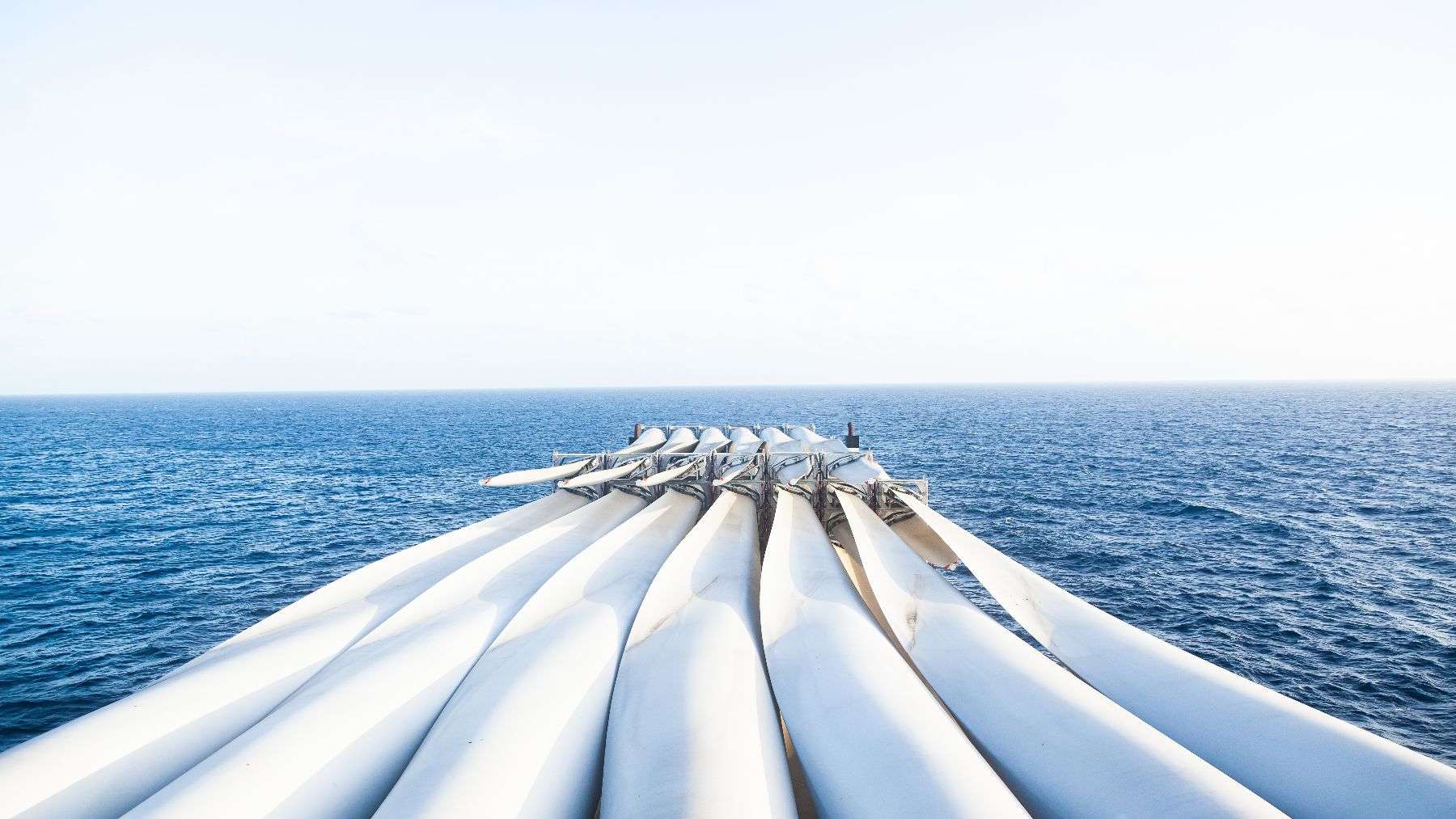
By 2030, some 65 gigawatts of European wind turbines will have outlived their original 20-year design life — a looming wave of aging machines that operators want to keep running, if the structural math holds up.
The problem is that doing that math requires knowing exactly what loads a turbine is carrying. And that depends on blade geometry that manufacturers rarely disclose. Without it, the aerodynamic models engineers rely on for life-extension decisions rest on uncertain ground — and standard turbine monitoring data alone can’t fill the gap.
A research team set out to find a more reliable path, combining an unlikely pair of measurement tools to cut through that uncertainty.
An OpenFAST aeroelastic model built from the laser-scanned geometry showed good overall agreement with both SCADA and SHM data across the full wind speed range.
A growing fleet of turbines running past their expiration date
By 2030, 65 gigawatts of European wind capacity will exceed the 20-year design life those machines were built around. Operators want to keep them running — but doing so responsibly means proving the structure can handle continued loading, which requires accurate aeroelastic models simulating how aerodynamic, structural, and control forces interact across the whole turbine.
Blade geometry is the central obstacle. Blade shape drives aerodynamic loading, and manufacturers almost universally treat it as proprietary. Without it, engineers estimate or borrow geometry from reference turbines, introducing uncertainty precisely where precision matters most. Standard SCADA systems log 10-minute averages of power output, pitch angle, and rotor speed — enough to tune a controller model, but revealing little about actual structural loads.
Scanning a blade from the ground up
The researchers used terrestrial laser scanning — ground-based lidar — to capture blade geometry directly. With the turbine parked and rotor locked, a scanner placed at 13 positions around the base captured both sides of one downward-pointing blade, producing roughly 5.29 million points.
Even under low wind, blade vibration introduced scatter in the point cloud, making the blade appear thicker than it actually is. The team developed a consensus-based alignment algorithm that iteratively estimated a rigid translation for each scan until the solution stabilized. Airfoil shapes, chord lengths, and twist angles were then extracted at 39 spanwise stations by fitting candidate profiles from a known airfoil database to the corrected data.
Tower strain gauges as a window into rotor loads
The second tool was a structural health monitoring system already installed on the tower. Strain gauges at two cross-sections measured bending moments at 5 Hz throughout normal operation. Using a static equilibrium model treating the tower as a cantilever beam, the team derived rotor thrust and torque directly from those readings — no blade instrumentation required.
Rotor thrust — the horizontal force pushing on the tower — is the main driver of the largest structural loads a wind turbine experiences, and SCADA doesn’t measure it. The SHM-derived estimates provided a validation metric far richer than power curves alone, capturing the structural signature of aerodynamic loading in a way that 10-minute averages simply can’t.
How the model performed — and where it fell short
An OpenFAST aeroelastic model built from the laser-scanned geometry showed good overall agreement with both SCADA and SHM data across the full wind speed range. Systematic discrepancies did appear, though. Below rated wind speed, the model consistently overpredicted rotor thrust.
Above rated, it overpredicted pitch angle — meaning the simulated turbine needed to feather its blades more than the real one did. Both patterns point to a modest overestimation of aerodynamic loads.
Pinning down the source of error — and what laser scanning rules out
To investigate, the team ran a parametric study varying five inputs: blade chord scale, twist offset, airfoil polar degradation, yaw misalignment, and SCADA wind speed accuracy. Closing the gap through chord or twist changes alone would require adjustments far larger than the laser-scan method’s expected uncertainty — around 10% chord reduction or roughly 2 degrees of twist offset, neither of which is plausible.
That pointed toward airfoil polar calculations and wind speed measurement errors as more likely contributors. This is the key value of laser scanning: tightly constraining geometry uncertainty prevents engineers from incorrectly attributing errors to blade shape when the actual cause lies elsewhere.
What this means for the future of wind turbine life extension
The study proposes a complete workflow for operators facing life-extension decisions without manufacturer data — use terrestrial laser scanning to reconstruct blade geometry, tower SHM to validate structural loads, and OpenFAST to simulate aeroelastic behavior.
Aging wind fleets are growing worldwide, and operators increasingly face these decisions with incomplete documentation and no manufacturer support. A methodology that recovers reliable aerodynamic models from field measurements alone could significantly raise confidence in load predictions across entire fleets, making TLS and tower-based SHM among the more practical tools the industry has for managing that transition.
Reference: Galhardo, A., Biscaya, A., Santos, J. P., and Magalhães, F.: Predicting wind turbine aerodynamic loads using laser-scanned blade geometry with validation based on operational and structural data, Wind Energ. Sci., 11, 4059–4075, https://doi.org/10.5194/wes-11-4059-2026, 2026.

Daniel García is an Editor-in-Chief with strong expertise in structural work and engineering principles. He combines this technical foundation with deep knowledge of energy, spatial design, and emerging technologies, bringing a forward-thinking and analytical approach to editorial leadership.
